Argon purge confined space: do not climb in to look
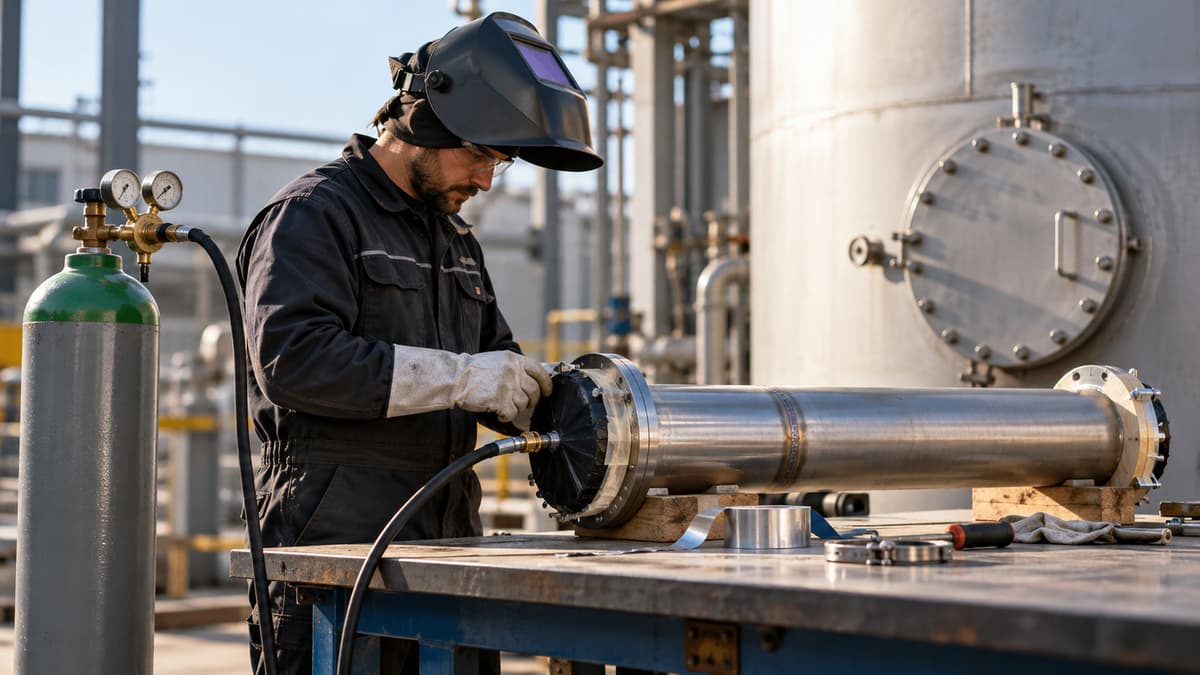
Argon displaces oxygen and has no smell. Deaths follow entry into purged fabrications. Purging a bench pipe is a different job from climbing into a tank.
On this page

You have the dams cut, the tape on the bench, and the argon bottle open because the root of a stainless joint needs gas inside the pipe. That is an ordinary TIG job, done from the outside. The argon purge confined space problem starts when the fabrication is large enough to climb into and you go in to see whether the gas has worked. Argon will push the air out. It will not tell you when the air has gone, or when the air has come back.
People have died, and others have lost consciousness, after entering fabrications purged with inert gas. The Health and Safety Executive tells you to avoid that entry. If entry truly cannot be avoided, its welding asphyxiation page names ventilation and breathing apparatus fed from an independent supply. This piece stops at that line. It is not a permit to work, and it will not hand you an oxygen percentage to treat as a home pass mark. A pipe you weld from outside and a tank you put your body inside can share one bottle. A qualifying purchase from the amazon.co.uk links on the argon gas cylinder comparison can earn a commission at no extra cost to you. That page is a buying note. It is not a reason to fill a vessel.
In short
An argon purge protects a weld root by displacing oxygen, and that same displacement causes asphyxiation. The gas has no smell, so waiting does not prove a vessel is safe to enter. Purge a pipe from the bench. If someone must enter a tank, HSE points to ventilation, breathing apparatus on an independent supply, and the Confined Spaces Regulations 1997 where the space meets that definition.
What a purge is doing
A purge fills the bore of a pipe, or the volume of a fabrication, with shielding gas so the back of the weld is not sitting in air. Oxygen, nitrogen and moisture in that air mark stainless and other sensitive roots. You close the ends with a purge dam, or with tape and a small vent, and you let argon flow until the air has been pushed past the joint. The dam holds the gas where the root is. It is a weld-quality tool. It is also how an oxygen-free pocket gets trapped inside the metal.
Argon, and argon mixed with carbon dioxide, are the same family you use at the torch. On a TIG welding machine the torch flow covers the top of the pool and the purge covers the side you cannot see. Neither flow is breathable air. When the arc stops, gas left in the pipe stays there until something moves it. Air Liquide’s catalogue page for an argon welding mix describes that mix as heavier than air and odourless. In a pipe on the bench the pocket stays in the bore. In a tank, a sump or a closed header, the gas can sit in the bottom after you think a lifted lid has cleared the job.
The top pick in the argon gas cylinder comparison is the SWP WG/1368, listed at 60 litres of argon/CO2, £17.99, mix ratio unstated, 4.6 from 160 amazon.co.uk reviews. That is an editorial top pick for a short session, not a lab test. A cartridge that short can clear a small pipe. It cannot make a tank a workplace, and more gas only makes the displacement easier if someone climbs in.
Where people have been hurt
HSE’s page on welding asphyxiation hazards records deaths and loss of consciousness after people entered fabrications purged with inert gas. The instruction is to avoid the entry. Where entry cannot be avoided, the page calls for ventilation and for breathing apparatus on an independent supply, and it says not to use the ambient air as the breathing supply. How a workplace builds the job sits with HSE, not in a weekend welding guide.
WL2, HSE’s information sheet on shielding gases, puts argon and argon/CO2 on the same asphyxiation list. A MIG mix you already own for mild steel can empty a space of oxygen as well. WL2 also says the less obvious confined spaces include poorly ventilated rooms, and that welding fume is an additional hazard. Fume is what the arc throws off. Inert gas is the shield you added so the weld would stay bright. They fail you in different ways.
A welding helmet deals with the arc at your face in open air. It does not put oxygen back into a purged vessel. You can feel ordinary for the moment it takes to put your head through a manway. A rescuer who climbs in after someone has collapsed is how one purge becomes two casualties. HSE says the air has to be tested before entry. This piece will not invent an oxygen percentage.
A pipe on the bench versus a space you enter
The line is whether any part of you goes into the volume that holds the gas. A pipe on the bench, dammed at both ends, with a hose in one dam and a weep hole in the other, is a joint you weld from outside. Your lungs stay in the workshop air. You can still do that job badly: a hose off the fitting, a bottle left running, a garage with no ventilation. WL2’s point about poorly ventilated rooms still applies to the room you are standing in. It does not turn every purged pipe into a space you are inside.
The line is crossed when the fabrication can take your head, your shoulders or your whole body. A tank, a vessel, a large duct, a closed box, a header you have flooded so you can weld a boss from the inside: that is entry into a fabrication purged with inert gas. Shielding gas in a tank is not a cleaning step you finish by climbing down a ladder for a second.
This article will not rule whether a wheel arch meets the Confined Spaces Regulations 1997. If you have blown argon into the cavity and then leaned your face in, your airway is in the purge. Weld from outside, or stop. A pipe you cannot get an arm into is the bench job. Anything you could crawl through is already on the entry side of the line.
Do not enter to check
You cannot smell argon, and you cannot see it. Waiting at the manway while you count does not measure oxygen. A tank you have purged is not safe once you have waited, because nothing in the wait tells you a heavier gas has left the bottom. HSE’s pages say test before entry. They are not steps for a domestic oxygen meter, and this article will not add the percentage they left out.
Sweetening the vessel with oxygen is the other shortcut. The asphyxiation guidance does not describe topping a purged fabrication up until it feels right. It says avoid entry. If entry cannot be avoided, it says ventilate and use breathing apparatus on an independent supply. Adding oxygen from a second bottle, or shutting the argon off and hoping the workshop air folds in, is a guess. What counts as breathing apparatus, on the wording kept here, is apparatus supplied independently of the air in the space. A paper mask, a fume extractor and a welding helmet are not that supply. Not the person who owns the TIG set, and not a helper holding a rope. Your role with a home bottle is to keep the purge inside a pipe you do not enter.
What to read before any entry
Read HSE’s asphyxiation hazards page before you decide a vessel is only a quick look: Asphyxiation hazards. It is the source for the deaths, the loss of consciousness, the instruction to avoid entry, and the independent breathing supply. Read WL2 for the point that argon and argon/CO2 can asphyxiate, and that poorly ventilated rooms sit among the less obvious spaces: WL2 shielding gases. Read the hypoxic-environments page for how reduced oxygen sits under the Confined Spaces Regulations 1997 when the space meets the definition: Hypoxic environments. The approved code is L101, a priced HSE publication: L101. Do not turn those documents into a permit you drafted yourself.
Compare gas, stated volume and fitting on the argon gas cylinder page before you treat a £17.99 disposable as a vessel fill. The SWP WG/1368 is the top pick there on price and a 160-review sample, with the mix unstated. None of the linked kit pages makes a purged tank breathable. If you have already filled one, do not climb in, do not send someone else in, and do not treat a wait as a test.
Common questions
Is argon poisonous?
Why can't I smell argon?
Is a wheel arch a confined space?
Is a tank I have purged safe once I wait?
Can I sweeten a purged tank with oxygen?
What breathing apparatus counts for a purged space?
Who should enter a fabrication purged with argon?

Peter F. is the editor for DIY & tools at productscompared.co.uk. Comparisons in this category are checked against amazon.co.uk listings, review evidence and public UK sources.
Related articles

How to store a welding cylinder at home
Keep a home cylinder upright, valve shut and ventilated, away from fuel.
Welding fume in a home garage
Fume is a separate hazard from shielding gas, including on mild steel.

Signs a welding regulator is leaking
Argon has no smell. A hiss, a falling gauge or soapy bubbles show a leak.