Independent comparisons. We may earn from shop links. More info

How to use a cable reel outdoors: unwind, then load

Updated: 23 October 2026

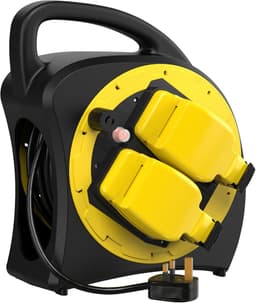
You have the reel in the hall, the mower on the patio, and a wish to switch on before the cable is off the drum. How to use a cable reel outdoors is a short sequence: look at the lead, unwind all of it, stay inside the rating on the label, and reset a thermal cut-out only once after it has cooled. We wrote this from UK safety guidance and the listings in our [outdoor cable reel comparison](/hub/sockets-and-extension-leads/outdoor-cable-reel), compared on 20 October 2026. We did not lab-test a drum. This is not a product ranking. A qualifying purchase can earn a commission at no extra cost to you.

You have the reel in the hall, the mower on the patio, and a wish to switch on before the cable is off the drum.

Our top picks

Masterplug Masterplug 25 m open reel

Best overall

Masterplug Masterplug 25 m open reel
8.4/10about £24.00
Status Status 15 m two-socket reel

Alternative

Status Status 15 m two-socket reel
7.0/10about £19.95
SLx SLx 20 m IP54 reel

Alternative

SLx SLx 20 m IP54 reel
8.6/10about £34.99
On this page

Before you plug in

Start with the reel unplugged. Look along the sheath for cuts, crushed spots, and taped repairs. Check the BS 1363 plug for cracks, a loose fuse holder, and pins that are bent or discoloured. A hot or brown plug is a reason to stop. Confirm you can see a thermal cut-out, and that any socket covers close. Walk the route you will actually use. Electrical Safety First treats a damaged lead and a daisy-chained second reel as things you do not put into service. If one fully laid drum is still short, you need a longer single reel or a fixed socket. If the amps, IP claim, or plug still look unclear, use the outdoor cable reel buying guide before you load a mower.

Unwind and route the cable

Take the whole cable off the drum before you connect a load. Dorset & Wiltshire Fire and Rescue has warned about reels left energised while still wound. Pull the cable into a loose line along the edge of the lawn, not a tight coil and not a bundle beside the socket. Keep the drum where you can reach the reset and out of a puddle. Close covers on a splash-rated case before you walk away. If the lead crosses a path, lay it flat so you can still see damage.

Load and the wound rating

Add the currents of everything you will run at the same time, and compare that with the unwound rating. In this set the usual ceiling is 13 A for the whole reel. Four sockets do not mean 52 A. The Status 15 m two-socket reel prints 13 A unwound and 5 A wound. At 230 V that wound figure is about 1,150 W. A partly unwound drum does not earn the 13 A number. If your label has no wound rating, do not guess a middle value for a quick trim with cable still on the hub. Unwind fully, then stay at or under the unwound figure. If the case becomes hot, switch off at the wall. The thermal cut-out is not an RCD. Tool currents and water near the sockets are on the extension reel for a lawn mower page.

Reset once, then stop

When the cut-out opens, unplug the reel from the wall and unplug the tool. Leave the cable unwound and give the drum time to cool. A manual reset pressed while the case is still hot often trips again. After it is cool, reset once and try the tool alone. A second trip on that same job is the end of the session. So is a burning smell, a warm plug, or a sheath that has gone soft. Do not bypass the cut-out, and do not fit a larger fuse than the plug is made for. Repeated trips can mean the tool is over the reel, the cable was still partly wound, or the reel itself is failing. If the house circuit or the RCD is also opening, leave it for an electrician.

After the job

Switch off, unplug from the wall, and unplug every tool before you wind. Wipe wet grass and mud off the sheath. If the cable or the case is damp, let it dry indoors with the sockets open to the air, then close the covers. Wind without forcing a kink. Store the reel inside, not on the patio because the title says outdoor. IP54, where a listing states it, is splash protection in use, not a case for leaving a drum out all winter. An open drum with no IP code has a weaker claim still. Check the sheath while you wind, then store the reel indoors.

Common questions

Why did the power cut out when only a few metres were out?
The wound part was still on the drum, so the lower current limit applied. On the Status 15 m reel that printed limit is 5 A wound against 13 A unwound. A mower can sit under 13 A and still be over 5 A. Unplug, cool the reel, unwind what remains, and reset only when it is cool.
How do I reset the thermal cut-out?
Unplug the reel and the tool, leave the cable unwound, and wait until the case is cool. Then press the manual reset once, if your model has one, and try a single tool. A thermal cut-out is not an RCD. A second trip, hot plastic, or a hot plug means you retire the reel for that job.
Can I leave spare sockets uncovered in the grass?
No. Empty sockets on an open drum collect spray and dew, and a splash-rated cover only counts when it is closed. IP54 describes limited dust and splashed water on a closed arrangement, not an open hole in the lawn. Shut every cover you are not using.
Can I daisy-chain another reel?
Do not plug a second reel or extension into this one to gain metres. Electrical Safety First warns against daisy-chaining. You hide the true load, you add joints in the wet, and you make the unwind rule harder to obey. If one fully unwound reel does not reach, choose a longer single reel within its rating, or ask an electrician about a fixed outdoor socket.
Where should I store it after use?
Indoors, dry, with covers closed once any damp has aired off. Outdoor in a product title is not permission to leave the drum in the border through winter. Wipe soil off the sheath, look for mower nicks, and wind without kinks. A reel that smelled hot during the job stays out of service until you know why.

Related pages

Sources

Sources taken from the research digest. Listings were scored on 20 October 2026. This page did not run a lab test.

  1. BSI Knowledge — BS EN 61242:1997+A13:2017 (retrieved 20.10.2026)
  2. Electrical Equipment (Safety) Regulations 2016, regulation 35 (retrieved 20.10.2026)
  3. Electrical Safety First — extension leads and cable reels (retrieved 20.10.2026)
  4. Dorset & Wiltshire Fire and Rescue Service — unwinding extension cables (retrieved 20.10.2026)
  5. NICEIC — gardens and electrics (retrieved 20.10.2026)
  6. HSE — INDG236 Maintaining portable electrical equipment (retrieved 20.10.2026)
  7. OPSS — product safety report 2511-0272 (retrieved 20.10.2026)
  8. Hammond — IEC 60529 IP code tables (retrieved 20.10.2026)