When to sow lawn seed UK: choose September or spring

When to sow lawn seed UK is September to November, or March and April. Early autumn lets seedlings root before frost. A hot, dry week can waste the bag.
On this page
The bag is open, the forecast is a hot week, and the bare soil already looks pale by lunchtime. When to sow lawn seed UK gardeners get a straight answer from the Royal Horticultural Society: September to November, or March and April, with early autumn preferred. A July sowing without serious water wastes the seed. The month is only half of it. The surface has to stay damp, and the seed has to touch soil.
In short
Sow a new lawn in September to November, ideally early in that window, or in March and April. Autumn gives warm soil and time to root before a hard frost. Spring works if you water as the ground starts to dry. Grass often shows in 7–10 days when moisture is there. Heatwaves, moss, and sowing under a full summer canopy are how bags fail. Shade, patches and clover are different packets on related dates.
The two RHS windows
The RHS page on starting a lawn from seed gives two blocks. September to November is the first. March and April is the second. Early autumn is the one it prefers. Both assume you can make a seedbed and keep it moist. Neither is a slogan you can stretch to every weekend from March to September because a shop calendar printed that range and left out the heat.
September and October are the heart of the autumn block. The soil still holds summer warmth, and rain is more likely to do some of the watering. Seedlings that appear in a mild October can root before a hard frost. November still counts, and it is slower. A sowing on waterlogged November clay sits and rots. Wait for a crumb. If that crumb does not come, you have the spring window.
March and April suit people who missed autumn. The risk is a dry, bright spell just as the seed germinates. You become the rain. A fine rose, often enough that the top centimetre does not turn to dust, is the job for two or three weeks. A hose left blasting moves seed into the path. If you are away in April, autumn was the better plan. Spring asks for more water through that fortnight.
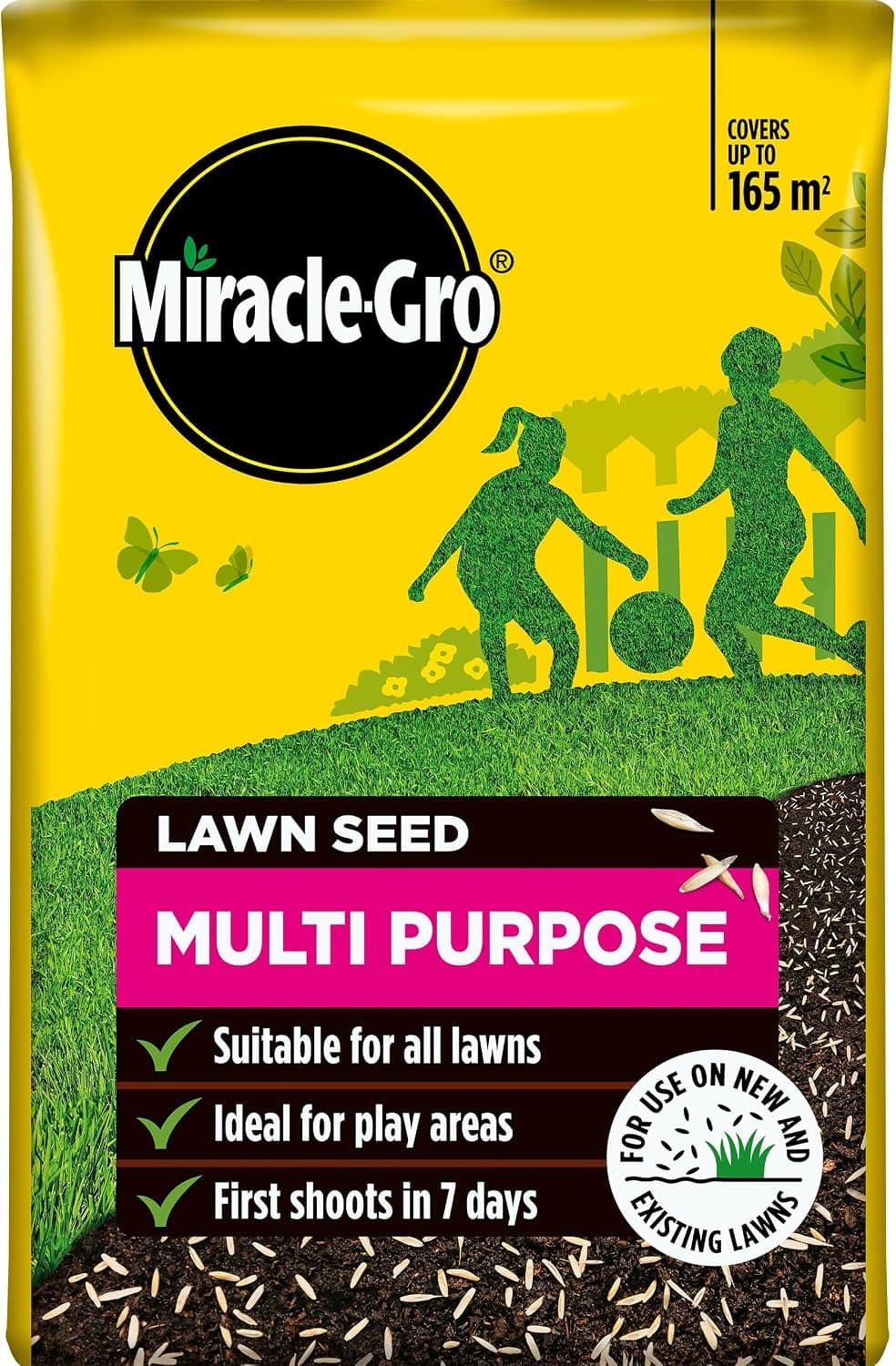
Miracle-Gro multi-purpose in our grass seed comparison is the captured top listing: 5 kg of ryegrass and fescue, up to 165 square metres, £28.94, rated 4.3 from 331 ratings, with a seller line about first shoots in 7 days. That line sits beside the RHS often 7–10 days. Both need the window and the water. The bag is for a larger family lawn. It is a clumsy tool for three bald patches and a poor tool for a clover experiment.
Why early autumn usually wins
Frost is the limit people fear, and drought is the limit that empties more bags. An early autumn seedling has weeks of mild weather to tiller. A late spring seedling meets longer days and a drying wind, and it puts on leaf while the root is still short. If a May heatwave arrives, the spring lawn is the one you water by hand.
Do not leave autumn until the last weekend in November because the range allows it. A green haze that appears into a freeze has not tillered. Sowing in September, then mowing only when the grass is tall enough for a high cut, matches the preference. Keep off it. Footprints in a wet new lawn become bare lines that need a spring repair.
Birds take seed that sits on the surface, in either window. Rake a light cover, firm the bed, and use fleece for a short spell if the patch is small and exposed. Take the fleece off when the green shows. Leaves on an October sowing must be raked lightly or they smother the seedlings. A thick leaf layer is an autumn-only failure. Spring’s version is a cap of dried soil.
The first cut is high, with a sharp blade, and the clippings come off. Scalping a three-week lawn, or mowing when the ground is soft enough to rut, undoes the timing. Feed can wait. Water if the autumn turns unusually dry. British Septembers are not guaranteed rain. Check with a finger. The calendar is a window, not a promise that the sky cooperates.
What to do in a dry summer
If it is July and the lawn is brown, the useful act is often to wait. Sow in September. A heatwave sowing germinates into a crust, or it never starts, and the bare result looks like a bad packet. It is a bad week. Retail ranges that say March to September without a heat warning are how that week gets sold. The RHS windows are the ones to write on the shed door.
If you have already sown and the forecast has turned hot, water little and often with a fine spray, morning or evening, until the seedlings have a root. Do not paddle the bed, and do not cover it with a plastic sheet that cooks it. If you cannot water, accept the loss and resow in the proper window rather than scratching more seed onto dust every Sunday.
Brown established grass is not always dead. Ryegrass can sit dormant and return with rain. Water a valued lawn before you strip it and reseed in a heatwave. If it is truly dead, clear it when you can work the soil and sow in September or spring. The lawn repair seed comparison is for gaps you open to soil in those seasons, not for a mid-summer sprinkle.
Dried ornamental grass is the other summer mix-up. The dry-grass shelf in this hub is bunches for a vase, pampas and bunny tails, not a seed that tolerates drought because the word dry is in the category. A brown lawn wants water, patience, or a September sowing of living turf seed. It does not want a bouquet. Keep that purchase for the house.
Shade, patches, clover and the wrong bag
Deciduous shade changes the month inside the same seasons. The RHS says sow while the tree is leafless, so seedlings see light before the leaves return. September through early spring fits. June under a full crown does not. The ground still needs about four to six hours of light. Use a shade mix from the shade grass seed comparison on that circle, and the ryegrass mix on the open play area. Evergreen shade has no leafless month.
Patches use the same calendar and a smaller product. Rake moss and thatch until you see soil, sow, cover lightly, water, and stay off. A repair box for a few square metres beats a 5 kg bag opened for one scuff. The large bag earns its place when the thin area is a real fraction of the lawn, or the whole thing is new. Up to 165 square metres is a ceiling at the seller’s rate.
Clover is not this bag with a different picture. Micro-clover guides talk about roughly 8–10°C and a March-to-September span. Use that for clover, not as a soil-logger rule for ryegrass. The RHS grass page asks for the season and the moisture. A new clover sowing wants water for longer than 7–10 days. Red clover for green manure, and a meadow mix for April or September, are other jobs.
Birds, depth and drought remain the reasons a correct month still looks empty. Half a centimetre of crumbly cover, a firm surface, and a damp top centimetre belong with September. A fortnight of dust is not a germination test. If the bed was right and the bag was wrong on weight or species, that is a question about the words you were shown, not a third sowing season.
We compared the RHS lawn-from-seed and shade pages with the captured amazon.co.uk listings. We did not time a germination trial. A qualifying purchase through our link can earn a commission at no extra cost to you. The £28.94 figure is the captured price in GBP. Check the live page. Sow in early autumn if you can, or in spring if you will water, and leave July for the watering can on the lawn you already have.
Common questions
Is autumn better than spring for sowing a lawn in Britain?
Can I sow lawn seed in a heatwave?
How long until I see grass?
When do I overseed bare patches?
Does shade change the month I sow?
Is clover sown on the same dates?
What if birds take the seed?
When is a new-lawn bag the wrong tool?

Peter F. is the editor for DIY & tools at productscompared.co.uk. Comparisons in this category are checked against amazon.co.uk listings, review evidence and public UK sources.
Related articles

Grass seed not germinating: water, depth and birds
Bare soil after a fortnight is often dry seed, depth or birds. It is a weak test of the packet.
Shade lawn seed UK: what moderate shade can still grow
Fescue mixes suit moderate shade. Deep shade under a dense canopy will not become a fine lawn.

Clover lawn vs grass: for wear or a low-input sward
Heavy wear points to ryegrass. A low-input patch can be white clover or grass with a little clover in the mix.