Shade lawn seed UK: what moderate shade can still grow
Shade lawn seed UK suits moderate shade, about four to six hours of light. Fescue mixes wear less, and deep all-day shade will not become a fine lawn.
On this page

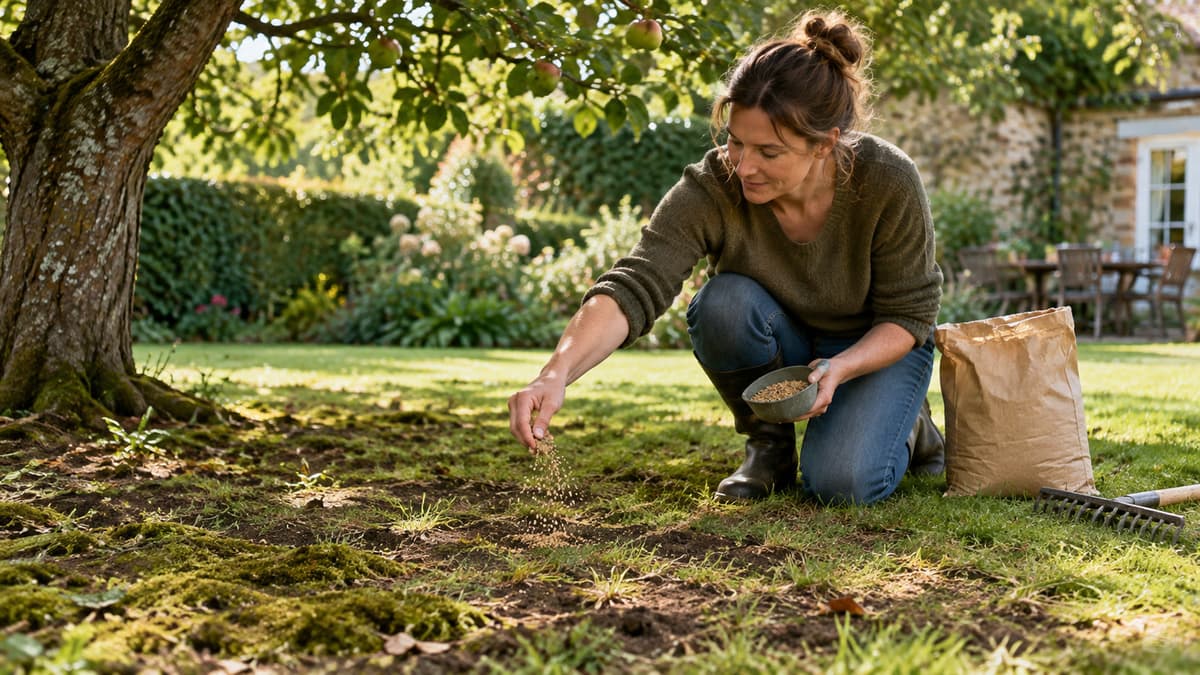
The lawn under the apple tree is moss, bare soil and a few pale tillers, and a bag marked shady is the fix you hope will ignore the branches. Shade lawn seed UK gardeners can use is real, and it is limited. The Royal Horticultural Society puts turf in moderate shade at about four to six hours of light, and it says deep shade will not make a fine lawn. A fescue mix matches that moderate band. It does not switch the lights on.
In short
Sow shade lawn seed where the grass can still get about four to six hours of light. The RHS shade mixes use hard fescue, red fescues and browntop, and they are not very hard wearing. Under deciduous trees, sow while the branches are leafless. Deep, all-day shade needs other plants. Clover is a separate packet, not a substitute fescue.
Moderate shade and deep shade
Four to six hours is the RHS note for growing turf in shade. Count it in summer, on the ground. A tree that leaves the lawn in sun at lunchtime and in shade by four is a fair place for a shade mix. A passage that stays dim at noon in June is deep shade. Seed will not turn it into a bowling green.
Dappled shade under a high crown is kinder than a solid hedge, and the hours still have to add up. Sun flecks at noon are closer to deep shade than they look. Walk the patch on a clear day. The RHS figure is a practical threshold, not a lux reading.
Dry shade and damp shade are different soils. Tree roots take water, so the ground can be dark and dusty in July. A fence line that never dries stays mossy. Bent is the RHS suggestion for damp shade, and fescues are the backbone of the shade mixes. Water dusty seedlings. Spike a sponge, and do not mulch wet seed.
Where the shade is all day, choose other plants or a path, and stop reseeding the same bald patch. Our shade grass seed comparison is for the moderate case. The top listing is Miracle-Gro Shady Lawn Seed, 840 g, a stated 28 square metres, about £15.99, rated 4.0 from 42 ratings. The captured page does not name the species. A child and pet line is a seller phrase, not a wear test.
What a shade mix contains
The RHS lawn-from-seed guidance describes shade mixes of hard fescue, red fescues and browntop bent. Those are finer grasses. They tolerate less sun than perennial ryegrass, and they mark, tear and open up sooner under feet. A family lawn that is also under a tree is a compromise: the wear line wants ryegrass, and the tree shade wants fescue. One bag that promises both, without a species list, is asking you to trust the adjective shady.
Read the packet for names. Red fescue, chewings fescue, hard fescue or browntop puts you in the RHS recipe. Shady lawn alone is a marketing word and a weight. Miracle-Gro's 840 g bag is in that second position. Twenty-eight square metres is about 30 g per square metre if you use the whole bag there. Check that against the rate on the box. The grass seed comparison holds ryegrass and fescue mixes for ground that does get the sun.
A small shady bag often costs more per square metre than a 5 kg sunny mix. That is fair when 28 square metres is the bald patch, and a poor way to overseed a 150 square metre lawn that is only shady at one end. Buy the shade pack for the tree and a wear mix for the rest. Do not blend them unless both packets give the same sowing rate. Mow high so you do not scalp fescue, and keep clippings off new seedlings.
When to sow under trees
Deciduous trees give you a window the RHS tells you to use: sow while they are leafless. Seedlings then get late autumn and early spring light before the canopy closes. That lines up with the usual British lawn seasons, September to November or March to April, and it rules out a June sowing under a full crown. Evergreens, a leylandii hedge, or a north wall do not open that window. If the shade is permanent, the four-to-six-hour test is the whole decision, in every month.
Rake leaves off and scarify moss so seed hits soil. Loosen the top without cutting visible tree roots, and keep any new soil thin. Sow at the packet rate, cover lightly, and water with a fine rose. The crown sheds rain, so a dusty centimetre under the tree still needs water.
Birds take exposed seed once the leaves are down. Horticultural fleece, pegged so it does not mat the seed, helps for a fortnight. Take it off when the green haze is even. The RHS lawn-from-seed page puts germination at 7 to 10 days, and shade plus cold soil can stretch that. Three bare weeks in November are not automatically a failed packet. Drought in a warm April fails faster.
Keep off the patch. Shade seedlings tiller more slowly than ryegrass in full sun, and footprints become moss lines. Lay a board if the shed path crosses the tree. Mow only on a high cut, and not while the ground will rut. Wet shade in the first winter favours moss if the grass is still single plants.
Moss, wear and the fence line
Moss occupies damp, compact, shady soil where grass has given up. A moss killer, used as the packet allows, can clear a brown mess and leave the same conditions. Without light and a grass that can use the light, the moss returns. In moderate shade, scarify, spike if water sits, and sow the fescue mix in the leafless window. In deep shade, removing moss is housework, not the start of a lawn.
The RHS calls shade mixes not very hard wearing. A goal mouth, a trampoline, or a dog run will not hold fescue the way a sunny ryegrass lawn might. Move the play, or accept a mud stripe and overseed it in season. Child-and-pet wording on the Miracle-Gro title is not a wear test, and this seed is not a pet treatment.
If the fence-line metre gets less than four hours, sow only up to the line of light and give the last strip a shade planting or a path. Lime, moss killer and shade seed are three products. Read each label, and do not mix them in one afternoon.
Clover is a different packet
The RHS treats white clover as a lawn in its own right, or as a weed in fine turf, not as the grass for deep shade. DLF's microclover notes claim shade tolerance short of prolonged flooding. That is a breeder claim, not the four-to-six-hour standard. One Pipolina review of germination on shaded clay is an anecdote, not a sowing rate.
If the goal is a greener low-input patch and the light is moderate, clover can be a choice you make on purpose, from the clover seed comparison, and you mow it. If the goal is grass, buy the shade mix and judge the hours first. Sowing clover because the grass failed in deep shade repeats the failure with a different seed. Prolonged wet, which the breeder note sets aside, is the fence-line sponge where moss already won.
We did not grow the 840 g bag under a tree. A qualifying purchase through our link can earn a commission at no extra cost to you. The £15.99 figure is the captured amazon.co.uk price. Check the live page and the species on the box. Four to six hours, a leafless sowing, and no playground duty: that is the lawn this seed can be asked to make.
Common questions
How much sun does a shade lawn need in Britain?
What grasses are in a shade mix?
When should I sow grass under a deciduous tree?
Can clover replace a shade grass mix?
Why is the shady lawn mossy?
Will a shade lawn take games?
What if the shade lasts all day?
Which comparison lists shade lawn seed?

Peter F. is the editor for DIY & tools at productscompared.co.uk. Comparisons in this category are checked against amazon.co.uk listings, review evidence and public UK sources.
Related articles

When to sow lawn seed UK: choose September or spring
Early autumn is the kinder window for a new lawn. Spring works if you can water as the soil starts to dry.

Grass seed not germinating: water, depth and birds
Bare soil after a fortnight is often dry seed, depth or birds. It is a weak test of the packet.

Clover lawn vs grass: wear or a low-input sward
Heavy wear points to ryegrass. A low-input patch can be white clover or grass with a little clover in the mix.