PUWER abrasive wheels: what replaced the 1970 rules

The Abrasive Wheels Regulations 1970 are gone. Here is what PUWER 1998 and HSE's HSG17 ask of a small UK workshop whose staff use angle grinders.
On this page
- 1.In short
- 2.PUWER in one paragraph
- 3.What happened to the abrasive-wheel regulations
- 4.Where HSG17 and L22 fit
- 5.Guards, training and suitable accessories
- 6.A practical routine for a small workshop
- 7.Householder and employer are not the same duty
- 8.Product safety is a second track
- 9.How this guide was put together
You run a small workshop, and two of your staff reach for a 125 mm angle grinder several times a day. A course provider says an abrasive-wheel certificate is the law. PUWER abrasive wheels duties are what HSE points to now, and HSG17 fills in the practical detail.
In short
The Abrasive Wheels Regulations 1970 were revoked by the Provision and Use of Work Equipment Regulations 1998 (PUWER). An employer now has to provide suitable equipment and make sure staff have adequate information, instruction and training, with HSE's HSG17 guidance for the detail. HSE's overview does not name one mandatory certificate.
PUWER in one paragraph
PUWER governs work equipment, from a ladder to a lathe, and an angle grinder with an abrasive wheel is work equipment like any other. HSE's overview asks whether the equipment is suitable, kept in a safe condition, and used by people who have had adequate information, instruction and training. The duties fall on employers and on people who control work equipment, from a sole trader with an apprentice to a larger firm. PUWER does not list wheel types, grinder sizes or course names. It sets the outcome and leaves the method to the employer.
If a grinder is used in your workshop, the question is whether you could show that the grinder and the disc suit the task, that the machine is in good order, and that the person using it knows how to fit, check and use the wheel.
What happened to the abrasive-wheel regulations
The Abrasive Wheels Regulations 1970 were a specific set of rules for grinding wheels, and much of the folklore around wheel mounting and appointed persons comes from them. They are no longer in force. PUWER 1998 revoked them, and legislation.gov.uk lists the 1970 regulations in the PUWER revocation schedule.
Training material still often talks as if those rules were live. When a provider cites the Abrasive Wheels Regulations, ask which regulation they mean. The current legal hook is PUWER, and the practical guidance HSE points to is HSG17. A wheel that does not suit the machine, or one fitted badly, can still burst, snatch or throw debris. Revoking the 1970 regulations does not lower the bar. Suitable and adequate now carry the weight, judged against HSG17 rather than a checklist printed in the old regulations.
Where HSG17 and L22 fit
Two HSE documents sit around PUWER. HSG17 is the guidance book on abrasive wheels. It is guidance, not law, and it is what HSE points to for how wheels should be selected, mounted and used. A short in-house routine for grinder use should be built from it.
L22 is HSE's Approved Code of Practice and guidance on PUWER. It mentions training for grinding machines and abrasive wheels under the PUWER training duty, so read that section alongside HSG17. A workshop that has decided which discs are allowed on which machines, and written down who has been shown how to change a wheel, is in a stronger position than one that has a certificate on file and nothing else.
Guards, training and suitable accessories
Suitable accessories under PUWER regulation 4
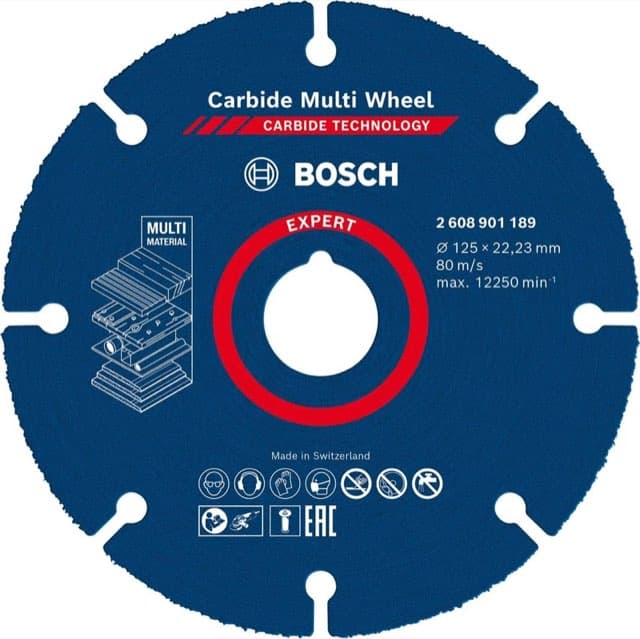
Regulation 4 is the suitability duty. Suitable means more than it fits on the spindle. The disc has to match the machine's diameter and bore, the material, and the maker's intended use. A 125 mm grinder with a 22.23 mm spindle should get a 125 mm wheel with a 22.23 mm bore, used with the guard the maker supplied. Our 125 mm wood-cutting disc comparison shows how often listings leave out details you need: the top pick, the Bosch Expert Carbide Multi Wheel, states the bore and thickness but no maximum rpm on its amazon.co.uk page, and the box contains the disc only, with no guard. Check the rpm on the wheel itself and the grinder's rated speed before you approve a disc. A grinder used with its guard removed is no longer the equipment the maker designed.
Angle grinder training without a named card
The training duty is real, but HSE's overview does not name a certificate. You need to show that each user has had adequate information, instruction and training for the grinder and wheels they use. A recognised course gives a tidy record. A supervised in-house session based on HSG17, written up and signed, is another way. A card alone says nothing about your machines, your discs or the jobs your staff actually do.
A practical routine for a small workshop
A short written routine turns the PUWER duties into something your staff can follow on a busy day. The steps below are a starting point drawn from the duties above, not a legal checklist, and you should adapt them to your own machines and HSG17.
- List each grinder's disc size, spindle size and rated speed, then name the wheels approved for it. If a label shows no maximum speed, do not approve the wheel until you have checked the wheel itself.
- Keep the maker's guard fitted and check it before each use. A missing or loose guard means the grinder stays out of use until it is put right.
- Show each user how to read the disc label, fit the flange, check for cracks or chips, and run the grinder briefly before the first cut. Record the date and who gave the instruction.
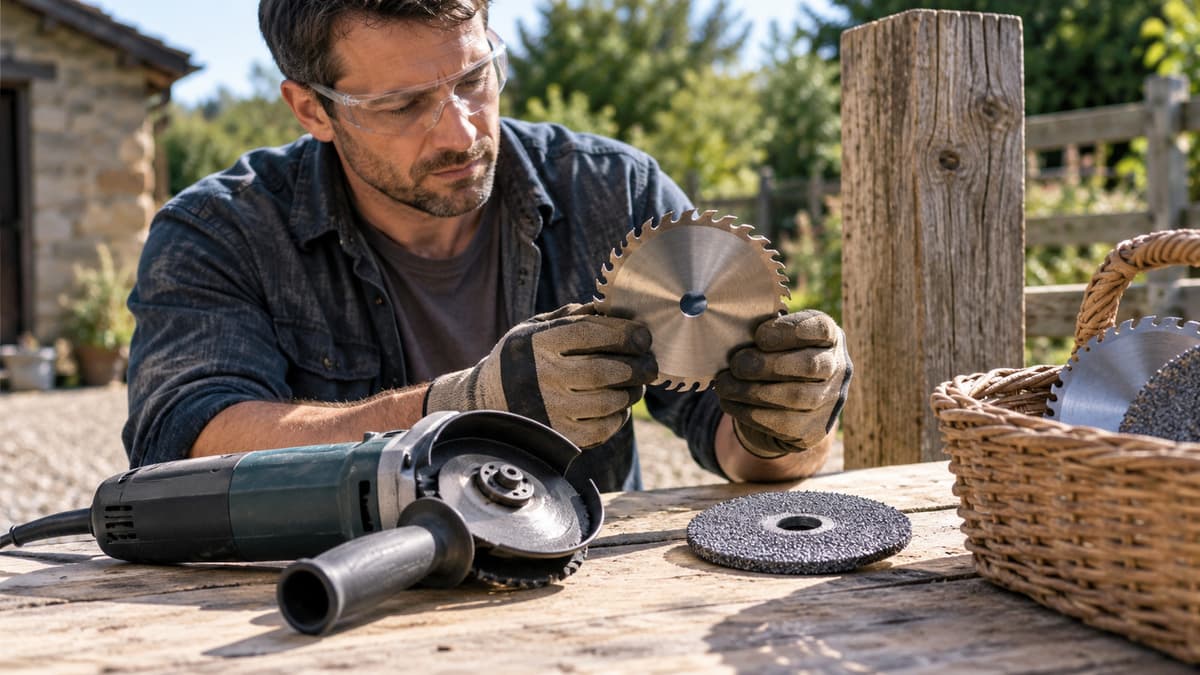
- Ban toothed saw blades on grinders. They are the subject of a UK product safety alert and a poor match for suitable equipment. If a job needs teeth, use a circular saw, such as one fitted from our 250 mm x 30 mm circular saw blade comparison.
- Decide how wood dust is controlled before a timber cut, not after the bench is covered in it.
- Update the list and repeat the instruction when you add a grinder, change the disc type, or have a near miss.
A laminated sheet that nobody updates does not meet a duty on its own.
Householder and employer are not the same duty
PUWER binds employers and people who control work equipment used at work. A householder trimming a shed board in their own garage is not in that frame, and nobody expects a training record for one grinder in a garden shed.
The hazard is the same at home. A wheel that does not suit the machine, a guard taken off, or a toothed blade can injure you on a driveway as easily as on a factory floor. Match the disc, read the speed on the wheel, keep the guard on, and use a circular saw when the job wants teeth. If you do the work for someone else, or a friend helps in a small business, treat yourself as being on the employer side.
Product safety is a second track
PUWER is about how an employer chooses, maintains and manages work equipment. Product safety law is about what may be supplied. The Office for Product Safety and Standards issued product safety alert PSA5 about toothed saw blades sold for angle grinders. That alert is product law, not a PUWER duty. Our guide to toothed blades on an angle grinder covers what it says.
An employer can treat the alert as a strong reason not to allow toothed blades on grinders. For aluminium or timber that needs teeth, use a saw designed for them. Our circular saw blade for aluminium comparison sits separately from the grinder discs. Wood dust is a third issue: HSE's wood-dust pages set out the employer's duty to control exposure, so a carbide disc raises a dust question as well as a wheel question. See wood dust from a cutting disc for why short cuts still count.
How this guide was put together
This guide draws on HSE's PUWER overview, the PUWER 1998 entry on legislation.gov.uk, HSE's HSG17 and L22, the OPSS alert on toothed blades, HSE's wood-dust pages, and the amazon.co.uk listing details in our 125 mm disc comparison. We did not test any discs in a lab, and this is not legal advice. If you buy through our amazon.co.uk links, we may earn a commission on a qualifying purchase at no extra cost to you.
Common questions
Are the Abrasive Wheels Regulations 1970 still in force?
What does PUWER require for an angle grinder at work?
Is an abrasive wheel training certificate a legal requirement in the UK?
Does PUWER apply to my home garage?
What is HSG17?
How does PUWER sit next to the OPSS toothed-blade alert?
Do staff cutting timber with a grinder raise a wood-dust duty too?

Peter F. is the editor for DIY & tools at productscompared.co.uk. Comparisons in this category are checked against amazon.co.uk listings, review evidence and public UK sources.
Related articles
Toothed saw blade on an angle grinder: what the UK alert says
Why the UK product safety alert singles out toothed blades on angle grinders, and what to fit instead for timber.

Wood dust from an angle grinder: why short cuts still count
A grinder throws fine wood dust fast. Why a few quick cuts still matter, and what an employer has to think about.

115mm or 125mm angle grinder disc: how to tell which fits
How to read the grinder, the guard and the disc label so the wheel you buy actually suits the machine.