When to change a sanding belt: signs the grit has died

A glazed sanding belt heats the wood instead of cutting. Spot the signs on the job, choose the next grit, and fit the new belt with the sander unplugged.
On this page

You are halfway along a painted door. The belt that was throwing dust has gone quiet, the face looks shiny, and a brown streak is forming under your front hand. That is when to change a sanding belt. The grit has stopped cutting, so the tool is rubbing, and the heat goes into the timber and the housing. Pushing harder darkens the scorch.
A timer will not decide it. Reviews here describe a coarse belt wearing out within minutes on old paint, and included sets used up on a floor. Both are anecdotes from those jobs, not an interval to copy onto the next door. You change the belt when it has stopped cutting, then fit the next grit the surface still needs.
In short
Change the belt when the face is glazed, the wood scorches, or the dust is no longer a dry powder. Extra pressure heats the work and finishes the belt off. Start coarse, move finer, treat a single P80 as a starter, and fit the next belt unplugged with the arrow matched and a torn loop in the bin.
Signs a glazed sanding belt has stopped cutting
A working belt looks dull and open, and the waste leaves as powder. A glazed sanding belt looks slick, sometimes polished, because paint, varnish or fine dust has packed the grit and the face is rubbing. You feel it before the streak is deep. The sander hums, the door stops getting lighter, and you start to push. That shine means you stop and change the belt.
Watch the dust as well as the face. Fresh grit throws a dry powder, even when the bag misses some of it. A loaded belt throws clumps, a smear, or almost nothing, while the timber darkens. If the stream has changed and the surface is heating, the belt is finished for this pass.
Paint loads the middle first, under the platen. With the sander unplugged, a smooth stripe down the centre and harsher grit at the rims means the working face has gone. The loop runs one way, so turning it leaves the loaded face on the wood. Change a shiny loop, and keep a belt that is still throwing powder.
A clogged sanding belt and burning wood
Clogging and glazing meet in the same scorch. A clogged sanding belt has grit filled with old gloss, varnish or sap, and a glazed one has that face polished smooth. You get sanding belt burning wood: a brown or black streak, often with a smell, along the path of the belt. Sitting in one spot will scorch even a fresh coarse belt.
Leave the extra pressure off. A handheld already weighs enough to hold the belt down, and some owners prefer a heavier tool because the mass does that work. Pushing stalls the cut, heats the motor, and digs a hollow if the front roller tips in.
A slick face means you change the belt. Pressing a dead loop is how a belt sander eating belts takes over the afternoon.
P120 or P180 on thick paint rubs the film into the loop, then scorches the wood. Drop to a coarse grade until the paint is gone, and keep the sander moving with the grain. A tap, with the tool unplugged, may clear loose powder from grains that are still proud. A shiny face has stopped being an abrasive. Both hands, the grain, and lifting off before the belt stops are on the how to use a belt sander page.
A grit sequence for a belt sander
Lower P numbers cut faster and scratch deeper. Start coarse and move finer, which is Homebuilding's order for floors and the same idea on a door. Thick paint or rough-sawn timber often wants P40 or P60. Light varnish can start at P80. A belt rarely leaves a gloss-ready surface on its own.
Toolstation lists 40, 60, 80 and 120 grit refills for 75×533 mm belts, a normal UK packet. The Enventor in our belt sander comparison ships three each of P24, P80, P120 and P180. P24 is a fast, deep cut, and a poor last belt.
Step through P80 and P120 before P180, so each belt meets a scratch it can reduce. A jump from P24 to P180 asks the fine belt to erase a coarse groove, and it glazes.
P80 is the middle grade most boxes include. On heavy paint, buy a coarser grade and a finer one if P80 is all you have. Five P80 belts, the GALAX PRO kit, only repeat that step. P120 and P180 still scratch in straight lines under varnish. Refining a finish is the subject of when a belt sander is the wrong tool, and floors need several belts, as the floorboards guide sets out.
What the box actually contains
Many handhelds in this amazon.co.uk set include only P80, and some include only one belt. The Einhell TC-BS 8038 is the top pick for flat work on the review record: 4.3 stars from 2,509 reviews, £48.94, 800 W, used on doors, banisters and boards. The box holds one P80, which checks tracking, and then you need more.
The Einhell listing does not state the length. One UK reviewer says 75×533 mm fits. The GALAX PRO states 76×533 mm and five P80 belts, at £50.99 with 4.1 stars from 156 reviews.
Check the tool before you treat those widths as one packet. Sanding belt sizes that actually fit is that check. A 75×457 mm belt will not run in place of a 533 mm loop.
The Enventor spreads the grits: twelve belts, three each of P24, P80, P120 and P180, on a 76×533 mm belt, £59.99, with 4.2 stars from 33 reviews. More belts is a grit fact, and that review pile is still thin. Refill cost sits in the buying guide.
One KA900E review said aftermarket belts lasted about a third as long as the originals. That file's belt is given by a UK reviewer as 13×451 mm, so the note does not set the life of a door belt. A loop chewed by the housing is a tracking or arrow problem: why the sanding belt keeps coming off.
Change the belt with the sander unplugged
Unplug the sander before you release the tension. A change on a tool that can start is how a finger meets a roller. Take the old loop off once it is slack. A glazed stripe, loaded paint, a frayed edge or an opening joint confirms the stop.
A belt that still throws powder can go back for a lighter pass. A torn, frayed or split belt goes in the bin. Tape will not make a sound loop, and turning it around does not give you a fresh edge.
Fit the width and length the rollers take. Point the arrow inside the belt the same way as the arrow on the housing, which is the direction of travel. Doncaster tool hire's sheet is that pair of checks: the correct belt, and the arrow the right way.
A reversed belt can look seated and still fail at the joint once it is up to speed. Seat the loop evenly, close the tension, and plug in only after your hands are clear. Track the new belt before the platen touches the door. If it walks at the limit of the adjuster, unplug again, because an edge that cuts the housing wrecks the belt as well.
Keep the next grit within reach. Changing mid-door is normal. Shine, scorch, and dust that has stopped being dust decide when to change a sanding belt.
This guide draws on Homebuilding's floor notes, Toolstation's 75×533 mm grades, Doncaster tool hire's sheet on belt type and arrow, and the amazon.co.uk listings in the belt sander comparison. We have not timed belt life in a lab. A qualifying purchase through our links can earn a commission at no extra cost to you.
Common questions
How do I know a sanding belt is finished?
Why is the belt sander burning the wood?
Should I press harder when the belt slows down?
Is one belt in the box enough?
What grit should I put on next?
Can I keep using a torn sanding belt?
Do aftermarket sanding belts wear out faster?
How do I change a sanding belt safely?

Peter F. is the editor for DIY & tools at productscompared.co.uk. Comparisons in this category are checked against amazon.co.uk listings, review evidence and public UK sources.
Related articles

75x533 sanding belt: match the length first
75×533 mm and 75×457 mm are both sold in the UK, and the wrong length will not run on your sander.

Belt sander belt keeps coming off: track it, then stop
Tracking, the arrow and a housing the belt has already cut are the usual reasons a loop walks off.
When not to use a belt sander: jobs that will gouge
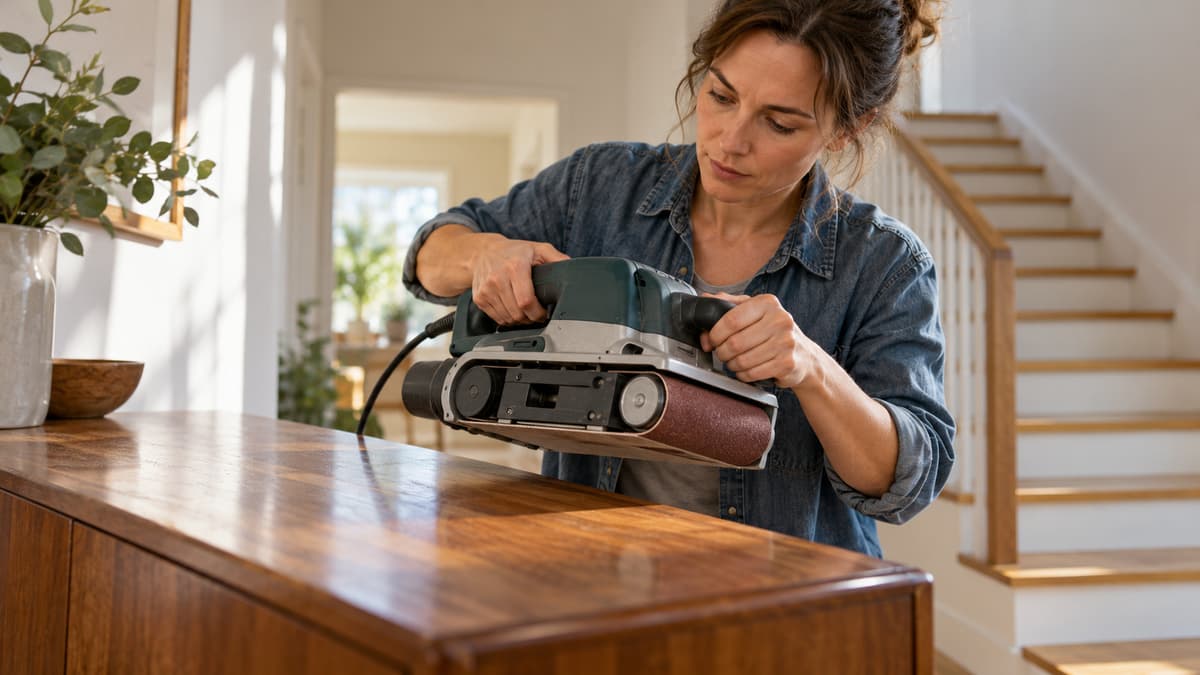
A belt digs veneer, a finished top and a staircase that needed a lighter sander or a hire drum.