Independent comparisons. We may earn from shop links. More info

How to install a security safe

Updated: October 2026

The cabinet is in the hall, and the useful question is what you do before anyone shuts the door. This is how to install a security safe so the first night does not end with the keys inside and a flat keypad, or with a light box that can be carried out. The [security safe comparison](/hub/safes-and-secure-storage/security-safe) is where the model was chosen. This page assumes it has arrived, or that you are checking the floor before you order. The Products Compared editorial team used the listings and UK fixing guidance, including Burton's notes and police.uk, on 16 October 2026. A qualifying purchase can earn a commission at no extra cost to you.

The cabinet is in the hall, and the useful question is what you do before anyone shuts the door.

Our top picks

Yale Yale YSV/200/DB2

Best value

Yale Yale YSV/200/DB2
8.6/10about £30.43
On this page

Set the code and test the key before the door shuts

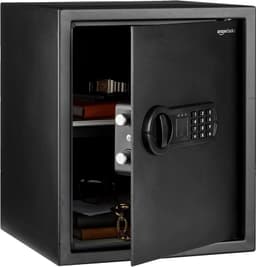
Work with the door open. Fit the batteries the listing includes, set the code, and open the lock again before you trust it. Both Yale safes in this set include four AA cells and two keys. Both Amazon Basics models need cells you buy separately. Try the override key while the door is still open, and the external pack if the model has one. NALULI and AltiKeep include a pack. The key-only WASJOYE has no keypad, so the test is the key itself. NALULI, AltiKeep, and Aprxuvot tell you not to lock the keys inside. A keypad with dead cells and the override key in the safe is a lockout, and forcing the door wrecks the lock. Put the keys, and any note of the code, outside the cabinet before the first real close. If several people will use a code, the digital safe or key safe page is the trade-off.

Bolt into concrete, brick, or a joist, not into a hollow wall

Burton's fixing guidelines say to use the supplied bolts only where they suit the surface. Concrete is the preferred fix. They say drill at least 100 mm into the concrete and below the screed. Timber wants the joists, not the floorboard alone. Brick is described with thunder bolts. Underfloor heating is the stop for a masonry bit: they point to an adhesive method if you are unsure where the pipes run. Mark through the holes in the base, drill a pilot, then a masonry bit matched to the bolt. A Yale owner tried a 10 mm bit and found it too big. The 100 mm figure is a depth into concrete, not into plasterboard. A hollow wall, or a floor you are not allowed to drill, is where you stop. If cover depends on a professional install, read the insurance page before you make a hole you cannot undo.

Where it sits

Police.uk tells householders not to use the bedroom, because burglars look there, to hide the safe, to bolt it to a wall or floor, and to ask the insurer. Other UK shops suggest a wardrobe. There is no single legal location for a domestic contents safe. Fire rating is a separate test. A wardrobe can conceal a cabinet and still be the first place someone searches. Choose a spot you can fix into something solid, not the obvious bedside. Concrete, brick, or a joist beats a plasterboard alcove. If the only surface is a hollow partition, pause.

When the keypad is dead

Independent Safes describes the usual path for a cheap electronic safe: the override key, which has to live outside. Some locks offer a 9 V emergency contact as well as a key. AltiKeep and NALULI include an external battery pack, so a flat internal pack is not the end if you still have that lead and a fresh cell. Amazon Basics in this set does not include batteries at all. The key-only WASJOYE has no battery path. If the keys are already inside and there is no external pack, call a locksmith rather than drilling the door. Call a fitter if the insurer named a professional install, if the wall is hollow, if you are fixing a firearm cabinet under a licence, or if you cannot tell where underfloor heating runs. Then prove the code and the key, bolt into a solid surface, and keep the keys outside.

Common questions

What should I do before I close the door the first time?
Fit the batteries the listing includes, or buy AA cells for an Amazon Basics model. Set the code and open it again. Try the override key, and the external pack if NALULI or AltiKeep supplied one. Close the door only after every way in has worked once.
Can I fix the safe to floorboards or plasterboard?
Floorboards alone and plasterboard are poor fixes. Burton's notes send timber fixings into the joists, brick towards thunder bolts, and concrete to a hole at least 100 mm deep, below the screed. If you cannot reach a joist or masonry, or the tenancy forbids drilling, stop. Supplied plugs do not make every surface suitable.
What drill size do I use?
Use the bit that matches the bolt in the kit, after a pilot hole, with tape for depth. A Yale reviewer tried 10 mm and found it too large. Burton's 100 mm figure is depth into concrete, not a width, and it does not apply to plasterboard.
How do I get in if the batteries die?
Use the override key you kept outside, or the external pack on AltiKeep and NALULI. Some locks also have a 9 V emergency contact. Amazon Basics cabinets in this set do not include cells. If the keys are inside and you have no external pack, call a locksmith. Do not force the door.
When should I stop and call a fitter or a locksmith?
Call a fitter if the insurer requires a professional install, if the wall is hollow, if underfloor heating is in the way, or if you are dealing with licensed firearm storage. Call a locksmith if the keys are locked inside and there is no external pack. Guessing at pipes, or drilling a door to beat a forgotten PIN, is the expensive mistake.

Related pages

Sources

Public UK sources for domestic safe grades, fire tests, and firearms storage. Listings checked on 16 October 2026. Prices on amazon.co.uk move.

  1. Secured by Design, domestic home safes (retrieved 16 October 2026)
  2. Sold Secure ratings (retrieved 16 October 2026)
  3. Sold Secure approved product catalogue 2025 (retrieved 16 October 2026)
  4. Lock & Key, safe ratings and insurance (retrieved 16 October 2026)
  5. De Raat, certifications (retrieved 16 October 2026)
  6. NFU Mutual, home safe security (retrieved 16 October 2026)
  7. Home Office Firearms Security Handbook 2020 (retrieved 16 October 2026)
  8. Burton, S2 home safe fixing note (retrieved 16 October 2026)