Do I need title deeds UK: what the register proves
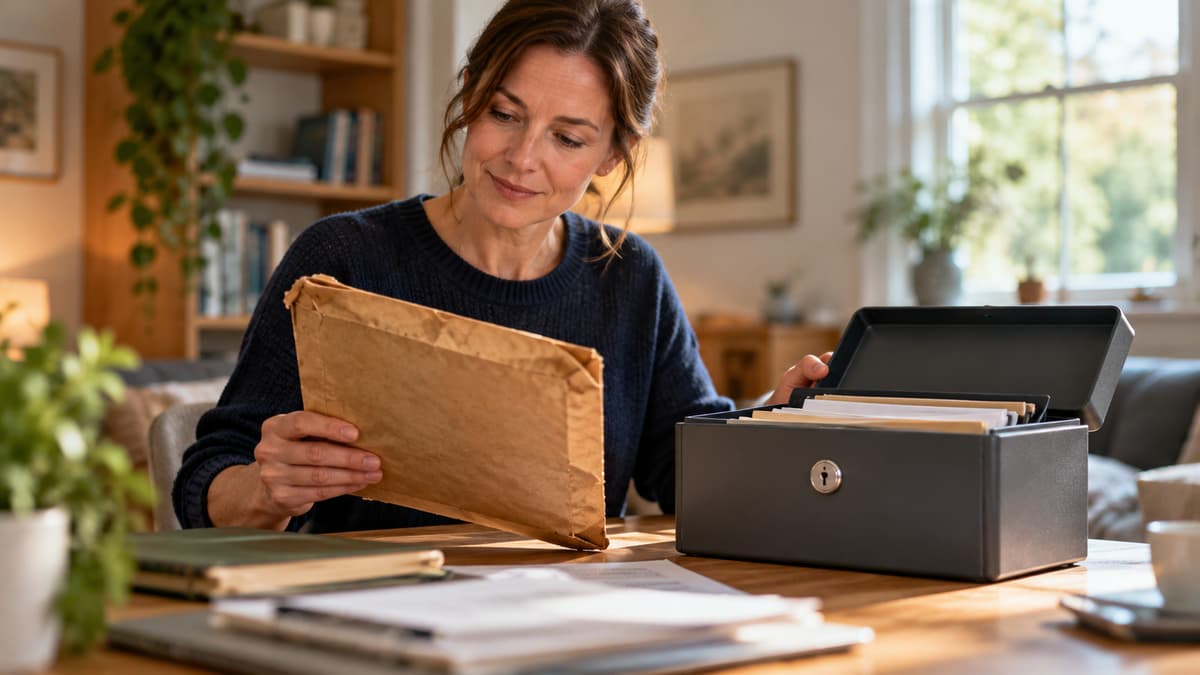
Do I need title deeds UK for a registered house? In England and Wales the register is the record. Old deeds can still hold boundary and history detail.
On this page

The brown envelope has sat in the loft since you bought the house, and the box in your basket is sold as storage for the deeds. If you are asking do I need title deeds UK, start with the title you actually have. For a registered house in England and Wales, HM Land Registry’s register is the record. The envelope earns a shelf when it holds a plan, a boundary note, or history the register does not repeat in full.
You might be remortgaging, clearing a loan, or picturing a fire in the roof. An official copy of the register is what GOV.UK treats as proof of a registered title. The loft bundle is the older pile.
We read HM Land Registry’s deeds blog of 19 February 2018, its 16 July 2024 note on original deeds for first registration, and the GOV.UK pages on searching the register and on copies of deeds, in October 2026. We set those beside the amazon.co.uk listing for the Burg-Wächter FP 22 K. We did not inspect your title or fire-test a box. A qualifying purchase through our links can earn us a commission at no extra cost to you.
In short
For a registered title in England and Wales, HM Land Registry’s register is the record of ownership, and an official copy is the proof GOV.UK tells you to order. Keep old deeds when they add boundary and history detail. Unregistered land still needs the paper bundle, and a document box only stores the papers you choose to keep.
What the register is for
A registered title is one HM Land Registry already holds. The 2018 deeds blog states the point plainly: for that title, the register is the record. The original conveyance has finished the job it did on the day the title was registered. When a buyer’s solicitor, a lender, or a court wants evidence, put an official copy of the register in front of them.
GOV.UK separates that official copy from a file you download while searching. The download is for reading the title. The official copy is the one the same guidance treats as proof, so order it when the other person can refuse a printout.
The old bundle still has a narrower job. HM Land Registry tells owners to keep deeds for boundary and history detail the register does not set out in full. A filed plan and a faded plan in the envelope can disagree when you argue about a fence. This split is England and Wales. Scotland and Northern Ireland have their own registers, so use the guidance for the register that holds the house. If you need to prove a registered title next month, order an official copy before you compare locks.
When the paper bundle still matters
Keep the old deeds if they say something the register skates over. The 2018 blog treats that extra detail, often a boundary or an old plan, as the reason to hold on to them.
Unregistered land is the harder case. The same note says unregistered land still needs the deeds, because no register entry does their work. If a solicitor has told you the title was never registered, the envelope is the working record, and a lost bundle is a lost chain of ownership. Store those deeds as papers you cannot easily replace, and let a conveyancer see them before you send them on.
First registration has its own date. On 16 July 2024 HM Land Registry said it would need the original deeds for first-registration applications after 1 October 2024. That note covers the step that puts unregistered land onto the register for the first time. It leaves later dealings with a title that is already registered on the existing record. If you are about to apply, ask your solicitor whether the originals you hold are the ones that application requires.
Search the register on GOV.UK and see whether a title comes back. A hit means an official copy for proof, and the old bundle for extra detail. No hit, together with advice that the land was never registered, means the paper deeds are still the file that matters. The print from that search is for reading.
Official copies and a download
GOV.UK’s page on searching the register draws a line around the file you save. A downloaded copy is not proof of ownership. A buyer or a lender can still ask for the document the guidance names as proof. That document is an official copy, which you order.
Official copies are copies of the register. Copies of the old deeds are a different paper. GOV.UK’s page on copies of deeds says copies of deeds cannot prove ownership. A scan of a 1974 conveyance, a photocopy a lender once sent, or a photograph of the loft envelope sits in that second group. Those sheets help you read the older story, while an official copy of a registered title is still a separate order.
Match the sheet to the question. For the named proprietor and any charge still showing, order an official copy and read that. For the place a 1960s plan put the hedge, look in the old bundle if you still have it. GOV.UK prices that copy on the day you order, so the fee stays on that screen. If the land is unregistered, you are back with the original deeds, and a photocopy of the old conveyance remains a reading copy.
After the mortgage is paid off
Paying off the mortgage sends a lot of people back to the loft. The loan ending can feel as if the papers should come home and become the title. For a house already registered in England and Wales, HM Land Registry’s register remains the record whether or not you still owe the lender. Proof is an official copy of the register.
Any deeds the lender stored are a separate conversation. Some owners receive a bundle when the charge ends. Others are told the papers were never held, or were destroyed under a retention rule. Ask the lender, in writing, what they hold and what they will send. If you need to prove the title this month, order the official copy while you wait.
A charge on the register is its own line. When you redeem, you want that line to show the charge has gone, through the lender and HM Land Registry. A conveyance placed in a new box leaves the entry as it is. If the official copy still shows the charge after the date you were promised, chase the lender with that copy, and store the sheets that add boundary or history detail.
A document safe for deeds you still hold
A fire box is optional storage for papers you have decided to keep. On a registered title, HM Land Registry and your lender read the register. Buy a box when those papers are worth protecting from fire, water, or a clear-out.
A Burg-Wächter FP 22 K is one option in our set. On amazon.co.uk it is about £42.00, with 5.6 litres, two keys, and a stated 30 minutes up to 1,093°C. The listing shows 4.4 from 1,548 reviews and sets water resistance to not water resistant. The bullets say it will fit documents up to A4, while reviews often say a flat sheet curls and a folder does not fit.
Measure the bundle, folder included, before you treat this model as its home. At about 9 kg, with floor anchoring for screws up to 6 mm that the listing does not include, a loose box can still be carried away. A stated fire time is a claim about heat, and any cash figure an insurer might accept stays separate.
If the loss you have in mind is fire, read the fire lines on a fireproof safe comparison. If the loss is someone walking out with the box, look at weight and fixing on a safe comparison. The Burg-Wächter safe page sets the FP 22 K beside the Favor cupboards. Unregistered deeds in that box may be the file you cannot replace.
Common questions
Do I need the paper deeds to prove I own a registered house?
Should I still keep the old bundle?
What if the land was never registered?
Are downloaded copies proof of ownership?
Does this apply in Scotland?
Will a document box take a thick deed pack?
Is a fire box the same as a burglary safe for those papers?
Do I need paper deeds if the mortgage is paid off?

Peter F. is the editor for DIY & tools at productscompared.co.uk. Comparisons in this category are checked against amazon.co.uk listings, review evidence and public UK sources.
Related articles

Fireproof safe or security safe: two tests, one purchase
A fire test does not certify burglary resistance. Match the box to the loss you are trying to prevent before you pay.

How to bolt down a home safe: wall, floor, and a weak substrate
Bolts only hold in a sound wall or floor. A light document box that is not fixed can still leave with the papers inside.
Home insurance safe rating UK: cash versus the booklet
A maker’s cash line and the money limit in your contents policy are different figures. The schedule is the one a claim follows.