Cash limit home insurance UK: what your schedule pays

A cash limit home insurance UK is the money line on your schedule. TSB states £750 and Haven £500 in these booklets. A safe rating leaves that sum unchanged.
On this page

You counted the notes in the drawer, bought a small safe, and assumed the insurer would now pay for whatever was inside. A cash limit home insurance UK is the personal-money figure on your own contents schedule, and it stays there until the insurer changes it. TSB’s home insurance summary of cover puts personal money in the home at £750. Haven’s home booklet puts money in the home at £500 on the limit table used here.
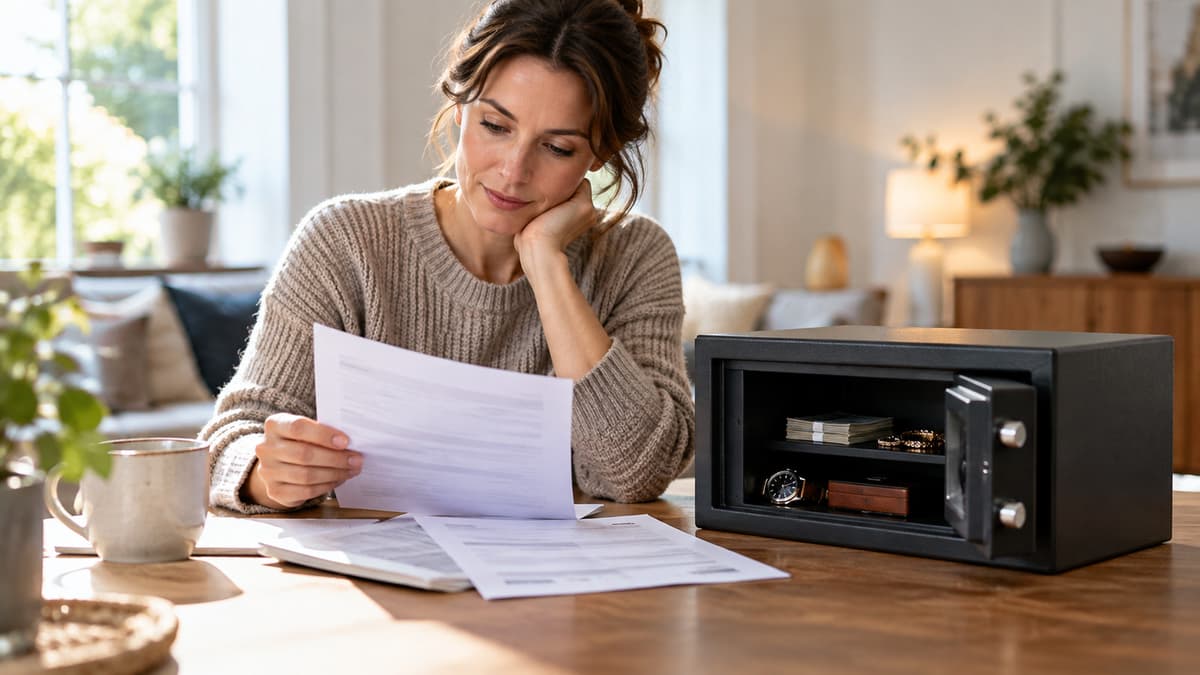
The safe is a second conversation. De Raat’s insurance-rating note treats a box’s cash bands as separate from the contents money cap. Howden warns that an unfixed safe you have only hidden can be picked up and carried out. Ordering steel changes where the notes sit. The schedule sum stays where you found it.
Products Compared read the TSB summary of cover, Haven’s home booklet limit table, Allianz’s cover FAQ, De Raat’s insurance-rating note, Howden’s note on jewellery in a safe, and Ace Safes’ retailer cash table, in October 2026. We did not test a safe in a lab, and we did not obtain a quote on your behalf. A qualifying purchase through our links can earn us a commission at no extra cost to you.
In short
There is no single cash limit home insurance UK. On the documents used here, TSB states £750 for personal money in the home and Haven’s limit table states £500. A safe’s cash rating, including a shop’s one-to-ten table, is a separate promise, and Allianz’s online home product excludes business cash.
Where the money line sits
Contents insurance cash is a short line inside a much larger policy. Notes, coins, and often postage stamps or travel tickets sit on a line called personal money or money in the home. That line is the cash limit. Insurers print it because cash leaves in a pocket, and a claim handler cannot count what used to be in a tin.
You find the figure on the schedule, the page with your name, the address, and the sums that apply to this policy. A generic booklet can show a default, and an endorsement can change it after you asked for more cover. When the booklet and the schedule disagree, the schedule and the endorsement are what a claim follows.
Open the PDF and search for “money”, “cash”, and “personal money”. Write down the sum, whether it applies only at home or also while you are out, and whether a locked safe is a condition or only advice. Treating the overall contents sum as the allowance for notes makes a large contents figure look like a cash float. A smaller away-from-home line, where one exists, is what a float in the car uses.
Two booklets, two figures
TSB’s home insurance summary of cover states £750 for personal money in the home. That PDF is one insurer’s summary, and a poor stand-in for every other UK firm. Haven’s home policy booklet states £500 for money in the home on the limit table used here.
The gap on these two documents is £250. If you keep £700 in notes, the TSB line in that summary still has £50 of room, and the Haven line is already £200 over. Your insurer may sit under £500, between the two, or over £750. Allianz’s cover FAQ takes a third route and says money is covered up to the policy limit, which means your schedule, rather than a blended figure from two other firms.
Nothing in these sources sets a legal maximum for notes at home. You can hold more than the policy will pay, and the surplus is your loss if the notes are stolen or burnt, unless a higher personal money limit is already on the paperwork. After you switch insurer, read the new schedule in the week it arrives, because last year’s figure can have moved.
Cash in a safe is separate
A safe cash rating is the sum a maker, a test house, or a retailer attaches to a box. De Raat’s insurance-rating page treats those bands as a different promise from the contents money cap.
Ace Safes publishes a one-to-ten table as a shop guide. The £2,500 row on that table is absent from the De Raat table used here, so the two pages disagree. If you buy to the shop table and the underwriter uses another band, the claim follows the policy.
Cash in a safe cover, where a policy has it, is a condition you have to meet. Money above the ordinary line is covered only where the wording names a grade, a fixing, or both. With no such sentence, the safe is a precaution you chose and the personal money limit stays put. An unfixed box you have only hidden can still leave with the notes inside it.
The Burg-Wächter FP 22 K is a 5.6-litre key document box at £42.00, with a stated 30 minutes up to 1,093°C and 4.4 from 1,548 amazon.co.uk reviews. Reviewers treat it as a fire box for paper, and the listing prints no EN burglary grade, so the fire sentence leaves the money line untouched. A security safe fits when the insurer named a burglary grade, and a safe covers a lighter cabinet for passports. That price can suit a will, and it is a weak plan for a large cash float.
Jewellery and business cash
High-value jewellery often has its own limit, and sometimes its own safe condition. Haven’s booklet, in the wording read with that £500 money line, can require a locked safe for high-value jewellery. That sentence covers the jewellery. A watch and £400 of housekeeping in one cupboard can still face two different caps.
Specify items when the wording asks you to. A single-article limit can sit below the price of a ring. Name the item, the value, and whether it lives in the safe or goes out on your wrist. A safe condition for jewellery can be required for that claim while contents insurance cash stays on the smaller money line.
Business takings are a third pot. Allianz’s cover FAQ excludes business cash on that online home product, so a café float or a market stall’s takings can fall outside a household policy even in the same drawer as the rent money. Split the sums before you ask. £200 for food and fares is household money, and £600 from an evening stall may be business money. A theft of the whole £800 is two questions, and on that Allianz product the stall slice meets an exclusion while the household slice is tested against the money line alone.
What to ask before you keep more
Ask the insurer or the broker, in writing, before you hold more than the current line. Tell them the sum in notes, whether any of it is business cash, and what else shares the box. Name the safe model if you have one, and say whether it is fixed and to what. A call that ends with “a safe is sensible” has not changed the limit. You want the money-in-the-home figure, any higher figure that applies only inside a stated safe, the excess on that section, and the date the change starts.
The insurer is the party who changes the limit. A manufacturer’s cash line, Ace Safes’ one-to-ten table, and a bolted Burg-Wächter safe leave the contract as it stands. If the insurer agrees a higher sum, read the premium beside it. The rise can be refused, or it can cost more across a year than the extra notes are worth keeping at home.
Count the notes at renewal, and again if you are paid in cash, and write the figure next to the schedule line. £200 under a £500 line leaves room for a weekend. If you are over, move the difference the same week, because a count after a burglary only measures the loss. If you rent, say so in that email: a bolt requirement and a tenancy that forbids holes in the floor are still two unresolved conditions.
Common questions
Is there a legal maximum for cash at home?
Why do policies show £500 or £750?
Does buying a safe raise the cash limit?
What is the difference between money cover and a safe cash rating?
Are business takings included in home insurance?
Do I need to specify jewellery as well as cash?
Who can change the cash limit on my policy?

Peter F. is the editor for DIY & tools at productscompared.co.uk. Comparisons in this category are checked against amazon.co.uk listings, review evidence and public UK sources.
Related articles
Home insurance safe rating UK: cash versus the booklet
A maker’s cash line and an EN grade sit apart from the personal-money cap in your contents booklet.

How to bolt down a home safe
Bolts hold a light safe to a sound floor or wall. They leave the money line unchanged, and a weak wall can be the wrong place.

Fireproof safe or security safe: which job you need
A stated fire time does not certify burglary resistance. Match the test to the loss you are trying to cover.