Carrots on heavy clay: a stump root, not a long keeper

Heavy clay forks a long carrot root. A stump type finishes in a shallow tilth. Do not dig the bed into sand, and do not start with Autumn King.
On this page
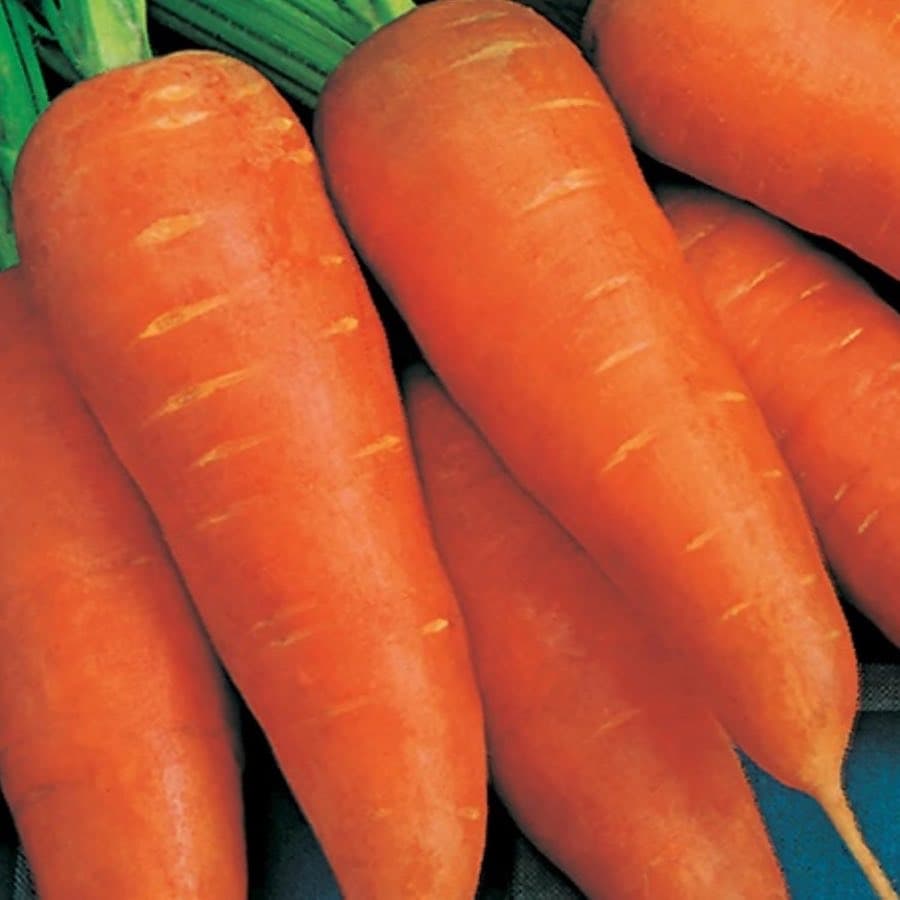
The fork stops early, the slice you turned is a smear, and last year's long carrots came up with two legs. Carrots in clay soil in the UK are a shape problem before they are a feed problem. The Royal Horticultural Society says long roots fork in stones, in shallow soil, and in clay, and that short-rooted types cope better. A stump packet is the practical switch. Digging the bed into sand is not.
Products Compared grew no trial row on clay. Prices below are GBP from the 15 October 2026 amazon.co.uk listings in the carrot seed comparison. A qualifying purchase through our links can earn us a commission at no extra cost to you.
Clay forks long roots
A long root needs a clear run. Clay that pans, or that stays in lumps under a raked surface, stops the tip and the root branches. The same guide lists stones and shallow soil beside clay, so a flint in an otherwise workable bed does the same job as the pan. You can see the full set of causes on why carrot roots fork. This page is only the clay case, and the packet you open first.
Autumn King 2, at about £2.34, is the tapering maincrop in this set and the one sold for keeping. It is the wrong first packet for unimproved clay. A long keeper meets the same shallow tilth and forks. Storage comes after you have a straight root, which is the maincrop storage question, not the question of what to sow into a pan.
What short means in a catalogue
Short, here, means a stump, not a slogan. Meldon Chantenay Red Cored, B0B66PJ8R3, was £2.95 with 4.4 from 170 reviews. The seller calls it a stump of about 1.5 inches across in about 80 days. Those figures are the seller's lines, not a root we pulled. Reviewers describe sweet roots and, in one case, a late June sowing that still cropped. Others report no roots, five weeks with nothing showing, or goosefoot in the row. The 4.4 does not prove the stump beats clay. It is the shape that matches a shallow tilth, with its own empty rows.
Early Nantes, B09X4S1W15, at £3.10 with 4.3 from 267 reviews, is a blunt cylinder with a small core. The seller's line is about 2 inches across and 65–75 days. It is not the longest carrot in a catalogue, and it still wants a clear run. If your clay pans at about 15 cm, the stump finishes and the blunt root is the one that forks. Suttons says stump-rooted varieties need less depth, and that a fine tilth matters more than a sandy field. You do not have to turn the garden into sand before a short carrot will grow.
A raised bed or a pot when the clay stays wet
A raised bed helps when the fill is compost you can rake to a crumb. Heaping the same clay higher only lifts the pan. If water sits in the frame after rain, the roots are still in wet clay. Fill the depth the stump is sold for, and do not mix in fresh manure because the frame looks new.
A pot is the same idea on a slab or a balcony. Chantenay is the stump for a trough nearer 20 cm. Nantes needs a deeper pot, or you pull it young. Both Meldon listings say the seed suits pots, troughs, or beds. Neither listing prints that 20 cm depth. How deep the container should be is on how deep a pot carrots need. Use the pot when the garden clay stays wet. Do not use it as a claim that every carrot shares one depth.
Manure still forks roots in improved soil
Fresh manure forks both shapes. Suttons tells growers not to sow a Nantes type into freshly manured ground, and the same rich pocket splits a Chantenay. Digging last winter's muck into the clay in March does not become safe because the packet says stump. Bagged compost for a pot is not that muck. A heap you can still recognise as manure stays off the drill, including a soil improver that is mostly fresh dung.
A rich nitrogen feed can fork roots as well. Hold a high-nitrogen liquid off the carrot row while the roots are sizing. Improving the tilth means a crumb and fewer stones in the depth the root will use. It does not mean a sandy recipe, and it does not mean a feed mixed for leafy crops.
Stones stay in the job even after you switch packets. Clear the flints in the stump's shorter run. A stone under the tip still branches that root. You do not have to excavate the subsoil. You do have to clear the layer you are asking the root to occupy.
Where the variety choice continues
Sow Chantenay where the soil is shallow, stony, or heavy. Sow Nantes only where the tilth is deep, or where a deep pot stands in for it. A short Chantenay row in the clay and a Nantes row in a stone-free end is a sensible split. It is not a storage plan. The two packets, the review gaps, and the seller measurements sit on the Nantes or Chantenay page. Prices for the whole set of twelve are on the comparison.
Covering the seed is not the clay fix. Several listings say cover seed with about 3 cm. The Royal Horticultural Society figure is about 1 cm. Follow the RHS unless the paper packet in your hand says otherwise. Sowing depth is on how to sow carrot seeds. A deeper cover does not give a long root a way through a pan.
If the first long row forks, switch that ground to the stump rather than sowing the same keeper again. Choose Chantenay when you cannot offer a clear run of workable soil. Choose Autumn King when you can, and you want a root to keep. Clay does not become sand because a catalogue prefers sand. A fine tilth and a short root are the change this bed will actually take.
Common questions
Can carrots grow in clay?
Which shape forks less?
Should I add sand to the bed?
Is a raised bed easier?
Will Autumn King cope?
Do I still remove stones if I sow a stump variety?
Is fresh compost the same as fresh manure?
Can I just use a pot instead?

Products Compared publishes British-English buying guides based on amazon.co.uk listings and public UK sources. We do not run a lab and we do not invent test scores.
Related articles

Why carrot roots fork
Stones, fresh manure, and moved seedlings fork roots. Clay is one of those causes, not the only one.

How deep a pot carrots need
A pot is the other bed when the clay stays wet. Baby roots and long roots do not share one depth.

How to store maincrop carrots over winter
Autumn King is the keeper in this set. It is the wrong first packet for unimproved clay.