Independent comparisons. We may earn from shop links. More info

How to use a kitchen compost bin

Updated: 21 October 2026

Smell and fruit flies come back when a metal kitchen caddy sits too long or the charcoal filter is exhausted. This is how to use a kitchen compost bin as a holding pot: what goes in, when you empty it, how you wash coated steel, and what to try before you blame the metal. Which tin to buy is on the [metal compost bin comparison](/hub/raised-beds-greenhouses-and-compost/metal-compost-bin). Peter F. did not run a lab test. The routine follows Recycle Now, WRAP, and review patterns on these amazon.co.uk listings. A qualifying purchase can earn a commission at no extra cost to you.

Smell and fruit flies come back when a metal kitchen caddy sits too long or the charcoal filter is exhausted.

Our top picks

On this page

The daily loop

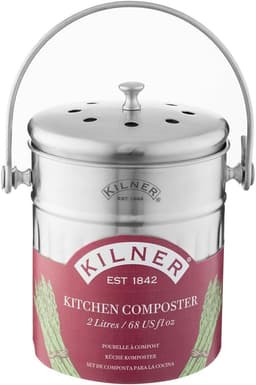
Use the caddy as a queue, not as a composter. Scrape peelings, coffee grounds, and crushed eggshells in loosely. Leave the lid shut. Do not pack the tin until the lid will not seat, and do not leave it open on a warm worktop. ENLOY’s UK notes say not to overfill a tin that looks larger in the photo than it is. A propped lid is how fruit flies find the scraps. A 2 litre Kilner fills faster than a 5 litre VeoHome. The small tin is a daily loop, sometimes twice on a cooking day. Once a day is a fair start for a 3 litre tin and one or two people, and you shorten it when the lid smells before you open it. That rhythm is a rule of thumb, not a manufacturer schedule. Which size to buy is on the metal compost bin buying guide.

Emptying to the right place

Empty the caddy into the bin that is allowed to take what you put in it. Raw peelings can go to a home heap. Cooked food, meat, and fish stay out of that heap, on Recycle Now’s list, even from a stainless tin. A council food caddy often accepts those foods. Norwich is one example. Your council’s page is the one that counts. The split is on food waste caddy or compost bin. Carry it with the handle the listing gave you. The duck-egg KitchenCraft has a swing handle. Harbour has side handles on the outer metal and a plastic inner bucket with no handle, which UK reviews say is awkward once it is full. If the liner sticks, loosen it at the sink, then tip. Do not bang the shell on the outdoor bin rim. A full bag that will not come out is a reason to empty earlier.

Washing metal and liners

Wash the tin when you empty it, not only when it smells. Rinse the residue and dry the metal before the lid goes back on. The duck-egg KitchenCraft bullets say hand wash only. Warm water and a soft cloth match the Candco care line. Skip the dishwasher for coated tins. The cream KitchenCraft page has a dishwasher line inside a bullet block about a sponge flan tray. That sentence is not a care instruction for the caddy. Stainless still wants a dry rim. Kilner’s bullets say wipe with a damp cloth. Leave the lid off until the inside is dry. A filter that goes back onto a wet lid works less well and can mark the steel around the vent.

Flies and smell

Fruit flies mean the tin has been a food source for long enough, not that metal has failed. Empty sooner, wash, dry, and do not overfill. Bury fresh scraps in the outdoor heap rather than leaving them on top. If you only have a council bin, get the scraps into that closed caddy the same day the flies appear. Check the filter second. Kilner includes two carbon filters. VeoHome and the duck-egg KitchenCraft include a charcoal or carbon filter. Those filters are consumables. When smell returns with the lid shut, replace the filter rather than buying another tin. UK themes still include flies despite a filter and a filter called weak. There is no tested interval in months on these amazon.co.uk pages.

When the hardware annoys you

A tight lid is a feature until it is a fight. UK reviews of KitchenCraft, Kilner, and Harbour include awkward lids. Sit the tin on a flat counter and empty it before the contents press the lid up. Forcing a lid onto an overfilled 2 litre Kilner blames the hinge for a size you already knew was small. An inner bucket that will not come out is the Harbour complaint. UK reviews say the plastic tub is hard to extract and has no handle. Empty more often so it does not jam, or wash the metal and stop using the liner. XLSBZ reviews mention clasps that are very tight and wood that opened up. Tight hardware on a seven-review listing is a reason to contact the seller under the Consumer Rights Act 2015 if the goods do not match a usable bin.

Common questions

How often should I empty the caddy?
Empty a 2 litre tin every day, and a 3 litre tin every day if two people are cooking. Empty sooner when the lid smells or you see fruit flies. A 5 litre tin can wait longer, and it should not wait until the scraps are wet and packed. This is a household rhythm, not a time printed on these listings.
Do I need a liner bag?
You need one only if your council or your own routine asks for it. The metal tin works without a bag. Harbour’s plastic inner bucket is a liner of a different sort, and it has no handle. Compostable bags are a local rule. A bag left in place for days is a common reason flies stay after you thought the lid was enough.
When do I replace the charcoal filter?
Replace it when smell comes back with the lid shut and the tin has been emptied and washed. Kilner ships two carbon filters. Other listings include one charcoal filter or none. Nobody in this set has a lab date for filter life. If the listing did not include a filter, buying one later only helps if the lid has a place to put it.
How do I wash coated steel?
Hand wash with warm water and a soft cloth, then dry it, which matches the duck-egg KitchenCraft hand wash only line. Do not put that coated caddy in the dishwasher. Do not follow dishwasher wording on the cream KitchenCraft ASIN while those bullets still describe a sponge tin. Dry the rim before the lid goes on, because rust reviews cluster where the coating stays wet.
Why do I still have fruit flies?
The tin has held fruit or peelings long enough for flies to breed, or a vent is open without a fresh filter. Empty it, wash and dry it, shut the lid, and replace the filter if there is one. Do not leave the lid ajar. If the scraps are meat, move them to the council food bin the same day, if your council takes them, rather than hoping a new filter will hide them.

Related pages

Sources

Public UK sources from the research digest, last checked on 19 October 2026.

  1. GOV.UK — Simpler recycling: household recycling in England (retrieved 19.10.2026)
  2. legislation.gov.uk — Environment Act 2021 commencement regulations 2024, regulation 6 (retrieved 19.10.2026)
  3. WRAP — Home composting (retrieved 19.10.2026)
  4. Recycle Now — How to set up home composting (retrieved 19.10.2026)
  5. RHS — Composting for schools (retrieved 19.10.2026)
  6. RHS — Rats in the garden (retrieved 19.10.2026)
  7. Test Valley Borough Council — Rats and compost (retrieved 19.10.2026)
  8. Norwich City Council — Food waste caddy (retrieved 19.10.2026)