Independent comparisons. We may earn from shop links. More info

How to put up a lean-to greenhouse without a twist

Updated: 21 October 2026

The frame is in the garden, the forecast is breezy, and the temptation is to peg it down before it is square. If you put up a lean-to greenhouse that way, the cover twists, the panels refuse the channels, and the anchors lock the mistake in. This page is the sequence for the four kits in the [lean-to greenhouse comparison](/hub/raised-beds-greenhouses-and-compost/lean-to-greenhouse): two VOUNOT polyethylene covers, the Ohuhu cover with a weight pocket, and the Outsunny polycarbonate house. Peter F. used the listing files and public UK manuals. A build was not timed. A qualifying purchase can earn a commission at no extra cost to you. None of the four raw files prints a wind speed, so the supplied pegs are not a design rating.

The frame is in the garden, the forecast is breezy, and the temptation is to peg it down before it is square.

Our top picks

On this page

Base before frame

GardenSite's greenhouse FAQ says you do not stand a house on soil or turf. Set slabs, paving, or a level timber frame first, and check it with a spirit level along both directions and across the diagonals. A base that is 15 mm out over two metres will show up as a door that will not close, or as a polycarbonate sheet that will not sit in its channel. Square the frame on that base before you pull a cover on or glaze a panel. Robinsons' lean-to manual, which is not the Outsunny drawing, tells you to anchor only after the house is glazed and square, with two people, and not in high wind. A Simplicity-style manual makes the same point in another way: if you stop overnight, weigh the half-built frame down rather than leaving it to catch the wind. Do not copy hole spacing from those glass-house manuals onto the Ohuhu tubes. Do not drill the wall until the frame is square against it. If you anchor a crooked house, every later zip and every later panel fights you.

Cover kits and the Outsunny panels

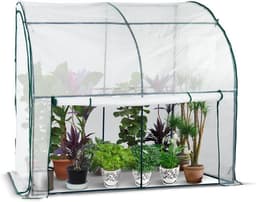
The VOUNOT and Ohuhu kits are covers on a metal frame, with stakes, and in the Ohuhu's case ropes and a weight bag. Stake into soil only after the cover is on and the frame is square. On paving, the plastic pegs have nothing to bite. Reviewers of portable covers find that guy ropes slacken and the skin then flaps off the ties. That is a grower's note, not a laboratory result, and it matches the limit of these files: no Beaufort number is printed. The Ohuhu pocket is meant for soil, stones, or bottles. Reviewers say it fills with rain and has no drainage holes, so empty it after a wet day or the ballast becomes a water butt on the skirt. VOUNOT reviews in the shared file describe a zip that leaves the cover. Fit the zip closed and look at the stitching before the first wind, because a failed zip is a failed door. The Outsunny is a different day. Assembly is required. Reviews describe image-only instructions, mis-numbered pieces, and often two people for most of a day. Check the polycarbonate film before you lock a sheet. If the film is missing, or if it is on both sides, you cannot tell the UV face from the listing. Some buyers siliconed panels and one drilled extra holes in the door rail, which means the drawing and the rail did not agree in that parcel. Do not treat silicone as the designed fixing unless your own instructions say so. The skin itself is polycarbonate or polythene.

After it is up

Open something on a warm day. The Royal Horticultural Society wants roof ventilation and warns that small houses overheat above about 27°C. Only the Outsunny lists a roof vent. The PE kits list mesh. Mesh will not dump heat the way a propped vent does, so on a south wall you may need to open the zip door as well, which is a security and a weather compromise. Clear snow off the roof. No snow load is printed for these four, so do not invent a kilogram figure. A light PE roof that sheds a shower can still hold a wet slab of snow until a tube bends. Check guy ropes after the first windy night. Slack ropes let the cover move, and a moving cover wears the zip. If you have bolted the frame into the house wall, stop treating it as a freestanding cover and read the planning page before you assume it is still an outbuilding. Rain gutters are named on the Outsunny. The PE listings do not name a gutter, so water off those roofs can run down the wall you just fixed to.

When you stop

Stop before you drill if you cannot say what the wall is. A cavity wall, a thin fence panel, and rendered block are not the same fixing. Greenhouse Stores describe timber packers for an uneven wall, with a 50 mm note that is their method. If the gap is larger than a simple packer, or the frame will not sit square, a fitter should take the wall, not a longer screw. Stop if the base will not level. Packing one corner with a loose slate and then glazing locks the twist into the panels. Stop if the job becomes excavation near a neighbour. The Party Wall etc. Act 1996 is separate from planning permission, and a concrete footing on the boundary is a different case from a slab kit that does not dig. Whether bolting the frame to the house changes the English test is lean-to greenhouse planning permission. A listed building, a flat, or a bolt pattern that attaches the greenhouse to the house is also the point where you ask the council or a fitter rather than finishing the holes. Two people and a calm day are the normal kit. A wall you are not allowed to drill is not a DIY step.

Common questions

Do I build the base first?
Yes. Level and square the base, then the frame, then the cover or the panels, and anchor last. GardenSite says you do not stand a greenhouse on soil or turf. If you peg a crooked frame, the zip and the door fight the error. Check both diagonals before the first stake goes in.
Can I peg a cover into paving?
The supplied stakes need soil. On slabs they spin or bend, and they are not a wind rating in any of these four files. Use a base you can bolt to, or weights that the listing actually names, such as the Ohuhu bag filled with bottles rather than left to collect rain. Ropes still need checking after wind, because they slacken.
Do I need two people?
Plan on two. The Ohuhu reviews often describe a two-person assembly. Outsunny reviews often describe most of a day with two people. A glass-house manual such as Robinsons also says two people, and not in high wind. One person can sort the parts. One person should not glaze or pull the cover on in a breeze.
What if the polycarbonate film is on both sides?
Stop and identify the UV face before the sheet is fixed. Outsunny reviewers found film missing or on both sides, so the protected face was unclear. Peeling the wrong side, or leaving film on, is a common way to haze a panel. If the instructions do not show the mark, ask the seller before you silicone anything in.
Should I leave it up in a named storm?
These files do not state a wind speed you can compare with a forecast. One Outsunny reviewer reported about 45 mph on the first day behind a wall about 7 feet high. That is one garden. Supplied pegs and a wind-resistant bullet are not a storm rating. If the ropes are slack or the base is not anchored, take the cover off or weigh the frame before the gust, rather than hoping the zip holds.
The weight pocket is full of water. Is that in the reviews?
Yes. More than one Ohuhu review says the outer flap collects rain, and one says it has no drainage holes. Empty it. Water is not the ballast the bullets describe. Soil, stones, or bottles are. A pocket left full adds weight in the wrong place and can pull the skirt.

Related pages

Sources

Public UK sources named below. amazon.co.uk prices, stars and review counts on these listings were read on 19 October 2026. Page updated 21 October 2026.

  1. Town and Country Planning (General Permitted Development) (England) Order 2015, Class E (retrieved 2026-10-19)
  2. GOV.UK permitted development rights for householders, technical guidance (retrieved 2026-10-19)
  3. Planning Portal outbuildings guide (retrieved 2026-10-19)
  4. Party Wall etc. Act 1996, section 6 (retrieved 2026-10-19)
  5. Consumer Rights Act 2015, section 9 (retrieved 2026-10-19)
  6. RHS ventilation and shading in greenhouses (retrieved 2026-10-19)
  7. Growsave, alternative greenhouse materials (retrieved 2026-10-19)
  8. Better Growing Spaces, lean-to greenhouse buying guide (retrieved 2026-10-19)
  9. amazon.co.uk lean-to greenhouse listings captured 19 October 2026 (retrieved 2026-10-19)