Needlestick gloves vs puncture resistant
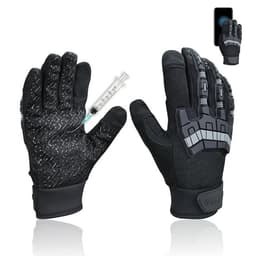
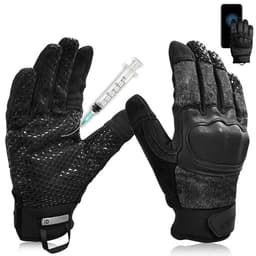
You are choosing gloves because a syringe might be in the waste, or because an EN 388 line looks high and you have decided it must cover needles. Needlestick gloves vs puncture resistant is the difference between two probes. One is a blunt, nail-like stylus on a palm sample. The other is a hypodermic. The newton numbers sit on different scales, and a strong blunt result does not certify the needle. The eight pairs are on the [puncture resistant gloves comparison](/hub/protective-clothing/puncture-resistant-gloves). We used amazon.co.uk listings and public UK guidance. We did not run a lab test. A purchase through our links can earn a commission at no extra cost to you.
You are choosing gloves because a syringe might be in the waste, or because an EN 388 line looks high and you have decided it must cover needles.
You are choosing gloves because a syringe might be in the waste, or because an EN 388 line looks high and you have decided it must cover needles. Needlestick gloves vs puncture resistant is the difference between two probes. One is a blunt, nail-like stylus on a palm sample. The other is a hypodermic. The newton numbers sit on different scales, and a strong blunt result does not certify the needle. The eight pairs are on the puncture resistant gloves comparison. We used amazon.co.uk listings and public UK guidance. We did not run a lab test. A purchase through our links can earn a commission at no extra cost to you.
Our top picks
| Badge | Product | EN 388 blunt line | ASTM F2878 on the page | Where the claim stops | Note | Price | Offer |
|---|---|---|---|---|---|---|---|
| Best overall |  Intra-FIT Intra-FIT impact needle gloves, size L | 4X22FP. P is impact, not puncture | ASTM F2878-10 level 3 | Yellow palm fabric. Four reviews, no text | 4.9 | about £30.99 | View offer |
 Intra-FIT Intra-FIT needle gloves, size M | 2X22F. Puncture digit 2 | ASTM F2878-10 level 3 | Palm, including thumb and index crotch | 8.2 | about £28.99 | View offer | |
| Alternative |  Intra-FIT Intra-FIT gusset-noted needle gloves, size L | Palm 4X32F. Puncture digit 2 | Palm 8.15 N. Fingers 10.03 N | Gussets stated as not needle-resistant | 7.6 | about £34.99 | View offer |

On this page
Two probes, two scales
Why a modest EN 388 score can still name a needle level
Where the fabric stops
What you must not conclude
Common questions
Does puncture resistant mean needlestick resistant?
Why is EN 388 level 4 about 150 N and ASTM level 5 about 10 N?
What do 2X22F and ASTM level 3 mean together?
Why do the finger gussets matter?
What should you do if you already know there are needles on site?
Related pages
Sources
Public UK sources for puncture, PPE duties, and marking. Listing prices, stars, and review counts are the amazon.co.uk figures in this set, shelf date 19 October 2026. Retrieved 21 October 2026.
- HSE — Selecting protective gloves (retrieved 21 October 2026)
- HSE — PPE overview (retrieved 21 October 2026)
- HSE — PPE regulations 2022 (retrieved 21 October 2026)
- HSE — Product safety and supply of PPE (retrieved 21 October 2026)
- GOV.UK — PPE enforcement regulations 2018 (retrieved 21 October 2026)
- uvex UK — Understanding puncture-resistant safety gloves (retrieved 21 October 2026)
- Traffi — EN 388 revision guide (retrieved 21 October 2026)
- SafetyGloves.co.uk — Puncture versus needlestick resistance (retrieved 21 October 2026)