Puncture resistant gloves buying guide
You are in a UK shed with a torn rose glove and an amazon.co.uk title that says thorn proof, level 5, or puncture resistant. Those words are not the same purchase. This puncture resistant gloves buying guide is the order of checks we use before any brand: name the point that will hit the skin, read the code the listing actually prints, then see where the fabric stops. Prices, scores, and the eight rows sit on the [puncture resistant gloves comparison](/hub/protective-clothing/puncture-resistant-gloves). Shelf prices are from 19 October 2026. A purchase through our amazon.co.uk links can earn a commission at no extra cost to you.
You are in a UK shed with a torn rose glove and an amazon.co.uk title that says thorn proof, level 5, or puncture resistant. Those words are not the same purchase.
You are in a UK shed with a torn rose glove and an amazon.co.uk title that says thorn proof, level 5, or puncture resistant. Those words are not the same purchase. This puncture resistant gloves buying guide is the order of checks we use before any brand: name the point that will hit the skin, read the code the listing actually prints, then see where the fabric stops. Prices, scores, and the eight rows sit on the puncture resistant gloves comparison. Shelf prices are from 19 October 2026. A purchase through our amazon.co.uk links can earn a commission at no extra cost to you.
Our top picks
| Badge | Product | EN 388 on the listing | Needle test | Coverage the page states | Note | Price | Offer |
|---|---|---|---|---|---|---|---|
| Best overall |  Safta Safta leather gloves with Kevlar lining, M | No code printed | None printed | Palm, back, and fingers. Kevlar lining | 5.5 | about £16.99 | View offer |
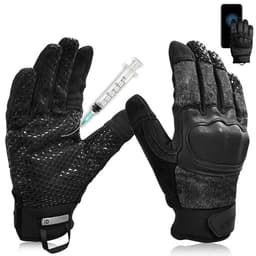
 Intra-FIT Intra-FIT needle gloves, size M | 2X22F | ASTM F2878-10 level 3 | Palm, including thumb and index crotch | 8.2 | about £28.99 | View offer | |
| Alternative |  Intra-FIT Intra-FIT gusset-noted needle gloves, size L | Palm 4X32F. Back 3X44F | Palm 8.15 N. Fingers 10.03 N | Palm and fingers. Gussets excluded | 7.6 | about £34.99 | View offer |


On this page
Name the point before the brand
Read a code or write down that there is none
Coverage, size, and the care line
If this is work, not a garden
Common questions
What should you check first, the plant or the standard?
What does the fourth character of EN 388 mean?
Does level 5 or ANSI A9 mean puncture level 5?
When is an unmarked leather glove still a reasonable buy?
Which care line applies, machine wash or hand wash?
Related pages
Sources
Public UK sources for puncture, PPE duties, and marking. Listing prices, stars, and review counts are the amazon.co.uk figures in this set, shelf date 19 October 2026. Retrieved 21 October 2026.
- HSE — Selecting protective gloves (retrieved 21 October 2026)
- HSE — PPE overview (retrieved 21 October 2026)
- HSE — PPE regulations 2022 (retrieved 21 October 2026)
- HSE — Product safety and supply of PPE (retrieved 21 October 2026)
- GOV.UK — PPE enforcement regulations 2018 (retrieved 21 October 2026)
- uvex UK — Understanding puncture-resistant safety gloves (retrieved 21 October 2026)
- Traffi — EN 388 revision guide (retrieved 21 October 2026)
- SafetyGloves.co.uk — Puncture versus needlestick resistance (retrieved 21 October 2026)