Independent comparisons. We may earn from shop links. More info

Coping saw for skirting

Updated: 21 October 2026

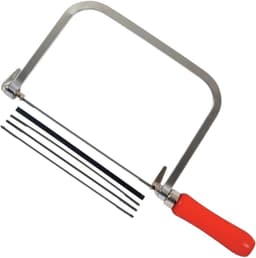
The internal corner looks fine until the boards go up, and then the mitre opens because the wall is not square. A coping saw for skirting copies the profile of the first board onto the second, so the joint can close on a wall that is out by a few degrees. The sequence follows UK guides from BuildWiz, Homebuilding and Wickes, and the blade choice uses the sets on our [fret saw set comparison](/hub/power-saws/fret-saw-set). Peter F. did not scribe a room as a lab test. A qualifying purchase can earn a commission at no extra cost to you. You want a pin-end coping blade around 16–20 teeth per inch, a shallow frame, and a back-cut so the face of the moulding meets. A deep fret saw is a different purchase.

The internal corner looks fine until the boards go up, and then the mitre opens because the wall is not square.

Our top picks

On this page

Why the internal corner is coped

A 45° mitre assumes two walls meet at 90°. In a lot of UK houses they do not. The gap shows at the top of the skirting or along the face, and filler cracks out of it later. Coping keeps the first board square to the wall, with its end cut at 90°. You mitre the second board only to reveal the profile, then saw that profile away so it nests over the first board. The joint is wood against wood on the face, and the back of the cut can be hollow. Homebuilding and BuildWiz both treat a coping saw as the tool once the profile is more than a plain rectangle. Wickes tells you to cope the waste off the mitre and to keep the pencil line. Architrave around a door uses the same idea on a smaller moulding. Cornice can too, until the material is ornate plaster, which a blade will chip. If you have never scribed a corner, do one offcut before you cut a 2.4 m length of prefinished board. How the frame differs from a fret bow is on the fret saw vs coping saw page, and you should settle that before you mitre the good piece. External corners stay as mitres. Coping is the internal joint. Trying to cope an outside corner removes the wrong face and leaves a feather that breaks off.

The cut, in order

Fix the first board. Its end at the internal corner is a square cut, tight to the plaster. On the second board, set a mitre saw or a mitre box to 45° so the cut reveals the face profile, with the long point on the face. You are not leaving that mitre as the joint. You are using it as a template. Pencil around the revealed edge so the line is obvious if the saw dust fills the grain. On white MDF the pencil needs to stay on the arris you intend to keep. Take the flat, unmoulded part of the board off with a panel saw or a tenon saw, square down from the top of the profile to the bottom edge. The coping saw is a poor tool for that long straight waste. BuildWiz separates the two saws for that reason. Then fit the coping blade and follow the pencil line around the moulding. Wickes’s point is to angle the saw so you keep the line. You are cutting from the face toward the back. The back-cut is about 20–30° off square, so the face edge meets the first board and the back of the cut clears the plaster. BuildWiz and Homebuilding both give that range. It is their guide, not an angle we measured on a digital finder. If you cut square, the back of a slightly bowed board holds the face open. If you undercut past that range on a thin MDF nose, you can leave a fragile point. The stroke itself, teeth toward the handle, is the short version of our how to use a fret saw page. Turn the blade in the pins if the frame hits the board.

Blade and frame for skirting

BuildWiz’s rule of thumb is about 14–15 TPI for softwood skirting and about 18–20 TPI for MDF and tight mouldings. A coarse blade tears the painted face. A very fine blade snaps or crawls. Among the sets we kept, Avit is the one that prints wood blades in that area: two at 16 TPI and one at 20 TPI, plus 24 and 28 TPI metal blades, at £13.84. A UK review mentions 18 mm MDF skirting. That is one job in the file, not a guarantee the next board will behave. It is still the top pick here for this joint because you can see the tooth count before you buy. The frame is a shallow coping saw with wing adjusters through 360°. Hilka at £9.32 is the best value only if you accept that the listing does not state TPI and that one reviewer found four blades and none fitted. It is a 7 inch coping set, fine for light wood, weak as a specification for painted MDF. XMDROU at £7.59 was bought for coping skirting by one reviewer, in a file of 15 reviews. Another calls the blade twisty and says there is no tension screw, against a tension knob in the bullets. Use it only if the blade stays tight on a test cut. SULIVES at £7.25 has two UK reviews of a missing blade lock. MIPIACE’s 4, 6, 8 and 10 TPI blades are coarse for this MDF band. The Eclipse piercing blade is 32 TPI on a frame a reviewer put at about 8 cm. Neither belongs on the profile. The fret saw set buying guide compares those teeth without repeating the scribe.

Test the joint

Hold the coped board over the fixed board before you nail it. You are looking for the face to touch along the profile, with any gap hiding at the back where the undercut cleared the wall. A hairline on the face can come off with 120-grit paper wrapped on a short piece of dowel, which is BuildWiz’s way of reaching a concave curve without flattening it. Sand the high spot. Do not sand the whole nose round or the shadow line changes. If the gap is a millimetre or more at the top, the back-cut was too square, the first board is not tight to the wall, or the wall bows between the fixing points. Scribe again from a fresh mitre on an offcut before you shorten the good board twice. Filler can hide a hairline on a painted board. It will not hold a joint that never touched, and it looks obvious on a prefinished foil wrap. Check the board is the right way up. A torus profile coped upside down will never sit. Nail or grab adhesive comes after the dry fit. Adhesive behind a joint that still rocks will hold the gap open. If the floor is out and the top of the skirting has to stay level with the next run, that is a packing problem along the wall, not a saw problem.

When this is the wrong tool

A piercing saw will not cope skirting. The Eclipse 32 TPI blade is for thin metal and delicate work, and the short frame does not span a moulding the way a coping throat near 125 mm does. A deep fret kit such as the Pebaro, with a stand and a drill feature, is for patterns in thin sheet. Its UK listing does not state a throat, and the blade ends are not the pin-end coping blades you will buy again on the high street. A 285 mm bow is awkward against the wall. Plaster cornice with an ornate cast pattern is a joiner or a plasterer. A coping blade rides off the soft details and chips them. A whole house of prefinished boards, if you have never scribed one corner, is also the point to stop and get a chippy for the first room, then copy a joint that already closes. Structural cuts are not this saw. A long day cutting MDF is wood dust at work: HSE limits are 3 mg/m³ for hardwood and 5 mg/m³ for softwood over eight hours, and a few DIY copes are not the power-tool job those mask notes describe. If the lock was missing when the set arrived, return it under the Consumer Rights Act 2015 before you practise on the wall.

Common questions

Why cope instead of mitre both boards?
A mitre opens when the wall is not 90°. Coping lets the first board sit square and shapes the second board to that profile, so the face still meets. UK fitting guides from Wickes, Homebuilding and BuildWiz describe that for skirting and similar mouldings. External corners stay mitred. Filler on an open internal mitre cracks. The cope takes longer on the first corner and saves the joint on a bowed wall.
What angle is the back-cut?
About 20–30° off square, so the visible face meets and the back clears the plaster. BuildWiz and Homebuilding both give that range. We did not measure it on these saws. Too square and a bowed board holds the face open. Too steep on a thin MDF edge and the nose becomes fragile. The panel saw removes the flat waste first. The coping saw only follows the profile.
Which TPI for pine and which for MDF?
BuildWiz suggests about 14–15 TPI for softwood and about 18–20 TPI for MDF and tight mouldings. That is a rule of thumb, not a British Standard. Avit lists 16 and 20 TPI wood blades, so the 20 TPI blade is the closer match for MDF and the 16 TPI blade for pine. A 4 TPI blade tears paint. A 32 TPI piercing blade is too fine and too fragile for 18 mm board.
Can a fret saw or piercing saw do this?
Use a coping saw. A fret saw’s deep bow and plain-end blade are for patterns away from the edge of thin sheet. A piercing saw, such as the 32 TPI Eclipse frame at about 8 cm in one review, snaps on skirting and does not take pin-end coping blades. Pebaro’s kit is a fretsaw with a stand, not a skirting upgrade. If you already bought a deep frame, that is a different saw, not a different angle on the same mitre.
Which kept set states a suitable wood blade?
Avit, at £13.84, states two 16 TPI wood blades and one 20 TPI wood blade, with metal blades as well, and 4.4 from 1,612 reviews. One UK text mentions 18 mm MDF skirting. Hilka does not state TPI. XMDROU was used on skirting by one reviewer and called twisty by another. SULIVES reviews include a missing lock. The stated tooth count is why Avit is the set to open for this job.
What if the joint still shows a gap?
Dry-fit again. A hairline on the face can come back with 120-grit paper on a dowel, working the high spot only. A wider gap means the undercut was too square, the first board is proud of the wall, or the profile was coped from a poor pencil line. Cut a fresh mitre on an offcut and scribe again. Filler is for a painted hairline, not for a joint that does not touch. Check you have not mirrored the profile.
When should a chippy take over?
When the cornice is ornate plaster, when the run is a whole house of prefinished board and you have never closed a coped corner, or when the cut is structural rather than a moulding. One practice corner on an offcut is worth doing yourself. A missing blade lock, a piercing saw, or a coarse 4 TPI blade is a reason to change tool, not a reason to keep cutting the good length. Occupational MDF cutting belongs with extraction and a suitable mask.

Related pages

Sources

HSE, GOV.UK, legislation.gov.uk, BuildWiz, Homebuilding and Wonkee Donkee. Listing prices, stars and review counts are the amazon.co.uk figures for these seven ASINs. Shelf date 20 October 2026.

  1. HSE wood dust (retrieved 20 October 2026)
  2. HSE cutting and sanding wood (retrieved 20 October 2026)
  3. General Product Safety Regulations 2005 (retrieved 20 October 2026)
  4. Consumer Rights Act 2015 (retrieved 20 October 2026)
  5. Supply of Machinery (Safety) Regulations 2008 (retrieved 20 October 2026)
  6. BuildWiz coping saw (retrieved 20 October 2026)
  7. Homebuilding: what is a coping saw (retrieved 20 October 2026)
  8. Wonkee Donkee: coping, fret and piercing saws (retrieved 20 October 2026)