Chainsaw or reciprocating saw: choose the right tool

Chainsaw or reciprocating saw? Match logs, branches, roots or nail-filled timber to the right saw, and see why neither tool can fully replace the other.
On this page
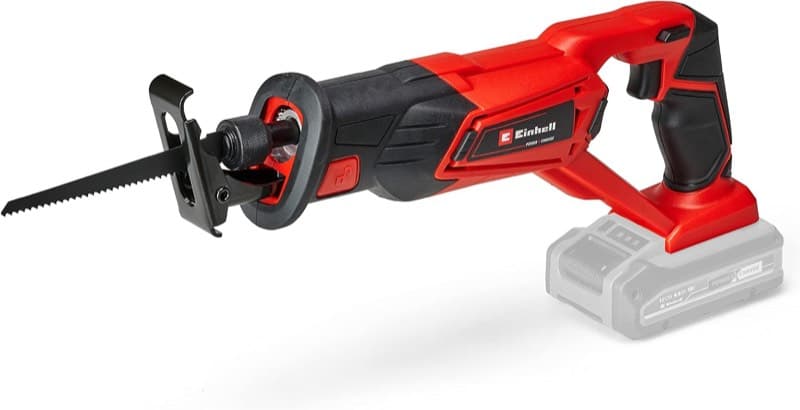
A fallen branch, an old pallet and a stack of firewood may all look like wood to cut, but they do not call for the same saw. In the chainsaw or reciprocating saw decision, the material around the wood matters as much as its thickness: clean logs favour a chain, while nails, cramped access and selective demolition point towards a reciprocating blade. Choosing by the job prevents you from forcing one machine into work it was not designed to do. The figures below come from amazon.co.uk listings already used in our saw comparisons. This is not a lab test.
In short
Choose a chainsaw for repeated cuts through clean logs, firewood work and jobs that genuinely belong to felling. Choose a reciprocating saw for rough, selective cuts in branches, roots or demolition timber, especially where nails or tight access rule out a chain. They overlap at light garden cutting, but neither is a complete replacement for the other.
Two saws that both get called garden tools
The overlap is real enough to cause confusion. Put a pruning blade in a reciprocating saw and it can tackle branches; take a chainsaw to a log pile and it turns longer timber into firewood lengths. Both can therefore appear in a garden-tool search, even though the way you should assign work to them is different.
A chainsaw carries a moving chain around a guide bar. Bar length and claimed speed were not collected here, so the advantage is the job: clean, substantial timber and repeated crosscuts through logs.
A reciprocating saw moves a straight blade backwards and forwards from a shoe you can hold against the work. You can change the blade for wood or metal. That helps when you need to reach between objects, remove one section, or cut timber that may contain fixings.
The boundary is not simply big wood versus small wood. A branch in an awkward corner may favour the reciprocating saw, while a clear stack of logs may justify the chainsaw because the cuts repeat. Identify clean timber, possible metal, access and how many cuts you have before you choose a size.
Logs, felling and firewood
If your main question is whether a reciprocating saw can replace a chainsaw for firewood, the practical answer is no. A reciprocating saw may get through an occasional branch or piece of smaller timber with a suitable wood blade, but that does not make it an efficient log-processing tool. Repeated firewood cuts are clean-timber work for a chainsaw.
This does not mean that any chainsaw is automatically suitable for any log. Stihl prices, bar lengths and model-by-model capacities were not collected here, so this guide will not match an unspecified chain to an unspecified trunk. Use the chainsaw comparison for actual products, and check the model's stated capacity rather than treating the word chainsaw as a guarantee.
Felling is a clearer boundary. A reciprocating saw is not a tree-felling substitute here. The tree's movement, the planned direction and the space around it decide the risk. Workplace chainsaw use sits under HSE forestry guidance, but that forestry page was not opened for this article, so no certificate or licensing rule is named.
Nails, roots and tight spaces
Demolition timber reverses the recommendation. An old stud, pallet or frame can contain nails, screws or brackets hidden below the surface. Fit a reciprocating-saw blade intended for the material you expect and make the rough removal cut. A chainsaw is not the choice for nail-filled wood.
A wood blade, a metal blade and a blade intended for mixed demolition work are not interchangeable just because they fit the same saw. You need to know what the cut is likely to cross. If the material is unknown, a new blade does not remove the uncertainty. Inspect the route, and do not assume that every fixing will be visible.
Roots suit a reciprocating saw when you need a selective cut in a confined patch of ground. The straight blade can reach a gap a broad body cannot, and replacing a blade is a different prospect from running a chain through dirt. Soil, poor sightlines and damp timber can still slow the cut.
For pruning, distinguish one or two reachable branches from a pile of logs. A reciprocating saw for branches is useful when access decides the job and you have the right pruning blade. The model data behind our cordless reciprocating saw comparison includes buyers using these tools for garden lopping, conifers and an apple tree. It also records vibration, sticking in damp wood and difficulty on thin branches.
The featured Einhell TE-AP 18/22 Li Solo illustrates the trade-off. Its amazon.co.uk listing showed a 22 mm stroke, an adjustable shoe and one wood blade, at about £49.99. It is a bare 18 V Power X-Change tool, so you still need a compatible battery and charger. Those details make it a rough-cutting example, not evidence that it should take over a chainsaw's log workload. A qualifying purchase through our links can earn a commission at no extra cost to you.
Choose by the job in front of you
Begin with the object, not the tool you already own. For clean logs and repeated firewood crosscuts, start on the chainsaw side. For a stud with nails, a pallet, a root in a narrow gap or a local demolition cut, start on the reciprocating-saw side. For a small clean branch, either may look plausible, so access, repetition and the blade available decide it.
Count the cuts, then check for metal and dirt. One branch is not a winter's log pile. A reciprocating saw can answer an occasional garden cut when you already own its battery. As clean timber cuts multiply, you are asking a selective tool to process logs. Nails, ground contact and roots point the other way. A small piece that needs one cut may still suit the reciprocating saw. Over time you may need both.
Why a circular saw is the wrong third option
A circular saw may seem like a compromise because it cuts timber quickly and often already sits in a DIY cupboard. It is not a sensible substitute for either tool on a branch or log. The Bosch circular-saw data available here showed cutting depths of roughly 48–57 mm, which can suit sheet goods and straight construction timber but does not turn a circular saw into a log machine.
A circular saw expects its shoe on a stable surface while the round blade passes through. A curved branch that can roll or flex does not give it that platform. Cutting a log from several sides does not fix the mismatch.
Keep the circular saw for flat sheet and controlled straight cuts. If that is the project, our guide to choosing a saw for sheet timber separates circular saws, jigsaws and table saws.
Noise, dust and sensible limits
Both chainsaws and reciprocating saws can be loud, and both can create wood dust. Matched decibel readings were not collected, so there is no supported basis for declaring one quieter. The machine, the material, the condition of the blade or chain and the length of the session all affect the exposure.
HSE noise and wood-dust material is particularly relevant where cutting is employment and an employer has duties to manage exposure. That is different from treating every workplace threshold as a household licensing rule. A private DIY user should not read the absence of employer duties as evidence that noise and dust stop mattering. Our hearing protection guide for power saws explains the workplace context without turning it into a home-use law.
Vibration is a practical limit in the UK reciprocating-saw listings used here. Pressing the shoe to the work can help, but damp wood and thin branches may still bind or shake. Use a chainsaw for substantial clean timber, repeated log cuts and genuine felling, subject to model capacity and your competence. Use a reciprocating saw for mixed materials, nails, roots, selective pruning and awkward access. When the job crosses that line, change the tool.
Common questions
Can a reciprocating saw replace a chainsaw for firewood?
Which tool cuts timber that has nails in it?
Can I fell a tree with a reciprocating saw?
Can a reciprocating saw cut green wood?
Is a circular saw useful on a branch?
Which saw is louder?
Do I need chainsaw training at home?
Do I need a chainsaw for storm damage?

Peter F. is the editor for DIY & tools at productscompared.co.uk. Comparisons in this category are checked against amazon.co.uk listings, review evidence and public UK sources.
Related articles
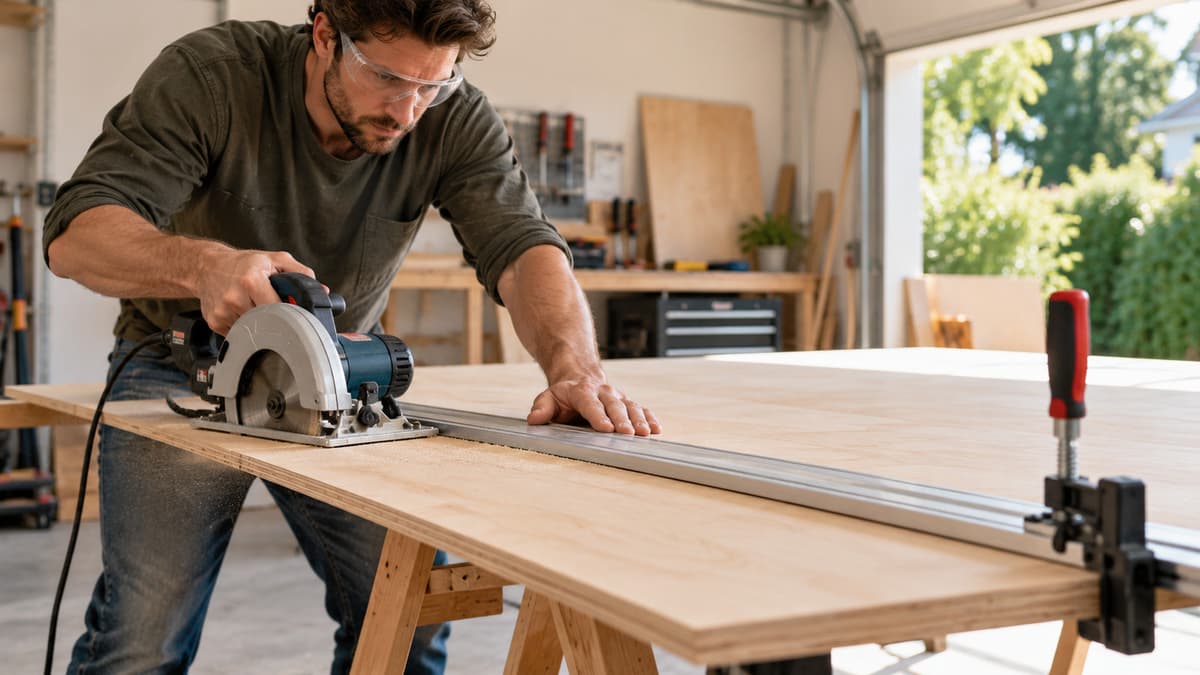
Which saw for a sheet of timber?
Choose between a circular saw, jigsaw and table saw when cutting plywood, MDF or a worktop.

When to change a saw blade
Spot burning, slow cuts and extra force before a worn blade spoils the work.

Hearing protection for power saws
Understand the UK workplace noise context and what it means for a cutting session.