How to use a Vornado fan
You already have a fan that matches the supply in the room, and you want the column of air to do something useful. This is how to use a Vornado fan, or any circulator built the same way: aim the beam, keep the path clear, respect the heatwave limit, and unplug it before the grille comes off. The method assumes the listing was never 110 V, 120 V, 24 V DC or USA only. If it was, stop and do not switch it on to test. That case is the [UK voltage page](/hub/portable-heaters/vornado-fan/sub/vornado-fan-uk-voltage). Which model to buy stays on the [Vornado fan comparison](/hub/portable-heaters/vornado-fan) and the [buying guide](/hub/portable-heaters/vornado-fan/sub/vornado-fan-buying-guide). The shape choice is [Vornado fan vs tower fan](/hub/portable-heaters/vornado-fan/sub/vornado-fan-vs-tower-fan). This is the maker’s aiming note and UK public guidance, not a lab trial, as of 16 October 2026.
You already have a fan that matches the supply in the room, and you want the column of air to do something useful.
You already have a fan that matches the supply in the room, and you want the column of air to do something useful. This is how to use a Vornado fan, or any circulator built the same way: aim the beam, keep the path clear, respect the heatwave limit, and unplug it before the grille comes off. The method assumes the listing was never 110 V, 120 V, 24 V DC or USA only. If it was, stop and do not switch it on to test. That case is the UK voltage page. Which model to buy stays on the Vornado fan comparison and the buying guide. The shape choice is Vornado fan vs tower fan. This is the maker’s aiming note and UK public guidance, not a lab trial, as of 16 October 2026.
Our top picks
| Badge | Product | Speeds | Movement | Timer | Note | Price | Offer |
|---|---|---|---|---|---|---|---|
| Best overall |  DREO DREO Nomad One tower | 4 or 8 | 90° sweep | 8 hours | 8.4 | about £79.99 | View offer |
| Best value |  Honeywell Honeywell TurboForce HT900E | 3 | Tilt only | None | 8.8 | about £35.32 | View offer |
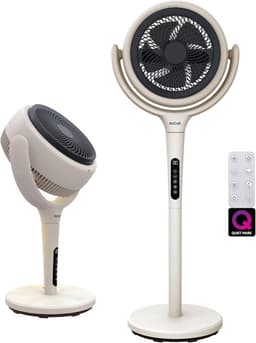
 AirCraft Home AirCraft Home Lume | 12 | Both axes | 12 hours | 8.9 | about £149 | View offer |


On this page
Aim the beam across the room
Windows and the 35 °C limit
Winter is moving warm air, not making it
When to unplug and when to stop
Common questions
Where do I point a Vornado-style circulator?
Can I cool a room by running the fan with the windows shut all day?
Is a fan safe in a heatwave once the room is above 35 °C?
Should I aim it straight at myself in bed?
Can the same fan move warm air in winter without working as a heater?
When do I unplug it, including a burning smell?
What do I do if the listing was 120 V after all?
Related pages
Sources
Public UK and maker sources used for this comparison. Listing prices, stars, and review counts are from the amazon.co.uk listings for these 12 ASINs. Shelf prices are not a live check on 16 October 2026.
- Electrical Equipment (Safety) Regulations 2016, regulation 35 (retrieved 16 October 2026)
- Plugs and Sockets etc. (Safety) Regulations 1994 (retrieved 16 October 2026)
- Electrical Safety First, electric fans (retrieved 16 October 2026)
- Electrical Safety First, travel advice (retrieved 16 October 2026)
- NHS, how to cope in hot weather (retrieved 16 October 2026)
- GOV.UK, beat the heat at home (retrieved 16 October 2026)
- Energy Saving Trust, keep your home cool (retrieved 16 October 2026)
- Vornado, frequently asked questions (retrieved 16 October 2026)