Independent comparisons. We may earn from shop links. More info

Ceramic or wire fan heater

Updated: October 2026

The title says ceramic, the spec row says Radiant, and you are trying to work out which word is the heater. A ceramic or wire fan heater on this shelf is still a fan blowing air over an element. The adjective does not turn it into a different machine, and it does not print a measured saving. The ten listings are on the [2000W fan heater comparison](/hub/portable-heaters/2000w-fan-heater). Peter F. compared the element cells with the titles, and used Ofgem’s October 2026 cap for the pence. This is not a lab test of an element. A qualifying purchase can earn a commission at no extra cost to you.

The title says ceramic, the spec row says Radiant, and you are trying to work out which word is the heater. A ceramic or wire fan heater on this shelf is still a fan blowing air over an element.

Our top picks

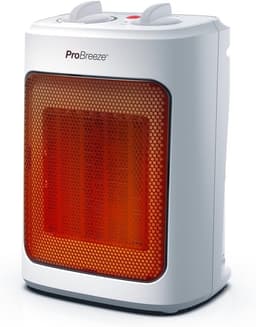
Pro Breeze Pro Breeze PB-H 2000 W

Best overall

Pro Breeze Pro Breeze PB-H 2000 W
8.4/10about £29.95
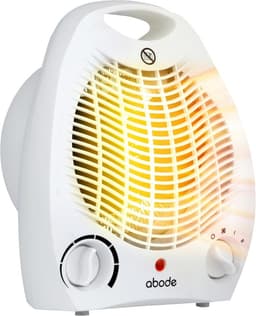
Abode Abode AFH1002 2000 W

Best value

Abode Abode AFH1002 2000 W
8.1/10about £12.99
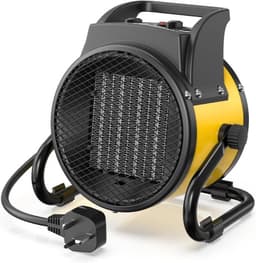
DAHTEC DAHTEC BGP1506-02 2000 W

Alternative

DAHTEC DAHTEC BGP1506-02 2000 W
7.0/10about £46.75
On this page

Three words, one fan

Electrical Safety First describes a fan heater as a coil of wire plus a fan. That is the machine in front of you, whether the bullet says wire, ceramic or PTC. A ceramic or PTC element is often described by makers, including Trotec’s note on its own heaters, as self-limiting: the material’s resistance rises as it heats. That is a manufacturer description. It is not a result measured on the Pro Breeze or the Midea in this folder. A Radiant field on an amazon.co.uk spec row usually clashes with the title. Radiant, on a page that also says fan heater, is not proof you have bought a glowing bar fire. On this shelf the fan and the ceramic word sit on the same box. TechRadar’s comparison says the same wattage uses the same electricity while both run flat out, and treats any extra saving from cycling as theoretical.

What these listings print

Heating wire, and the spec agrees, is Warmlite WL44002 and WL44001. Both are forced-air fan heaters with 1000 W and 2000 W in the bullets. WL44004 is the flat one. Its title says a flat fan heater and the spec field says Convection, so even the wire family is not clean on the third model. Ceramic, and the spec agrees, is DAHTEC BGP1506-02. That is the listing where the element word matches itself. The clashes are the rest. CUQOO’s spec says Radiant and the bullets describe a fan heater. Pro Breeze says ceramic in the title and Radiant in the spec, with 900 W, 1300 W and 2000 W. Status says Radiant in the spec on a page titled as a portable fan heater. Russell Hobbs says Radiant in the spec and fan heater as the item type. Midea says a PTC element in the bullets and in the item type, and Coil in the spec. Abode does not state an element at all. The heating method says Fan. If you need the row to agree with itself, DAHTEC is the ceramic match and the two upright Warmlites are the wire match. The price cap does not change with that adjective.
Pro Breeze Pro Breeze PB-H 2000 W

Testsieger

Pro Breeze Pro Breeze PB-H 2000 W
8.4/10about £29.95

Same watts, same pence

Full 2 kW is about 53 pence an hour whichever word is on the tin. Ofgem’s Direct Debit average for 1 October to 31 December 2026 is 26.32 p/kWh in England, Scotland and Wales. Two kilowatts for a full hour is 52.64 pence. A 1 kW hour is 26.32 pence. Northern Ireland and a fixed tariff are outside that figure. Midea’s bullets claim ECO cuts energy use by 40 percent. That number is not a measurement in this file, so do not shop on it. Which? says no electric heater type is automatically more sustainable, and that a fan suits a short blast. A self-limiting ceramic story still does not change the pence while the heater is drawing the watts printed on the plug. The running-cost difference you can actually use is the lower setting, once the room is warm, and only if the listing prints one.

What to buy instead of the adjective

Buy the printed watts and the cut-outs. A lower step near 1000 W is on the Warmlites, CUQOO, Abode, Russell Hobbs, DAHTEC and Pro Breeze. Status and Midea do not print the low watt as a number. Overheat protection is claimed across the set. A tip-over line is not. It is missing on the three Warmlites, the Russell Hobbs and the DAHTEC feature line. Ceramic does not fill that gap. Wire does not fill it either. Clearance of about one metre, and a UK 3-pin plug in the wall, stay the same if the label changes. Leave the Radiant cell as a clash to notice, not as a feature to pay for.

Common questions

Is a ceramic fan heater a different machine from a fan heater?
On this shelf, no. The ceramic word is on the same plug-in fan as the wire word. Electrical Safety First still describes the type as a coil and a fan. A PTC note from a manufacturer describes self-limiting behaviour. That is not a lab result for these ASINs, and it does not make the Pro Breeze or the Midea a different class of heater from the Warmlite beside them.
Which of these files say heating wire?
Warmlite WL44002 and WL44001. Both list heating wire. WL44004’s spec field says Convection, while the title says a flat fan heater, so do not fold that third Warmlite into the wire line without reading the clash. DAHTEC is the file that says ceramic and agrees with itself.
What does a Radiant spec field mean here?
In this folder it is usually a spec cell that does not match the title. CUQOO, Status and Russell Hobbs are Radiant in the spec while the pages describe fan heaters. Pro Breeze is ceramic in the title and Radiant in the spec. It does not, by itself, mean you have a bar fire with no fan. Read the heating method. Most of these say forced air, fan or convection on a fan-heater page.
Does ceramic use less electricity at the same wattage?
Not while both are running flat out at the same printed watts. Full 2 kW is about 53 pence an hour at 26.32 p/kWh on this cap, wire or ceramic. TechRadar treats any extra saving from cycling as theoretical. A lower setting uses less because it is fewer watts, not because the element word changed.
Can I trust Midea’s 40 percent claim?
No. The bullets say ECO cuts energy use by 40 percent. This file does not measure that. Reviews describe ECO as a temperature cut-off in one report, and others say the set temperature is not accurate. Treat 40 percent as marketing, and use the printed watts and the 26.32 p/kWh cap if you want a pence figure.
Does the element word change the fire clearance?
No. About one metre from curtains and furniture, no clothes on the grille, and the plug in the wall, apply to wire, ceramic and a Radiant cell alike. A ceramic bullet is not a reason to stand it closer to the curtain. The word on the box does not rewrite those steps.
Which listing is the one that agrees with itself?
DAHTEC, for ceramic. WL44002 and WL44001, for heating wire. Everyone else either clashes or, in Abode’s case, does not state an element. Agreement is worth noticing so you know what you ordered. It is not, on its own, a reason to ignore a missing tip-over line or a hot-plug review.

Related pages

Sources

Public UK sources for the plug, clearance, the room-heater identifier, and the unit rate. Listing prices, stars, and review counts are the amazon.co.uk figures in this set. Retrieved 21 October 2026.

  1. Ofgem — Changes to the energy price cap, 1 October to 31 December 2026 (retrieved 21 October 2026)
  2. Electrical Safety First — Portable heaters (retrieved 21 October 2026)
  3. Electrical Equipment (Safety) Regulations 2016 (retrieved 21 October 2026)
  4. BSI — BS EN 60335-2-30:2009+A13:2022 room heaters (retrieved 21 October 2026)
  5. Devon and Somerset Fire and Rescue — Heaters (retrieved 21 October 2026)
  6. Electrical Safety First — Bathroom sockets and zone 1 (retrieved 21 October 2026)
  7. Scottish Fire and Rescue — Electrical safety (retrieved 21 October 2026)
  8. Electrical Safety First — 2 kW upright fan heater recall (retrieved 21 October 2026)