Winterise an above-ground pool: a practical UK close

Winterise an above-ground pool by clearing debris, circulating a labelled dose, then fitting the cover. A six-month algaecide claim is not a dose for each pool.
On this page
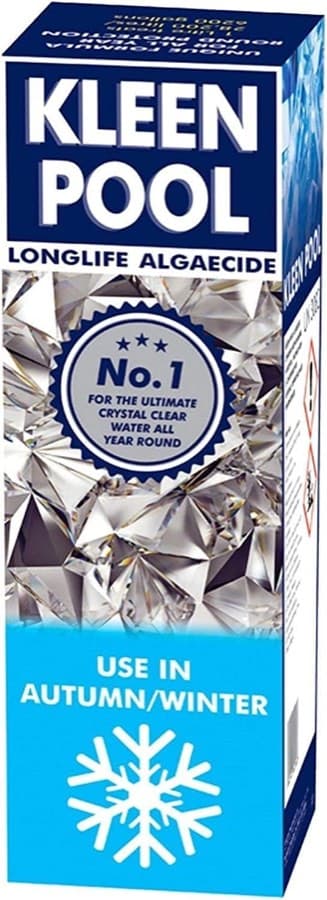
Closing a garden pool can look simple: pour in a winter product, pull over a cover and return in spring. To winterise an above-ground pool, separate four jobs that are often bundled together: removing debris, circulating the water, applying any chosen treatment, and protecting the pool with the right cover. A long-life algaecide may support the chemical part of the close. It cannot remove leaves, move water, or decide whether your particular pool should stay assembled through a British winter.
The listing figures below come from the amazon.co.uk Kleen Pool card and UK buyer accounts used in this hub, not from a lab test. A purchase through our links can earn a commission at no extra cost to you.
In short
Clean out debris first, circulate while applying any winter treatment according to its label, then manage the cover and pool structure as separate tasks. Do not turn a buyer's half-bottle routine, or a six-month listing claim, into a universal dose. Check your pool manufacturer's instructions before deciding whether to leave water in.
Closing is a sequence, not one product
Give each action one purpose. Debris removal takes organic material out of the water, circulation distributes treatment, algaecide adds algae control, and the cover limits new debris. None cancels the others.
Start by removing the debris you can see. Sunlight and debris drive algae in an outdoor pool, which is why a cover can help after cleaning. Covering is not retrospective: it does not remove what is already in the water, and it does not treat water that has already deteriorated.
Read the treatment label before you open the bottle. Pool & Spa Centre's winter guidance for Kleen Pool says to remove debris and circulate for at least two hours while dosing. Circulation is part of the chemical step, not a substitute for it. Do not pack the pump away before a treatment whose directions require moving water. Your pool instructions decide whether the frame stays up, how much water remains, and what must be disconnected or stored. A review of a filled pool is not structural approval for every model.
A practical order for your autumn close
The exact instructions on your pool, pump, cover and chemical take priority. The evidence used here supports this order, and it does not prescribe a drain level, promise ice protection, or give one float arrangement for every pool.
- Check the pool's own winter or storage instructions. Decide whether that model may stay assembled and whether water should stay in it. Do not base that decision on an algaecide review.
- Remove leaves and other visible debris. A cover can reduce new contamination, and it will also hide debris you leave behind.
- Work out the actual water volume from the manufacturer's stated capacity, rather than estimating from the frame's outside dimensions.
- Read the treatment label, confirm the product is intended for the job, and calculate the labelled amount for your litres.
- Circulate as directed while treating. For the Kleen Pool winter guidance used here, the stated period is at least two hours during dosing.
- Complete the cover and structure set-up separately, following the relevant manufacturer instructions. Choose physical accessories for that job, not because they sit beside an algaecide online.
- Plan to inspect rather than forget. A long-duration claim does not make a covered pool maintenance-free through every British winter.
What the six-month claim means
Kleen Pool is relevant to winter closing because the amazon.co.uk title for the one-litre listing says it treats 28,000 litres and lasts six months. It was listed at about £17.95 with 4.6 out of 5 from 585 UK reviews when this comparison was checked. Those details make it a plausible option for a laid-up swimming pool. Six months remains a listing claim, not a measured guarantee for your water.
UK reviews give the claim context. One owner describes half a bottle in a 15 ft Intex in autumn and clear water at spring opening. Another reports about eight months under a cover. A separate review mentions half a bottle every six months for roughly 14,000 litres. These experiences are not a dose table, and they are not a promise for another pool.
A minority of buyers said a whole bottle did nothing, or that the pool became greener, and settled algae still needed sweeping from the floor in another account. The product cannot replace physical cleaning or circulation. Use the above-ground pool algaecide guide to compare suitability, rather than treating a high review average as certainty. If a mild winter lasts beyond the claimed period, guidance cited for this article says a further treatment may be needed. Inspect and consult the label. That is not permission to add another arbitrary fraction of a bottle.
Dose from the label and your litres
Half a bottle appears often in buyer accounts, and it is meaningful only when you know the bottle size, the pool volume and the label directions. Half of a one-litre bottle is 500 ml. Whether that amount is right depends on the product and the litres being treated. A 15 ft pool is not itself a precise volume, because depth and fill level matter.
Start with the capacity stated by your pool manufacturer, then use the winter or maintenance dose printed on the label. The Kleen Pool Amazon title gives a broad claim of one litre for 28,000 litres. Its product card does not show the full millilitre dose table or name the active ingredient. Read the physical label. Do not reverse-engineer a dose from reviews. One buyer's oversized dose is evidence of misuse, not a shortcut worth copying.
Clearwater's one-litre listing names above-ground pools and says the dosage depends on water volume and appears on the bottle. Its UK reviews more often describe a regular capful-style routine than a single October pour. It is not a six-month winter product because it sits in the same category. Compare those jobs in the pool algaecide comparison. More product does not compensate for poor circulation or debris. If the label is missing, unreadable, or does not cover your intended use, choose a product with instructions you can follow.
Shock, circulation and algaecide
A chlorine shock raises chlorine. An algaecide provides a separate form of algae control. Circulation moves treated water around the pool. One account describes a roughly 10,000-litre green pool that received a chlorine shock the day before Kleen Pool, with the pump then left running. That sequence may explain the reported result. It does not show that every clean pool needs a pre-close shock.
Use the condition of the water and the relevant labels. Do not mix products together, or compress separate stages, because a review mentions both. If the pool is already green, you are dealing with an existing water problem, and cleaning plus filtration remain part of the job. There is no universal compatibility timetable for every chlorine product and every algaecide. For a clean pool receiving a labelled winter treatment, Pool & Spa Centre's clearest practical detail is at least two hours of circulation while dosing Kleen Pool. That is more defensible than a quick stir at the edge of several thousand litres.
Treat cover and ice separately
A winter cover helps limit the sunlight and debris reaching the pool after you have cleaned and treated it. It does not sanitise water, guarantee that algae cannot grow, or establish that the frame and liner are safe to leave outdoors. A clear spring opening in a review reflects the whole set-up, not proof that the cover or the bottle succeeded alone.
Winter floats or a pool pillow belong with cover support and the pool's physical arrangement. The chemical evidence does not establish float quantities, placement or ice performance. Check the pool and cover manuals, then use the pool winter floats comparison for that purchase. Some UK reviewers left water in covered above-ground pools and reported a successful reopening. That does not prove your model should stay full, partly full, or assembled.
Once covered, keep the pool accessible for inspection. A claimed duration of six months should not become six months of deliberate inattention, especially during a mild winter or if the cover is no longer doing its job. Inspecting is different from repeatedly adding chemicals. Only a test result and the label directions support another treatment.
Open in spring with a test
Spring opening starts with observation. Remove the cover according to its instructions, avoid tipping accumulated debris into the water, and look for settled material or a change in colour. Clear-looking water is encouraging. Appearance alone does not confirm that the pool is balanced or sanitised for use.
Test the water when you reopen, before deciding what to add. This guide does not invent universal target readings or a one-product opening recipe. Use your pool-care system and the product labels to interpret the measurements. If you find settled algae or debris, remove it. UK Kleen Pool reviews include clear spring openings, and they also include residue that still needed sweeping. Prevention claims concern growth control. Material on the floor remains a cleaning task.
Record the water volume, the labelled dose, the application date, the circulation period, the cover condition and the opening result. That note is more useful next autumn than remembering only that you used half a bottle.
Common questions
Do I empty an above-ground pool for a UK winter?
How much winter algaecide should I use?
Should I shock the pool before adding winter algaecide?
Can I leave the pool cover on until May?
What should I do if the winter is mild?
Do I need winter floats or a pool pillow?
Is Clearwater algaecide a winter product?
When should I test the water when opening in spring?

Peter F. is the editor for DIY & tools at productscompared.co.uk. Comparisons in this category are checked against amazon.co.uk listings, review evidence and public UK sources.
Related articles

Green pool water: what to do first
Separate brushing, circulation and treatment when your pool has already turned green.

How to shock an above-ground pool
Understand what a chlorine shock does, when it may help and why filtration still matters.

How to read a pool biocide label
Check the authorised use, dose and limitations before relying on an algaecide claim.