Algaecide or chlorine: which does your pool need?
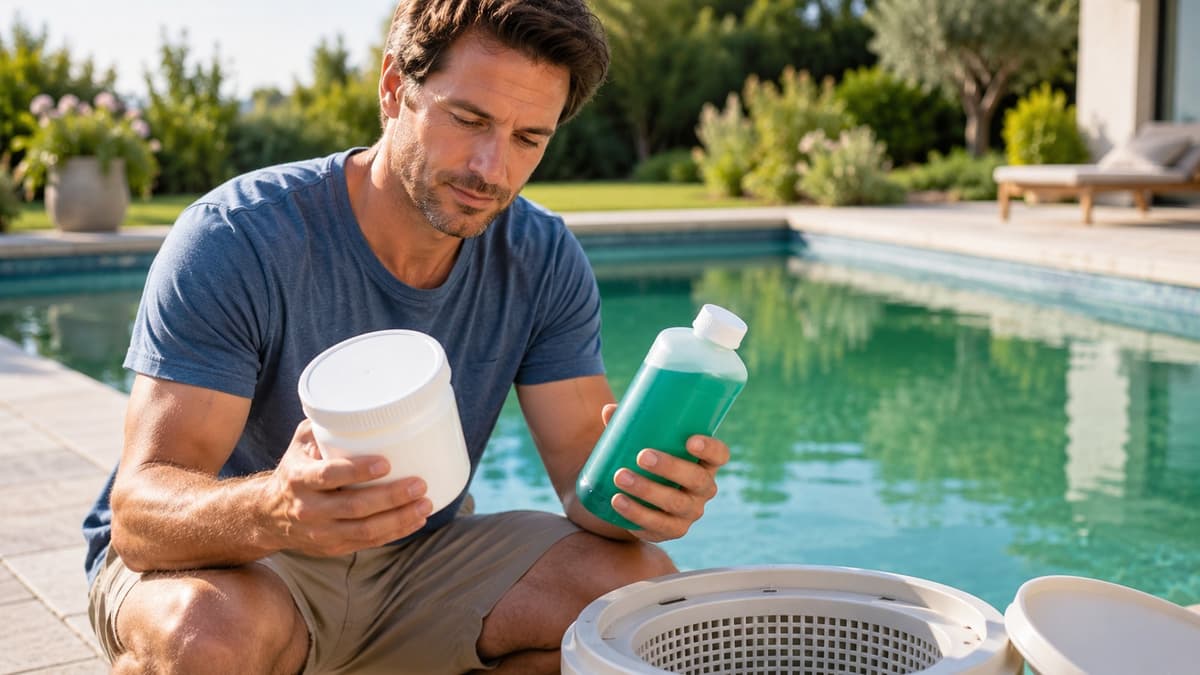
Algaecide or chlorine tablets? See which sanitises, which controls algae, when you may need both, and why unused winter pools follow different UK rules.
On this page
You are standing by a green or freshly filled pool with room in the basket for one product. The choice between algaecide or chlorine looks simple, but the bottles do different jobs: chlorine tablets supply a sanitiser, while algaecide adds targeted algae control.
Buying one as a substitute for the other can leave you with clear-looking water that lacks its normal disinfectant treatment, or properly chlorinated water that still needs better circulation, brushing or extra algae control.
In short
For a pool that people will use, establish the sanitiser first: that normally means chlorine, or bromine in a system designed around it. Algaecide is an extra measure for preventing or controlling algae. A narrowly worded winter exception for an unused pool does not make it a summer replacement for chlorine.
Two jobs, not two brands
Chlorine tablets and algaecide should be compared by job, not by which tub promises the longest-lasting water. Palintest guidance identifies chlorine or bromine as the disinfectant, while the algaecide evidence reviewed for this guide presents those products as algae control.
Algae is not caused only by the absence of an algae bottle. PWTAG lists a low disinfectant residual and poor turnover among the typical conditions behind algae. If the pump, the filter or the disinfectant has fallen away, another chemical may mask the maintenance problem without fixing it.
This article does not claim that every chlorine tablet prevents algae. A tub labelled “multifunction” may include more than sanitiser, but you must read that specific label rather than treating every tablet as a combined treatment.
Chlorine tablets are the sanitiser
Chlorine tablets are the first of these two products to consider for a newly filled pool that will be used. They release chlorine as part of the pool’s sanitation routine, usually through a suitable feeder or floater rather than loose on the liner. The exact dose, target reading and handling method come from your tablet label and pool instructions, not from the appearance of the water.
The research includes a supplier instruction to have chlorine at 1–3 mg/l before using Kleen Pool algaecide. That figure shows how the products can work as separate parts of one routine, but it is not permission to apply the same target to every pool and every tablet. Test your own water and follow the directions supplied with the chemicals you actually bought.
Tablets cannot take over the pump’s job. A floater in a still pool does not guarantee that the chemical reaches every wall, step or section under a cover. Filtration and brushing are not replaced by a slow-dissolving tablet.
If you are choosing products now, see the chlorine tablets comparison for the relevant listings rather than borrowing prices or claims from an algaecide page. A pool chlorinator comparison can also help you consider how the sanitiser is delivered. Never place tablets directly against a pool liner unless the product and pool maker explicitly instruct you to do so.
Algaecide is the algae extra
Algaecide is the additional control aimed at algae, not the product that establishes the normal disinfectant residual. That makes it useful in a narrower decision: you have checked sanitation and circulation, but prevention or an existing algae problem still calls for a labelled algae treatment. Our pool algaecide comparison covers the products researched for that job.
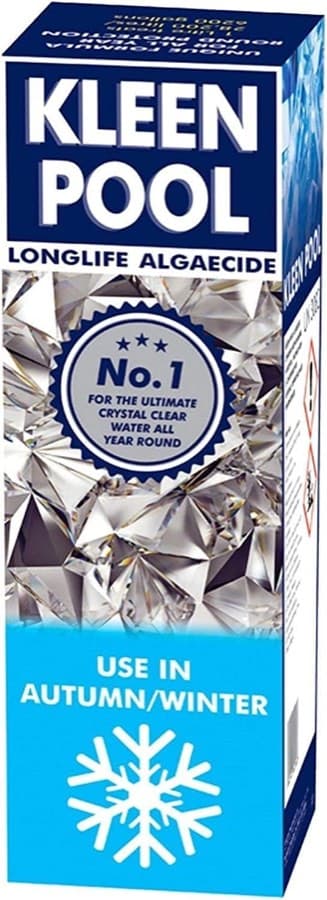
The distinction is visible in the Kleen Pool evidence. Its supplier instructions say to use it with chlorine in range, and a repeated UK review pattern concerns pools closed for winter. The amazon.co.uk card for the 1 litre listing, ASIN B00AWP8FBE, states 28,000 litres and six months in the title. Those are listing claims, not measurements from our own lab, and the active ingredient is not printed on the captured Amazon card.
Some UK reviewers describe clear water at spring opening after a winter close. Another account says a 10,000 litre pool cleared after chlorine shock the day before while the pump continued running. A minority report that a whole bottle did nothing, that water became greener, or that algae still settled on the floor and needed sweeping.
Use the bottle label for the actual dose and compatibility rules. The product card does not provide enough detail to improvise a treatment from pool size alone. In particular, never mix algaecide and chlorine together in one bucket. Add and handle each chemical exactly as its own label directs, using the specified sequence and waiting periods.
When you may need both
You may need both when a chlorinated pool has a separate reason for algae control. “Both” does not mean tipping them in together or adding algaecide every time you add a tablet. Maintain the sanitiser by its label, and use an algae product only by its own instructions.
A sensible order for dull or green water is to test first, restore the required sanitation routine, check the pump and filter, and brush affected surfaces. If the algaecide label fits the vessel and problem, dose it separately as directed. Keep circulation running where the product and equipment instructions call for it, then reassess the water rather than adding more because the colour has not changed immediately.
One Clearwater reviewer went back to multifunction tablets in a floater, while another reported that chlorine and pH appeared fine but shock had not cleared algae in pipework. These are individual buyer reports, not controlled trials. They are still useful as reminders that “the reading looks fine” does not prove circulation through hidden pipe surfaces, and “multifunction” does not tell you what a different tablet contains.
This is also where product type matters. A copper-based or quat-based algaecide presents a different buying decision, so use the copper or quat guide before assuming all algae treatments behave alike. The captured Kleen Pool Amazon card does not name its active ingredient, which means the listing alone cannot settle that choice.
The winter exception
Winter is different because a closed pool that nobody is using is not being maintained for immediate swimming. Happy Hot Tubs states that Kleen Pool can keep an unused pool clear without other chemicals during holiday and winter periods. The controlling phrase is “when the pool is not being used”: it is a limited lay-up claim, not evidence that algaecide can replace a sanitiser throughout the bathing season.
The UK review sample supports winter closing as a common use. Reports include half a bottle in a 15 ft Intex pool in autumn followed by clear water at spring opening, and one account describes clear water after roughly eight months under a cover. These reports do not prove that every pool will remain clear, and the Amazon title’s six-month wording remains a product claim.
Debris control, the cover, circulation choices and any cleaning at reopening remain separate tasks. The listing says the litre treats 28,000 litres, but the captured card has no millilitre dose table. Match your volume to the physical label rather than a review written about another pool.
Before anyone swims again, return to the sanitation and testing instructions for an in-use pool. Clear appearance is not proof that a disinfectant residual is in place.
What to buy first
For a new pool that will be used, buy the sanitiser and the means to test and deliver it before treating algaecide as essential. Add algaecide when the label, the pool conditions and the algae risk give you a separate reason.
On an existing green pool, check the disinfectant residual, turnover, filter and surfaces before you buy from colour alone. If the pool is being closed and left unused, a specifically labelled winter product may fit, but only within its stated limits.
Bromide powders sold for yellow or mustard algae need extra caution. They are not simply “chlorine alternatives”; they can move the water towards a bromine system. That is a different chemical commitment from adding an ordinary green-water algaecide, so identify the problem before buying and follow the full label rather than an isolated marketplace claim.
Peter F. checked public pool guidance, supplier instructions and the captured amazon.co.uk algaecide listing in October 2026. We did not conduct a laboratory test. Prices and listing details can change. If you follow an Amazon link and make a qualifying purchase, we may earn a commission at no extra cost to you.
Common questions
Can I use only algaecide in my swimming pool?
Can I use only chlorine tablets?
Do multifunction chlorine tablets contain algaecide?
Should I buy chlorine tablets or algaecide first?
Is winter pool care different?
Will algaecide lower the chlorine level?
Can bromine replace chlorine in a hot tub?

Peter F. is the editor for DIY & tools at productscompared.co.uk. Comparisons in this category are checked against amazon.co.uk listings, review evidence and public UK sources.
Related articles

Green pool water: what to do before a second bottle
Work through circulation, brushing and chemical checks before adding another bottle.

How to shock an above-ground pool the safe way
Raise chlorine safely without treating shock as a substitute for filtration.

Winterise an above-ground pool: a practical UK close
Separate covering, debris control, circulation and winter chemical treatment.