Is a ZZ plant toxic to cats?
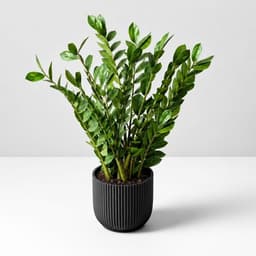
You are about to put a ZZ plant where a cat, a dog, or a small child can reach it. The Royal Horticultural Society and the Horticultural Trades Association class Zamioculcas zamiifolia as harmful if eaten, for people and pets, and as a skin and eye irritant. Use that UK line before the pot leaves the box. The [ZZ plant comparison](/hub/plant-accessories/zz-plant) does not clear any listing for a pet. This page is the harm line, what to do if a leaf is chewed, and why two amazon.co.uk files ask a pet question and do not answer it. The Products Compared editorial team used the RHS, the HTA, and Gardeners' World. We did not run a toxicity test. A qualifying purchase can earn a commission at no extra cost to you.
You are about to put a ZZ plant where a cat, a dog, or a small child can reach it.
You are about to put a ZZ plant where a cat, a dog, or a small child can reach it. The Royal Horticultural Society and the Horticultural Trades Association class Zamioculcas zamiifolia as harmful if eaten, for people and pets, and as a skin and eye irritant. Use that UK line before the pot leaves the box. The ZZ plant comparison does not clear any listing for a pet. This page is the harm line, what to do if a leaf is chewed, and why two amazon.co.uk files ask a pet question and do not answer it. The Products Compared editorial team used the RHS, the HTA, and Gardeners' World. We did not run a toxicity test. A qualifying purchase can earn a commission at no extra cost to you.
Our top picks
| Badge | Product | Pet line | Pack | Species named | Note | Price | Offer |
|---|---|---|---|---|---|---|---|
| Best overall |  Carbeth Plants Carbeth ZZ plant, one pot | Not stated | 1 | Yes | 10.0 | about £17.99 | View offer |
| Best value |  plantster plantster 35 cm ZZ plant | Not stated | Title reads as 1; counts say 3 | Yes | 10.0 | about £14.99 | View offer |
| Alternative |  Carbeth Plants Carbeth ZZ plant, pair | Question unanswered | 2; unit count 1 | Yes | 10.0 | about £28.99 | View offer |


On this page
What the UK sources say
Cats, dogs, and children
What to do if it is chewed
Nothing in this set is pet-safe
Common questions
Is a ZZ plant toxic to cats?
Is it toxic to dogs as well?
What about children and skin contact?
Does it cause cancer?
What should I do if a pet chews a leaf?
Does any listing in this set say it is pet-safe?
Is harmful the same as deadly?
Related pages
Sources
Public UK sources checked for this comparison, plus the amazon.co.uk listing facts in the display file on 15 October 2026. Shelf prices and star lines are those UK figures. GrowTropicals prices from 16 October 2026 are other-shop context, not amazon.co.uk.
- RHS, Zamioculcas zamiifolia (retrieved 15 October 2026)
- RHS, arum houseplants (retrieved 15 October 2026)
- BBC Gardeners' World, how to grow a ZZ plant (retrieved 15 October 2026)
- House & Garden, ZZ plant (retrieved 15 October 2026)
- Horticultural Trades Association, harmful plants guide (retrieved 15 October 2026)
- GOV.UK, import plants and plant products from the EU to Great Britain (retrieved 15 October 2026)
- Consumer Rights Act 2015, section 9 (retrieved 15 October 2026)
- GrowTropicals, Zamioculcas zamiifolia size prices (retrieved 16 October 2026)