How often to water a ZZ plant
You have a ZZ plant, the label said minimal care, and you still do not know whether this Sunday is a watering day. Water only after the compost has dried, and never leave the pot standing in the runoff. Weekly drinks rot the rhizome, including in a cool UK winter. The [ZZ plant comparison](/hub/plant-accessories/zz-plant) is about which listing to buy. This page is the habit once the plant is yours. A dark room dries more slowly, which is why the [low-light guide](/hub/plant-accessories/zz-plant/sub/zz-plant-low-light) sits beside this one. The Products Compared editorial team used Gardeners' World, House & Garden, the RHS, and a UK shop guide. We did not run a watering trial. A qualifying purchase can earn a commission at no extra cost to you.
You have a ZZ plant, the label said minimal care, and you still do not know whether this Sunday is a watering day. Water only after the compost has dried, and never leave the pot standing in the runoff.
You have a ZZ plant, the label said minimal care, and you still do not know whether this Sunday is a watering day. Water only after the compost has dried, and never leave the pot standing in the runoff. Weekly drinks rot the rhizome, including in a cool UK winter. The ZZ plant comparison is about which listing to buy. This page is the habit once the plant is yours. A dark room dries more slowly, which is why the low-light guide sits beside this one. The Products Compared editorial team used Gardeners' World, House & Garden, the RHS, and a UK shop guide. We did not run a watering trial. A qualifying purchase can earn a commission at no extra cost to you.
Our top picks
| Badge | Product | Water claim | Pot | Indoor or outdoor | Note | Price | Offer |
|---|---|---|---|---|---|---|---|
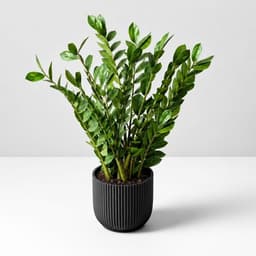
| Best overall |  Carbeth Plants Carbeth ZZ plant, one pot | Minimal care in the bullets | 12 cm | Outdoor | 10.0 | about £17.99 | View offer |
| Best value |  plantster plantster 35 cm ZZ plant | Bullets: minimal. Field: moderate | 12 cm in the title | Indoor | 10.0 | about £14.99 | View offer |
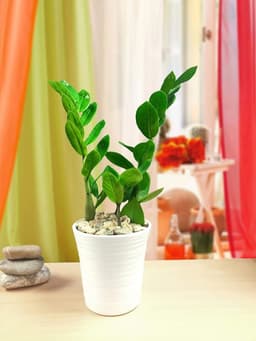
| Alternative |  Easy Plants Easy Plants aroid palm | Moderate watering | 13 cm ceramic | Indoor | 1.0 | about £21.99 | View offer |

On this page
How long to wait
Compost and the cover pot
When yellow stems mean stop
Common questions
How often should I water in summer and in winter?
How do I know the compost is dry?
What does an overwatered ZZ plant look like?
Is one yellow leaf a crisis?
Which compost should I use?
Can I leave it in a cover pot?
Related pages
Sources
Public UK sources checked for this comparison, plus the amazon.co.uk listing facts in the display file on 15 October 2026. Shelf prices and star lines are those UK figures. GrowTropicals prices from 16 October 2026 are other-shop context, not amazon.co.uk.
- RHS, Zamioculcas zamiifolia (retrieved 15 October 2026)
- RHS, arum houseplants (retrieved 15 October 2026)
- BBC Gardeners' World, how to grow a ZZ plant (retrieved 15 October 2026)
- House & Garden, ZZ plant (retrieved 15 October 2026)
- Horticultural Trades Association, harmful plants guide (retrieved 15 October 2026)
- GOV.UK, import plants and plant products from the EU to Great Britain (retrieved 15 October 2026)
- Consumer Rights Act 2015, section 9 (retrieved 15 October 2026)
- GrowTropicals, Zamioculcas zamiifolia size prices (retrieved 16 October 2026)