Independent comparisons. We may earn from shop links. More info

Planter buying guide

Updated: October 2026

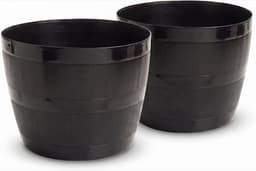
A planter buying guide should start with the plant and the place, not the finish or the price. A 16 cm pot, a sealed 50 litre tub and an open-bottom bed solve different problems. Our [planter comparison](/hub/plant-accessories/planter) shows twelve listings side by side. Decide the job and the size, then check drainage, filled weight, winter wording and listing consistency. Only then is price useful. In this set the top pick for several small indoor pots is the PROFIKLA set, and the best value for two large tubs is the Straame pair, once you accept a sealed base. A qualifying purchase can earn us a commission at no extra cost to you.

A planter buying guide should start with the plant and the place, not the finish or the price. A 16 cm pot, a sealed 50 litre tub and an open-bottom bed solve different problems.

Our top picks

On this page

Start with the job and the size

Match the container to the root space, the growing period and the position. PROFIKLA is three pots of 20, 18 and 16 cm with saucers. Either Straame barrel is 50 litres. For a longer-lived shrub or small tree, the RHS advises potting up in stages. Its tree guidance works towards a final container of about 45 cm. Overpotting can leave roots in compost that stays wet. A tall, narrow planter may become unstable in wind. Optimal is four 55 cm troughs. Bamworld stacks five levels. VIREO and FOUBAM are metal beds, not portable pots. See the best planter for each use.

Put drainage before the finish

For ordinary container growing, the RHS treats holes in the base as essential. The outlet must stay clear, not pressed flat against a patio. Both Straame barrels are sold sealed. Optimal’s bullets describe locators you drill yourself. PROFIKLA states holes in the title and bullets. Olly & Rose supplies a hole and plug. A sealed base can suit a bog-style planting and is the wrong start for a conventional shrub unless you add drainage. A plug is reversible. A saucer catches water and does not replace a hole. NATTHSWE has a plastic liner and no drainage on the table, so it is an indoor outer cover. Planter drainage holes separates holes, plugs, saucers and open bottoms.

Empty weight is not the planted load

The printed weight is normally the empty product or kit, not compost, water and a plant. The Straame one-pack prints 39 g and DIVCHI prints 250 g. Neither is a planted weight. VIREO’s 5.16 kg is the metal kit. Its 216 litre capacity is not a filled-weight calculation. Do not convert litres into a universal load. On a patio, handling may be the concern. On a balcony, roof or ledge, the building and the fixings set the limit. The balcony planter weight guide explains why UK standards cover localised planter loads without one spare kilogram for every balcony.

Read winter wording and material carefully

Plastic is generally lighter and holds moisture longer, and it still becomes heavy once filled. Metal is frost-proof as a material but heats and cools quickly and may corrode. A heavy fibre-cement pot is more stable and harder to move after planting. Frost resistant and frost-proof are not the same promise. Olly & Rose calls its 44 cm pot frost resistant, not frost-proof. The RHS advises containers suitable for winter wet, pots raised so outlets stay open, and protection in severe cold. Saturated compost can freeze, and a saucer can hold rain under the pot. Keep the weaker wording the seller prints.

Compare the bullets with the specification table

Read the title, bullets and table as separate evidence. JonesHouseDeco’s bullets say UV-resistant polypropylene, while the table says clay, with different dimensions, weights and piece counts. At about £75.99 and six reviews, ask the seller or skip it. FOUBAM’s title says 8 × 4 × 1 ft, and its centimetre lines do not map to the same axes. The Garden Superstore pot has no drainage field even though UK reviews mention a hole. Reviews do not rewrite a missing specification. Price comes last. In this capture seven listings sit below £20, including Garden Superstore at about £13.10 and PROFIKLA at about £15.99. The upper end is about £75.99 and about £89.99. Compare prices only inside the same job and drainage arrangement.

Common questions

Does every planter need drainage holes?
For ordinary plants in compost, the RHS says drainage holes are essential. A sealed tub can serve a deliberate watertight or bog-style use, but it should not be treated as a ready-drained pot. Open-bottom raised beds drain into the surface beneath them, while lined baskets are often outer covers rather than direct growing containers.
Is frost resistant the same as frost-proof?
No. Frost resistant is the weaker wording and may still require shelter from prolonged cold and winter wet. Olly & Rose uses frost resistant, so that is the claim to retain. Drainage, pot feet and the plant’s own hardiness still matter even when a container is sold as frost-proof.
Can I trust the item weight for a balcony?
Use it only as the empty-product figure unless the listing explicitly says otherwise. The 39 g Straame and 250 g DIVCHI figures are not planted weights. Wet compost, water and the plant create the load, and the safe allowance depends on your particular balcony or roof structure.
What should I do when the bullets and table disagree?
Do not average or combine them. Record both claims, ask the seller which applies to the exact variation, and keep evidence of the answer. Material, size, drainage and piece count can change whether the product suits the job. If the conflict remains, choose a clearer listing.
Should price decide between two pots?
Only after suitability. Compare job, size, drainage, filled-load implications and winter wording first. Review count then shows how broad the experience is, but a popular pot can still be the wrong shape or base.

Related pages

Sources

Public UK sources for container growing, product safety and balcony loads, plus the amazon.co.uk listing facts checked on 15 October 2026. Shelf prices, stars and review counts are those UK figures and can change. On that date a separate look also showed a 55 cm plastic trough at £6.99 and a fibre-stone trough at £47.18. Those two are not rows in this table.

  1. RHS: Growing plants in containers (retrieved 15 October 2026)
  2. RHS: Winter containers (retrieved 15 October 2026)
  3. RHS: Trees in containers (retrieved 15 October 2026)
  4. Consumer Rights Act 2015, section 9 (retrieved 15 October 2026)
  5. GOV.UK: General Product Safety Regulations 2005 (retrieved 15 October 2026)
  6. GOV.UK: sale of horticultural peat to be banned (27 August 2022) (retrieved 15 October 2026)
  7. Peat Free Partnership: legislation timeline (retrieved 15 October 2026)
  8. HCGA: container gardening leaflet (retrieved 15 October 2026)