Independent comparisons. We may earn from shop links. More info

Clear vs ceramic orchid pot

Updated: October 2026

Your moth orchid is fine in its grow pot, but the clear plastic clashes with the hallway shelf. A glazed ceramic planter, or a double wall that hides the roots, is tempting. The clear vs ceramic orchid pot choice is not really plastic versus pottery. It is whether you can still check drainage, root colour and the saucer while the plant lives in bark. This page compares slotted clear growers, holed ceramic and a cachepot. Listings from the same scrape are in our [orchid pot comparison](/hub/plant-accessories/orchid-pot).

Your moth orchid is fine in its grow pot, but the clear plastic clashes with the hallway shelf. A glazed ceramic planter, or a double wall that hides the roots, is tempting.

Our top picks

On this page

Why clear plastic is the default

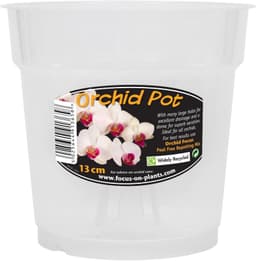
Royal Horticultural Society Phalaenopsis guidance recommends a transparent container so you can see green, active roots against silvery roots that are ready for water. Clear polypropylene slotted pots are common on amazon.co.uk because they are light, cheap to replace when bark acids scratch the walls, and they show brown rot without a full unpotting. Side slots add airflow in a warm room above a radiator. Fine bark may spill unless you water in the sink. Clear walls are not a growth miracle. Some retailers imply that roots photosynthesise through the plastic. The practical win is monitoring. What a clear pot supports is the Orchid Society of Great Britain habit: feel the bark, glance at root colour, soak, drain, empty the saucer. None of that works if a sealed outer stays on the roots and you never lift it.

When ceramic with drainage works

Holed ceramic suits a top-heavy flower spike that needs weight, or a sill where bare plastic looks wrong. A glazed pot with holes can grow a Phalaenopsis in bark if you accept two limits. You cannot see silvery roots without lifting the plant, so weight or a skewer matters more. Roots can grow through side holes and fuse to the wall, so the next repot is harder than with flexible plastic. Ceramic dries more slowly than thin plastic. The wall holds a little moisture and can cool the mix on a winter window. In a warm, dry room that slower dry-down can help. Water still has to leave the base. A glaze does not replace holes. A pot sold with a pinhole, or with no hole, is décor, not long-term bark culture.

A cachepot for the hallway

Many UK displays use a clear slotted grow pot inside a heavier outer cachepot with no drainage of its own. Lift the inner pot, run tepid water through the bark until it drains, then set the plant back in the shell. Do not pour water into the gap so the outer becomes a reservoir. Choose an outer wide enough to slide the grow pot out without snagging aerial roots. In this comparison, the Meshpot white double pot aims at that look: one inner pot with holes, a coloured outer and a saucer, with a 12 cm line beside a larger dimension row. You still have to lift the inner pot to water. Named clear growers are on best orchid pots.

What the ceramic listing actually says

The vensovo glazed ceramic pot in the table is about £20.99, weighs about 1.24 kg, and the bullets describe drainage holes plus an attached saucer. Reviews praise a sturdy display pot. A feature row labels it self-watering without describing a wick or a reservoir. That is a catalog conflict, not automatic watering. The title says 15.24 cm and a dimension row prints about 10.2 cm, so measure the pot that arrives. Glaze colours in reviews do not always match the green wording in the title. None of these pots stop rot if water sits in a saucer or in the gap between an inner pot and an outer shell.

Which setup matches the shelf

If you want the path closest to RHS transparency advice, grow in a clear slotted pot, soak in the sink, and empty the saucer. If you want weight and glaze as the only container, use holed ceramic and accept a hidden root check. If the plant must look tidy in a hall, keep the clear pot and lift it out of a cachepot each time you water. Skip a sealed decorative pot even when the photo shows a moth orchid. Diameter checks sit on the orchid pot buying guide.

Common questions

Can I plant a moth orchid directly in ceramic?
Yes, if there are adequate holes and you use the same soak, drain and empty-saucer habit as with plastic. Expect the next repot to take longer when roots bind to the wall. You will judge dryness by weight or a skewer, because the glaze hides root colour. A single pinhole is not adequate drainage for bark.
Do I need a clear inner pot if the shelf pot is ceramic?
A clear inner pot makes the moisture check easier, which is why many growers keep one inside a cachepot. If the ceramic pot is the only container, and it has real holes, you can grow in it and test dryness another way. You lose the glance at silvery roots that a transparent wall gives you.
Are side holes on ceramic worth it?
They improve airflow, which helps in a warm room, and they invite roots to escape. Plan to cut roots free, or to sacrifice the pot, if they fuse at the next repot. In a cool, dim room the extra holes matter less than making sure the base actually drains into a tray you empty.
Is the vensovo pot in the comparison truly self-watering?
No wick system is described in the bullets. The self-watering feature row conflicts with hole-and-saucer copy. Treat the pot as holed ceramic with an attached saucer. Empty that saucer after watering. A reservoir pair is a different listing, not this glaze.
Ceramic or plastic for a warm, dry room?
Plastic with side slots dries faster. Ceramic slows evaporation. If you tend to water again before the bark has dried, a slotted clear pot gives you a visible cue and a quicker dry-down. If bark in a clear pot is dusty within a day and the spike needs a heavier base, holed ceramic is the more stable pot.
Will roots grow through ceramic holes?
Yes, over time, in the same way they exit slots in a plastic pot. On ceramic they can grip the fired wall, so you cannot flex the pot to release them. That is normal and it raises the effort at repot time. Flexible polypropylene usually peels away with less damage to firm roots.

Related pages

Sources

Public UK sources used for this comparison. Shelf prices, stars and review counts are the amazon.co.uk figures captured for these twelve listings. Last checked 19 October 2026.

  1. RHS Phalaenopsis growing guide (retrieved 19 October 2026)
  2. Orchid Society of Great Britain, Phalaenopsis care (retrieved 19 October 2026)
  3. Kew, caring for your orchids (retrieved 19 October 2026)
  4. orchid.org.uk, repotting (retrieved 19 October 2026)
  5. Gardeners' World, how to repot a moth orchid (retrieved 19 October 2026)
  6. GOV.UK, General Product Safety Regulations 2005 (retrieved 19 October 2026)
  7. GroWell, clear orchid pot (retrieved 19 October 2026)
  8. GOV.UK product marking by sector (retrieved 19 October 2026)