Independent comparisons. We may earn from shop links. More info

How to plant a fibreglass planter

Updated: 22 October 2026

The carton is on the kitchen floor, or you are about to click Buy and want the sequence first. A fibreglass planter in this set is not one job. The Leaf pots are sleeves. The B2C Sahara is a tall shell with an insert. A specialist GRP cube with marked drill points is a third type, and it is not in this folder. The [fibreglass planter comparison](/hub/plant-accessories/fibreglass-planter) rows those three amazon.co.uk listings. This page is the plant-up, not a ranking. Decide sleeve or planted pot first, then make a drainage path before you add compost. Indoor versus outdoor use stays on its own page. Products Compared compared the listings and public UK sources. We did not run a lab trial. A qualifying amazon.co.uk purchase can earn us a commission at no extra cost to you.

The carton is on the kitchen floor, or you are about to click Buy and want the sequence first. A fibreglass planter in this set is not one job. The Leaf pots are sleeves. The B2C Sahara is a tall shell with an insert.

Our top picks

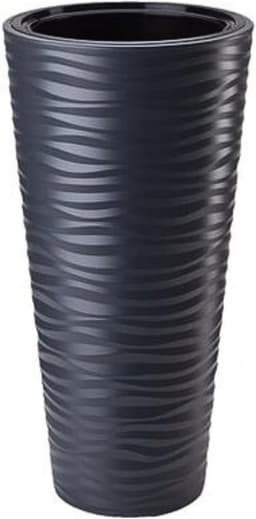
B2C B2C Sahara tall planter, 79 cm

Best overall

B2C B2C Sahara tall planter, 79 cm
7.5/10about £31.89
Leaf Leaf 44 cm Aztec cachepot

Best value

Leaf Leaf 44 cm Aztec cachepot
7.0/10about £40.99
On this page

Sleeve, insert or planted shell

Open the box and name the type before you buy a bag of compost. The Leaf 44 cm Aztec cachepot at £40.99 is a rustic sleeve, 26 × 26 × 44 cm, with an 18 cm inner hole. A starter pot smaller than 18 cm, or a bare-stem plant the listing allows, will fit. You do not fill the outer shell as if it were a 44 cm tub. Sit the nursery pot inside, or drop it through the hole, and leave the sleeve as the cover. One United Kingdom review says this pot holds water. That is expected of a cachepot with no stated drainage hole. Empty the sleeve after you water, or keep plants that like a damp base. The Leaf extra-large Aztec cachepot at £46.99 is the same job on a wider, shallower footprint, around 36 × 36 × 27 cm and 500 g, indoor only. The bullets say no plant is included. Do not wait for a missing plant. Included Components still says Plant, which is a field conflict, not a delivery promise. Drainage is not stated. Treat it as a hall cover for a plant that already has its own pot. The B2C Sahara at £31.89 is the insert pot. Lift the insert out by the handles, plant that, and drop it back into the 79 cm shell. The outer pot is listed at 40 × 40 × 79 cm and 51 litres. The plant still lives in the insert. One United Kingdom review said the insert was not flat, so a tree would not sit flush. Check that fit on a hard floor before you add compost. The same review file says weigh the base with bricks, which matches the 2 kg empty weight. If you wanted a specialist cube with marked drill circles, as Taylor Made and ADEZZ print on outdoor GRP, you do not have that product. The fibreglass planter buying guide is the type check if the carton is the wrong job.

Drainage, then compost

None of the three kept listings states a drainage hole. That is the first planting fact, not a detail you add later. The Royal Horticultural Society treats holes as essential in a container you plant into, because compost in a pot stays wetter than open ground. A cachepot can stay sealed if the inner pot drains into the sleeve and you pour the surplus away. A pot you plant into needs a path out. Do not drill a decorative Leaf cachepot as if it had ADEZZ’s raised, marked section. Those manuals assume a purpose-built outdoor shell. This folder’s saved listings do not show those marks. If you do have a specialist outdoor GRP pot with marked circles, Taylor Made asks for holes of about 2.5 cm in those circles, then about 10 cm of drainage material and a permeable fabric before loose soil. That sequence is not a licence to put a random hole in a rustic indoor sleeve. Crocks do not improve drainage. The RHS container page says add crocks only if the hole is larger than about 2.5 cm, to stop compost falling through. Their gardening-myths note is blunter: a layer of broken pot does not make a container drain better. Use a peat-free compost, fill so the surface sits about 5 cm below the rim, and water slowly so the mix wets through instead of running down the inside wall. Leave that 5 cm so a thorough water does not spill over the painted rim of a Leaf pot or the powder-coated B2C shell. On the B2C insert, plant the insert, not the 79 cm void. On the Leaf 44 cm pot, measure the nursery pot against the 18 cm hole before you cut a bag of compost you will not use. If the inner pot is larger than 18 cm, this sleeve is the wrong size.

After it is planted

Do not move a filled pot if you can avoid it. ADEZZ’s UK note for specialist GRP says the same in plainer words: place the empty shell, then plant. The B2C Sahara is 2 kg empty and much heavier once the insert and any bricks are in. The Leaf extra-large cachepot is 500 g empty; wet compost in a wide 27 cm-deep sleeve will still make it awkward to carry through a hallway without scraping the rustic finish. Slide a board under a planted pot if you must shift it. Do not pick it up by a decorative rim. Water to the plant, not to the sleeve. In a cachepot, lift the inner pot or tip the outer shell after a heavy water so the base is not a pond. The United Kingdom review that says the Leaf 44 cm pot holds water is describing that pond. In the B2C insert, water the insert and check that surplus is not sitting in the tall shell with nowhere to go. Drainage is not stated on that listing either. Before the first frost, raise any pot that stays outside on feet so the base is not sitting in a puddle. The RHS winter-selection note names fibreglass among the materials that cope better than thin terracotta, and it still asks you to raise the pot. Weather It, writing about fibreglass planters in winter, says frost-resistant is not a licence to leave standing water. The B2C listing claims frost resistance. That is not a test result, and it is not a reason to leave a sealed reservoir on the patio. The Leaf extra-large pot is indoor only. The Leaf 44 cm pot allows only a sheltered outdoor spot in the bullets. The indoor or outdoor fibreglass planter page is the winter decision. The fibreglass or terracotta planter page is the material one if you are replacing a cracked clay pot.

Common questions

Do I plant straight into a cachepot?
Not as the default. The Leaf 44 cm and extra-large pots are sleeves. Keep the plant in a nursery pot that fits — 18 cm or smaller on the 44 cm Leaf — and empty surplus water from the outer shell. Planting straight in turns a sealed cachepot into a reservoir.
How do I use the B2C insert?
Lift it out by the handles, plant that, and drop it back into the 79 cm shell. Check that the insert sits flat before you add a tree. One United Kingdom review said it did not. Weigh the base with bricks if the empty 2 kg pot feels light for a door pair.
Should I drill a Leaf pot?
Not as if it were an ADEZZ or Taylor Made outdoor cube. Those makers mark a raised circle. The Leaf listings in this folder do not state a hole and do not show those marks. A decorative indoor cachepot is a poor candidate for a random drill.
Do crocks improve drainage?
The RHS says no. Add crocks only if the hole is larger than about 2.5 cm, to stop compost falling through. A layer of broken pot does not make a sealed cachepot drain.
How full should the compost sit?
Leave about 5 cm below the rim, as the RHS plant-up note asks, and use a peat-free mix. That gap is what stops a slow, thorough water from running over a painted or powder-coated rim.
Can I move it once it is full?
Avoid it. Specialist GRP notes say place the empty shell first. The B2C pot is light empty and awkward once ballasted. The 500 g Leaf sleeve still becomes a wide, wet load. Slide it on a board if you must.
What do I do before the first frost?
Raise any outdoor pot on feet so the base is not in a puddle. Bring the Leaf extra-large pot in; it is indoor only. Treat the B2C frost-resistant line as a claim, not as permission to leave standing water outside.

Related pages

Sources

Public UK sources used for this comparison. Shelf prices, stars and review counts are the amazon.co.uk figures captured for these three listings. Last checked 19 October 2026.

  1. RHS, Growing plants in containers (retrieved 19 October 2026)
  2. RHS, How to plant up a container (retrieved 19 October 2026)
  3. RHS, Containers: winter planting (retrieved 19 October 2026)
  4. RHS, Roof gardens and balconies (retrieved 19 October 2026)
  5. Consumer Rights Act 2015, section 22 (retrieved 19 October 2026)
  6. Weather It, Fibreglass planters in winter (retrieved 19 October 2026)
  7. ADEZZ fibreglass note (UK PDF) (retrieved 19 October 2026)
  8. Primrose, Planter materials (retrieved 19 October 2026)