Independent comparisons. We may earn from shop links. More info

How to apply insect repellent

Updated: 23 October 2026

The usual failure is skin you missed: an ankle under a cuff, the back of the neck, a child’s ear. This is how to apply insect repellent on the skin that is out, after sunscreen, and again after water or when insects land. It does not pick a winner. The [mosquito repellent comparison](/hub/pest-control/mosquito-repellent) lists the bottles. A citronella band is not an application method, which the [bracelet page](/hub/pest-control/mosquito-repellent/sub/mosquito-repellent-bracelets) explains. The steps follow UKHSA, fitfortravel, and the 2026 malaria chapter. We did not time a dose. A qualifying purchase can earn a commission at no extra cost to you.

The usual failure is skin you missed: an ankle under a cuff, the back of the neck, a child’s ear.

Our top picks

On this page

Put sunscreen on first, then a full layer

Put sunscreen on exposed skin, let it absorb, then put the repellent on. UK traveller advice is SPF 30 to 50, not a mix in the palm. Lifesystems says the same order and that DEET may reduce SPF by 30–40%. That figure is the maker’s wording. People often use about half the tested dose, so rub a visible layer over forearms, neck, ears, feet, and ankles. Up to 8 hours is a ceiling, not a light breakfast mist. The strength behind the layer is on the buying guide. These products repel. They do not kill mosquitoes.

Face, hands, and children

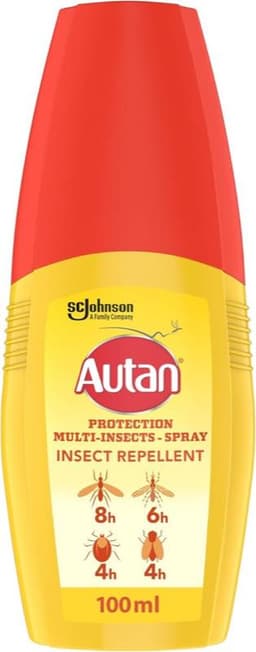
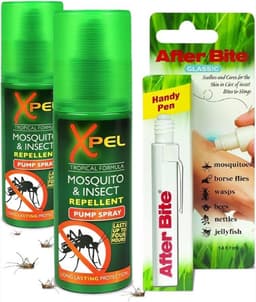
Spray onto your hands, then wipe the face, keeping it off eyes, mouth, and broken skin. Autan’s bullets allow spray on skin or on hands. For a child, use your hands and do not leave product on theirs. Both named sprays say over 2 years. UKHSA allows 50% DEET from two months, including in pregnancy, which is wider than these labels. Follow the bottle. Under two months, ask a clinician. Do not import an American 30% child cap and call it UK advice. APHY pumps locked after the first spray on a Rhodes holiday, so press the pump at home. The bottles are on best mosquito repellent.

Plastics, clothes, and water

DEET can mark watches, glasses, phone screens, and some varnish. Icaridin is the switch when you need to spare that kit, not a wristband. Autan’s listing asks about clothes and stores no answer, so this page will not invent a yes. Permethrin on fabric is not in this set and does not replace spray on bare skin. Reapply after swimming or heavy sweat, and when mosquitoes land, inside the label. Wash it off at the end of the day. Dye from a wet band is a stain, not a dose.

When this page is the wrong help

Stop here if repellent has gone into an eye, if a baby is under two months, if you need a decision on malaria tablets, or if you have a fever or an infected bite after travel. Those are for NHS 111, a pharmacist, or a travel clinic. A plug-in is a different object from a skin spray. If the pump leaked in the bag, as one Lifesystems review described, do not decant it onto your hands. Read the label you packed, including “Use biocides safely. Always read the label and product information before use.”

Common questions

Do you put sun cream on before or after insect repellent?
Sun cream first, then insect repellent, once the sunscreen has had a chance to absorb. UK traveller advice uses SPF 30 to 50 for that first layer. The Lifesystems listing says the same order and warns that DEET may reduce SPF by 30–40%, which is the manufacturer’s note. Do not mix the two in your hand before they go on. If the day is long, you may need more sunscreen on skin you have washed, and then repellent again afterwards.
How do I put repellent on a child’s face?
Spray or pump the product onto your own hands, then wipe the child’s face, keeping it off the eyes and mouth. Do not put repellent on the child’s hands. The two named sprays in this comparison are labelled for children over 2 years, which is stricter than the UKHSA sheet’s two-month line for 50% DEET. If your child is under the age on your bottle, do not stretch the label. Under two months, ask a clinician rather than improvising with a band.
Can the spray go on clothes?
Autan’s saved listing raises clothes as a question and stores no answer, so there is no yes to pass on from that page. Skin that is bare still needs the repellent on the skin. Treated clothing, such as permethrin on fabric, is a separate product and it is not in this set. Spraying a shirt and leaving your ankles bare is the pattern behind a lot of “it did not work” reviews. Cover the skin that insects can reach.
How often do I reapply?
Reapply after swimming or heavy sweat, and when mosquitoes or midges start to land, within whatever maximum the label allows. The malaria guidance notes that people often use about half the tested dose, so a single light spray at breakfast is a common reason the afternoon goes badly. Hour claims such as 8 hours, or 6 hours for tiger mosquitoes on the Autan listing, are ceilings. They are not a timetable this page can personalise in minutes the label does not print.
Why am I still bitten on my ankles?
The spray is probably not on the ankles. Reviews on the DEET pump praise it where it was applied and report bites on skin left out, which is often the ankle under a sock line or the back of a knee. Pull the cuff up and rub the product on the skin, including the tops of the feet if sandals leave them bare. A band 1 cm away from a bite, which is what one bracelet review described, shows the same gap: untreated skin is still available.

Related pages

Sources

Public UK sources used for this comparison. Shelf prices, stars and review counts are the amazon.co.uk figures captured for these eleven listings. Last checked 21 October 2026.

  1. UKHSA mosquito bite avoidance for travellers (retrieved 21 October 2026)
  2. UKMEAG bite prevention 2026 (retrieved 21 October 2026)
  3. fitfortravel malaria bite avoidance (retrieved 21 October 2026)
  4. HSE biocide advertisement requirements (retrieved 21 October 2026)
  5. HSE active substance expiry postponements (retrieved 21 October 2026)
  6. Which? mosquito repellents that last under three minutes (retrieved 21 October 2026)
  7. Rodriguez and others, 2017, bracelet trial (retrieved 21 October 2026)
  8. ASA ruling A16-359663 (retrieved 21 October 2026)