Independent comparisons. We may earn from shop links. More info

DEET vs picaridin

Updated: 23 October 2026

One pump says 50% DEET and the other says DEET-free. DEET vs picaridin is a real comparison only when you keep the strengths in view. At a matched dose the actives are close. At 50% DEET against a weaker picaridin bottle, UK guidance still puts DEET first if you can use it. This page uses Lifesystems and Autan in our [mosquito repellent comparison](/hub/pest-control/mosquito-repellent), from the UKHSA sheet, the 2026 malaria chapter, fitfortravel, and pages saved on 21 October 2026. A qualifying purchase can earn a commission at no extra cost to you.

One pump says 50% DEET and the other says DEET-free. DEET vs picaridin is a real comparison only when you keep the strengths in view. At a matched dose the actives are close.

Our top picks

On this page

Same chemical job, different strengths on the UK shelf

DEET and icaridin (picaridin on many labels) make landing and biting harder. They do not kill the insect. UKMEAG treats them as comparable around 20%, and says use 20% icaridin if you choose it. Fitfortravel wants at least 20% icaridin against infection, and 50% DEET where malaria is a risk. Extra DEET above 50% does not buy time. Lifesystems prints 50%, not 20%. Goodyer and colleagues, in the Journal of Travel Medicine, found little difference at a matched dose, and noted that UK shelves still sell 50% DEET while many picaridin products are weaker. A lot of those studies are not high quality. Saltidin is a brand name, not a test. The percentages are on the buying guide.

Skin, smell, and plastic

DEET is the active with the plastics warning. Watches, glasses, and phone screens can mark. That is a reason to change active, not to switch to a citronella band. UKMEAG allows DEET up to 50% in pregnancy and while breastfeeding, from two months. That is not a claim that picaridin is safer in pregnancy. Reviews are not a trial: Lifesystems is often oily, with bites on missed skin, and Autan is often quick to absorb, with a minority still bitten. Both labels say over 2 years. Putting either product on a face is on how to apply insect repellent.

The two bottles in this comparison

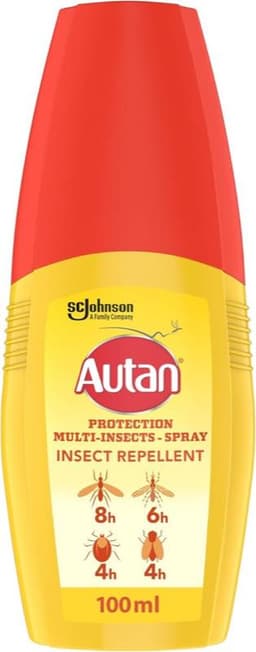
Choose Lifesystems, 50 ml at a saved £8.95, 4.5 from 1,300 reviews, up to 8 hours, when the biting is heavy and you tolerate DEET. It is the top pick because 50% is printed. Choose Autan, 100 ml at £8.50, 4.5 from 2,234, when you will not use DEET and the bottle is about 20% icaridin. The saved bullets do not print the percentage. A live page on 21 October 2026 showed Icaridine 20% (20 g/100 g). Confirm the carton. On those prices Autan is about £85 a litre and Lifesystems about £179, which is why Autan is best value if the strength is right. Who should skip each bottle is on best mosquito repellent.

Actives that are not in this basket

IR3535 is one of the four actives, and fitfortravel says not to rely on it where malaria is present. PMD, the specific oil from lemon eucalyptus, is used at about 30% and reapplied more often. If it gets in the eye it needs urgent care. Citronella is not PMD. A DEET-free bracelet contains neither active. The Advertising Standards Authority has rejected “just as effectively as Deet” where the evidence was not at that standard. DEET-free on Autan can still be a proper icaridin spray. DEET-free on its own is not a quality mark.

Common questions

Is picaridin as good as DEET?
At about 20% against about 20%, UK malaria guidance treats icaridin as comparable to DEET. Picaridin is the label name you will see for icaridin. The comparison changes when the DEET product is 50%, which is what the UK still sells for higher-risk trips and what fitfortravel wants where malaria is present. A lower picaridin bottle is not the same offer as 50% DEET.
Why do guidelines still say 50% DEET first?
Because that is the strength with the longest official backing for malaria-risk travel, and because going above 50% does not add duration. Icaridin at 20% is the stated alternative, not a silent upgrade. A review in the Journal of Travel Medicine notes that UK shelves can offer 50% DEET while picaridin products are often sold weaker, so the higher DEET product can lead when it is actually there. In this set it is there, on the Lifesystems pump.
Will DEET wreck my watch?
It can mark or soften some plastics, which is the warning UK sources print. Take the watch, glasses, and phone off the skin you are spraying, or accept the risk if you leave them in the way. A cloudy patch you already have will not wipe off with more DEET. If sparing that kit matters more than using 50% DEET, switch to icaridin at about 20% rather than to an untreated wrist. Icaridin does not come with a promise that no plastic will ever mark.
Is Autan 20% in the saved file?
Not in the bullets this comparison stored. Those bullets say the spray is picaridin-based, give separate hour claims for common mosquitoes, tiger mosquitoes, and flies or ticks, and stop before a percentage. The live amazon.co.uk page on 21 October 2026 printed Icaridine 20%. Until you read that on the bottle or carton in front of you, do not tell someone else the stored file proved 20%. If the bottle shows a much lower figure, it is a different product from the one this page recommends as best value.
Can I use either in pregnancy?
The UKHSA line that covers pregnancy and breastfeeding is about DEET, up to 50%, from two months of age. If you can use DEET, that is the strength the sheet puts first. This page does not claim picaridin is safer in pregnancy, because the sources we used do not say that. Both bottles here are labelled for children over 2, which does not block an adult. Malaria tablets in pregnancy are a clinician’s decision. The spray does not settle that question.

Related pages

Sources

Public UK sources used for this comparison. Shelf prices, stars and review counts are the amazon.co.uk figures captured for these eleven listings. Last checked 21 October 2026.

  1. UKHSA mosquito bite avoidance for travellers (retrieved 21 October 2026)
  2. UKMEAG bite prevention 2026 (retrieved 21 October 2026)
  3. fitfortravel malaria bite avoidance (retrieved 21 October 2026)
  4. HSE biocide advertisement requirements (retrieved 21 October 2026)
  5. HSE active substance expiry postponements (retrieved 21 October 2026)
  6. Which? mosquito repellents that last under three minutes (retrieved 21 October 2026)
  7. Rodriguez and others, 2017, bracelet trial (retrieved 21 October 2026)
  8. ASA ruling A16-359663 (retrieved 21 October 2026)