Independent comparisons. We may earn from shop links. More info

How to use mite spray without treating every job alike

Updated: October 2026

You already have a bottle or can and want to know how to use mite spray. First identify whether its label is for plants, furnishings, poultry housing or a caged bird. The method changes with the host. Compare the stated job in the [mite spray comparison](/hub/pest-control/mite-spray), then read the physical label before opening it. Coverage, eggs and repeat timing matter, and they do not replace the directions. No retained listing states a treated area. If you still need to choose, use the [best mite spray by job](/hub/pest-control/mite-spray/sub/mite-spray-best).

You already have a bottle or can and want to know how to use mite spray. First identify whether its label is for plants, furnishings, poultry housing or a caged bird. The method changes with the host.

Our top picks

On this page

Read the can you actually hold

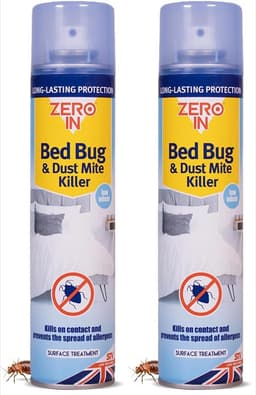
Check the product name, target pest, permitted surface or species, amateur-use statement, authorisation number, hazards and repeat interval. Make sure those details match the item ordered, because marketplace titles and fields can conflict. One Zero In title says 2 × 300 ml while its volume field says 300 ml. The READY STEADY DEFEND item field says aerosol while reviewers describe a trigger bottle. Use the label on the delivered pack, not a review describing another size. Plan the follow-up before the first application. Mite and bed-bug eggs may survive an initial contact treatment, but the correct repeat interval is product-specific. A reviewer repeating a poultry spray every three days is not a substitute for its label, and a six-month seller claim does not prove that no repeat is needed.

Plants: reach under the leaf, then reassess

Glasshouse red spider mite usually lives on the underside of leaves. The upper surface may show fine pale mottling while the lower surface carries mites, eggs, cast skins and webbing. A contact spray from above can leave the target untouched. Inspect in good light and isolate an affected houseplant where practical. The Royal Horticultural Society notes that hot, dry, crowded glasshouses favour these mites. Raising humidity can reduce risk. It does not clear an established infestation. Phytoseiulus persimilis is a biological option, though not for fruit-tree red spider mite. Verify a current MAPP number and follow the crop, rate and harvest directions. READY STEADY DEFEND is the only plant listing here. Its bullets say shake, spray affected areas and reapply as needed. The file has no MAPP number, and “until harvest” is only a marketplace bullet. More detail is in the spider mite spray guide.

Mattresses and furnishings: patch-test first

Household aerosols here target different combinations of mattresses, frames, skirting, carpets and furnishings. Do not transfer one listing’s surfaces to another. Zero In says test a small area first, which matters on coloured fabric and carpet. Follow the can’s distance, drying and ventilation instructions. The marketplace file is not enough to invent them. Treating visible seams is not treating a whole room. If bed bugs are suspected, do not move bedding between rooms or keep adding aerosol. The British Pest Control Association says amateur pesticides are highly unlikely to clear bed bugs alone. For house-dust-mite allergy, spraying is not the foundation. Allergy UK says carpet sprays should not go on pillows, soft toys or places where children play. Covers and a 60°C wash are in the dust mite spray guide. “More than two weeks” and “up to six months” are seller bullets, not a repeat schedule.

A coop treatment, then a stopping point

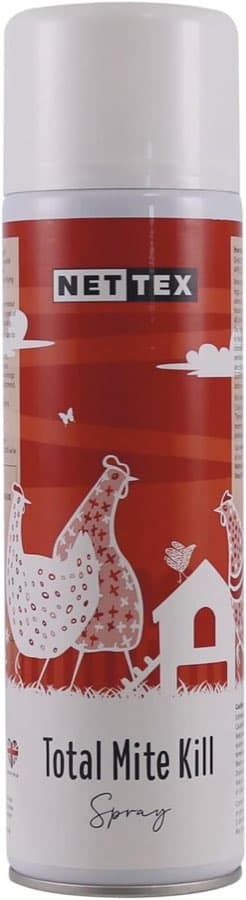
Poultry red mite hides in cracks and comes out to feed, so the housing matters as much as the nozzle. Clean the coop only as the veterinary plan directs. Nettex Total Mite Kill is a 250 ml spray with an oily residual for cracks. The file names no active, approval number or egg-withdrawal period. Do not turn reviewer timing into instructions. One reviewer repeats every three days, another sprays through summer, and one says the can covers only a small coop. GOV.UK laying-hen guidance notes that the life cycle can run from egg to adult in as little as a week, and recommends a protocol agreed with a vet. Do not apply a housing product to birds unless the label permits it, and do not substitute Johnson's caged-bird pump because reviewers mention hens. Stop and call a vet for pale combs, weakness or blood-spotted eggs. In England you must not destroy a wild bird nest while it is in use.

Common questions

Where should you spray a plant for spider mites?
Inspect the lower leaf surface, where glasshouse red spider mite usually feeds and lays eggs. A contact product must reach the target within its label directions. Spraying only the upper leaf is likely to miss much of the infestation.
Does a six-month bullet mean no repeat is needed?
No. The Professional Strength six-month wording is a seller bullet, not a measured schedule in this comparison. Use the physical label and monitor the result rather than assuming one application lasts for that period.
Can you spray pillows or soft toys?
Allergy UK says carpet sprays should not be used on pillows, soft toys or places where children play. Do not copy a customer review that describes doing so. Follow health advice and the exact product label.
How often should a poultry spray be repeated?
Only at the interval stated on an appropriate authorised label and within a vet-led protocol. Reviewer reports of every three days are anecdotes, not directions, and this file gives no egg-withdrawal period.
Can one method cover a cage bird and a mattress?
No. A caged-bird pump and a household aerosol have different hosts and exposure routes. Use only the species, pest and surface printed on the physical label.
When should you stop spraying?
Stop when the label does not match, irritation occurs, the infestation continues, birds appear ill or bed bugs are identified. Contact a vet, clinician or qualified pest controller according to the problem rather than escalating an uncertain application.

Related pages

Sources

Public UK sources from the research digest, last checked on 15.10.2026.

  1. Cambridge University Hospitals — Dust mites in your home (retrieved 15.10.2026)
  2. Allergy UK — House dust mite allergy factsheet (retrieved 15.10.2026)
  3. HSE — Regulated biocides (retrieved 15.10.2026)
  4. HSE — Using biocides (retrieved 15.10.2026)
  5. HSE — Pesticides in the garden and home (retrieved 15.10.2026)
  6. RHS — Glasshouse red spider mite (retrieved 15.10.2026)
  7. GOV.UK — Poultry welfare recommendations (retrieved 15.10.2026)
  8. BPCA — Secondary infestations from birds (retrieved 15.10.2026)