Independent comparisons. We may earn from shop links. More info

Dust mite spray: what reduces allergen in a UK home

Updated: October 2026

You have year-round sniffing, wheezing or eczema and have been told to reduce house dust mite, so a dust mite spray looks like a simple answer. UK health guidance does not put a can first. Cambridge University Hospitals says acaricide sprays are of limited help and are not recommended. Allergy UK prioritises enclosing covers, washing and careful cleaning. This page sets those measures beside the bedding products in the [mite spray comparison](/hub/pest-control/mite-spray). A spray is not a treatment for asthma, eczema or allergy. Discuss symptoms with a healthcare professional.

You have year-round sniffing, wheezing or eczema and have been told to reduce house dust mite, so a dust mite spray looks like a simple answer. UK health guidance does not put a can first.

Our top picks

On this page

The allergen, not just the mite

House dust mites are microscopic relatives of spiders that live where they find warmth, moisture and skin scales, particularly bedding and soft furnishings. The allergy is mainly triggered by proteins in their droppings and body fragments. Killing a live mite does not automatically remove that material from a mattress, carpet or duvet. Seeing fewer moving mites, even if you could measure that at home, would not prove that allergen exposure had fallen enough to change symptoms. The useful question is broader than whether the spray kills mites. Ask whether the plan encloses reservoirs, removes washable allergen and reduces the conditions mites favour. Allergy UK notes that mite allergen dissolves in water. A cooler wash can remove allergen temporarily, but it does not reliably kill the mites. Washing at 60°C or above does both for suitable items.

Covers and a hot wash come first

Use breathable, allergen-proof covers that fully enclose the mattress, duvet and pillows, following the manufacturer’s fitting and care instructions. A partial pad on top of a mattress does not create the same barrier as a zipped enclosure. Covering the main reservoirs is a continuing measure, not a one-off chemical application. Wash suitable bed linen weekly at 60°C or above. Check textile care labels, because not every item tolerates that temperature. For items that cannot be hot-washed, use the alternatives recommended by a clinician or a trusted allergy source rather than improvising with insecticide. Cambridge University Hospitals suggests vacuuming the mattress weekly if it has no cover and says the allergic person should not do that vacuuming. A cover without washing leaves allergen on removable bedding, while washing without addressing the mattress leaves a large reservoir exposed. A seller’s six-month spray claim cannot replace that routine.
Zero In Zero In ZER968 twin

Testsieger

Zero In Zero In ZER968 twin
8.6/10about £11

What UK health sources say about sprays

Cambridge University Hospitals does not recommend acaricide sprays for reducing house-dust-mite exposure. Its guidance says they are of limited help, may irritate and should be avoided around children and pets. If someone has respiratory disease, ask a clinician before an aerosol or fragranced liquid. Allergy UK says carpet products need care in respiratory disease and should not go on pillows, soft toys or areas where children play. One marketplace review describes spraying a child’s soft toys. A review is not safety guidance. “Non-toxic” or “natural” does not settle the question. HSE rules restrict those terms on biocidal labels because they can understate risk. No retained bedding listing shows an HSE number in its file. If you use a product after advice, follow only its complete label. Repeat timing is in the mite spray use guide.

The bedding cans in this comparison

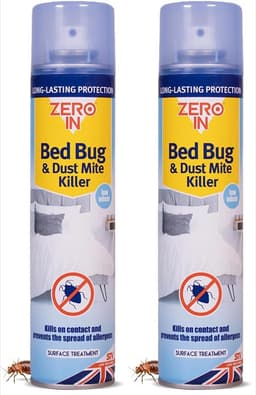
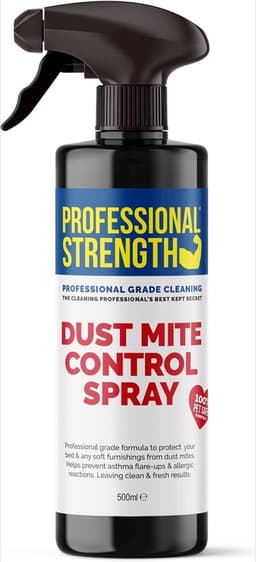
Professional Strength is a 500 ml bottle at £9.99 or three bottles at £21.99. Both show 3.9 from 84 and share the same 15 review texts, so they are one feedback pool. The bullets claim up to six months. The files name no active or approval number. The scent field says unscented while a bullet says fresh or clean cotton. The single bottle lists pillows. The three-pack bullets omit them. Do not transfer that wording. Reviews include mites still moving after the liquid dried. Three Zero In packs name bed bugs and dust mites, plus cyphenothrin and prallethrin. They claim more than two weeks and say to patch-test fabric so mattresses and carpets do not stain. ZER968 at £11 has the largest review count. The £6.99 twin has conflicting volume fields, and £14.49 buys four 300 ml cans. Neither range is an allergy treatment. Pack differences are on the best mite spray by job. The health decision still starts with covers, washing and clinical advice.

Common questions

Do dust mite sprays clear a home?
No retained product proves that it clears a home of mites or allergen. Cambridge University Hospitals does not recommend acaricide sprays for this purpose. Enclosing covers, suitable 60°C washing and a consistent cleaning routine address reservoirs more directly.
Does a cooler wash still help?
Allergen dissolves in water, so a cooler wash can remove some of it for a time. Allergy UK says 60°C or above is needed to kill mites in suitable washable items. Always check the textile care label.
Can you spray pillows or children’s soft toys?
Allergy UK advises that carpet sprays should not be used on pillows, soft toys or places where children play. Do not treat a customer review as permission to override that boundary.
What supports the Professional Strength six-month claim?
In the retained marketplace file, it is a seller bullet. No active ingredient, approval number or independent measurement supporting six months is provided, and reviews include mites moving after the liquid dried.
How is Zero In different?
The retained Zero In bullets name cyphenothrin and prallethrin, include bed bugs as well as dust mites and claim more than two weeks. They also require a fabric patch test. The files still show no HSE number.
When is this a clinical question?
Seek clinical advice when symptoms such as wheeze, persistent rhinitis or eczema drive the purchase, especially for a child or someone with asthma. A spray comparison cannot diagnose the trigger or replace a treatment plan.

Related pages

Sources

Public UK sources from the research digest, last checked on 15.10.2026.

  1. Cambridge University Hospitals — Dust mites in your home (retrieved 15.10.2026)
  2. Allergy UK — House dust mite allergy factsheet (retrieved 15.10.2026)
  3. HSE — Regulated biocides (retrieved 15.10.2026)
  4. HSE — Using biocides (retrieved 15.10.2026)
  5. HSE — Pesticides in the garden and home (retrieved 15.10.2026)
  6. RHS — Glasshouse red spider mite (retrieved 15.10.2026)
  7. GOV.UK — Poultry welfare recommendations (retrieved 15.10.2026)
  8. BPCA — Secondary infestations from birds (retrieved 15.10.2026)