Independent comparisons. We may earn from shop links. More info

How to get rid of pantry moths

Updated: 23 October 2026

You have found silk in the flour and a moth on the cupboard door, and you want them gone this weekend. How to get rid of pantry moths starts with the food, not with a glue card. Larvae are in the packets. A pheromone trap catches males that are already flying. The British Pest Control Association puts an outside bin and a deep clean ahead of gadgets. Choosing among the nine amazon.co.uk cards sits on the [food moth trap comparison](/hub/pest-control/food-moth-trap). We may earn a commission if you buy through our links. Do not spray the inside of a food cupboard as a shortcut.

You have found silk in the flour and a moth on the cupboard door, and you want them gone this weekend. How to get rid of pantry moths starts with the food, not with a glue card. Larvae are in the packets.

Our top picks

On this page

What to throw away

Throw away anything with webbing, clumped flour, larvae, pupal cases, or a hole that fits Indian meal moth damage. Waltham Forest lists grains, flour, nuts, dried fruit, pet food, seeds, and chocolate. Check rice, pasta, and opened mixes. Larvae chew paper, cellophane, and polythene. The British Pest Control Association says contaminated food goes in an outside bin. Dr. Killigan's bullets say find the source and get it out of the house. A Hey Nature reviewer traced moths to a holed bag of bird seed. A sealed tin you can wipe is a different case from a paper bag beside webbing.

Clean shelves and cracks

Vacuum the shelf pins, the hinge side, the cracks where shelves meet the carcass, and the floor under the cupboard. Empty the vacuum into the outside bin. Wipe with hot water and washing-up liquid and let the shelves dry. Skip insecticide sprays next to flour. If moths continue after that pass, the British Pest Control Association's line is to call a professional. Check pet food and bird seed in the garage. If you cannot find the source, Bromley's leaflet points to a contractor.

Store what you keep

Decant what you keep into a stout jar or a tin with a tight lid. These insects get through ordinary food bags. Wipe the outside of anything you put back. Do not tip flour from a paper bag into a jar without looking. New shopping stays in the containers until you have had a quiet week. A second generation can emerge from a crack you missed. One PIC reviewer restocked and saw moths again because the shelf was not finished.

Then set a trap

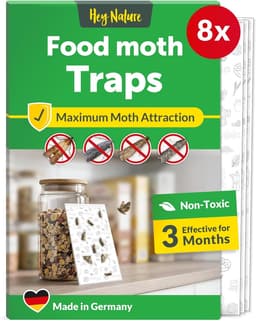
Set one monitor after the shelves are dry. Follow how to use pantry moth traps for the peel and the door strip. Date the card and leave the rest of the pack sealed. A catch in the first days means you missed a packet or a crack. Veddelholzer's 10-pack and ENTOEND's six prisms last only if you use them in sequence. Glue does not reach larvae in a jar you decided to keep.

When moths keep coming back

Give the clean-out about a week before you buy a second brand. Search the garage seed, the pet-food tub, and chocolate at the back of a tin. If you still cannot find the source, call a pest controller. A new trap will not fix a sack left in the shed. Empty glue with moths still flying can mean a clothes moth or a house moth. None of these listings print a GB biocidal authorisation number. A conditional pick is on best pantry moth traps.

Common questions

Do I have to throw all the flour away?
Throw away flour and other dry food that is webbed, clumped, holed, or sitting open next to infested packets. A sealed tin you can wipe is a different case. Thin bags are poor protection because Indian meal moth larvae chew paper, cellophane, and polythene. If you are unsure about an open bag, bin it.
Can I keep food if I see no larvae?
Only if the pack is intact, dry, and was not open beside the infestation. No larvae visible in a paper bag is a weak test. Decant sound food into a tight container after you have looked, and do not keep a bag you only shook. Larvae are the part the glue card never catches.
Why use an outside bin?
The British Pest Control Association tells you to put contaminated food outside. An indoor bin stays in the kitchen, and adults can fly back to the shelf you just cleared. Bag the waste, tie it, and take it out before you wipe. Empty the vacuum outside for the same reason.
Are sealed plastic boxes enough?
A stout box or jar with a tight lid is better than the thin polythene the larvae can chew. It is not a cure for food that is already infested. Look before you decant. Wipe the outside of tins you put back. New shopping goes into those containers rather than staying in the shop bag.
When can I set the moth trap?
After the waste is outside, the shelves are dry, and the food you kept is sealed. One card in that cupboard is the monitor. Peel and placement, including a back strip that falls off, are on the how-to-use page. The trap does not replace the bin or the vacuum.
Bird seed in the garage — does it count?
Yes. Waltham Forest lists seeds and pet food. Hey Nature reviews include a holed bag of bird seed as the source of a kitchen problem. Dr. Killigan's bullets name bird seed and pet food. Check those sacks in the same clean-out, or the cupboard moths will continue.
When should I call a pest controller?
If moths keep appearing after you have binned the food, vacuumed, and still cannot find the source, or if you are dealing with a food business rather than a home cupboard. A professional is also reasonable if the clean-out itself is more than you want to do. Another glue card is not the step that finds a hidden sack.

Related pages

Sources

Public UK sources used for species, lure limits, and monitor wording. Shelf prices, stars and review counts are the amazon.co.uk figures captured for these nine listings. Last checked 19 October 2026.

  1. HSE insect monitoring traps (retrieved 19 October 2026)
  2. HSE biopesticides, pheromone section (retrieved 19 October 2026)
  3. BPCA moth control (retrieved 19 October 2026)
  4. Waltham Forest Indian meal moth fact sheet (retrieved 19 October 2026)
  5. Bromley stored product insects leaflet (retrieved 19 October 2026)
  6. Rentokil UK moth species (retrieved 19 October 2026)
  7. Pest Evidence pheromone traps (retrieved 19 October 2026)
  8. London Moth troubleshooting (retrieved 19 October 2026)