Independent comparisons. We may earn from shop links. More info

How to use pantry moth traps

Updated: 23 October 2026

The card is on the worktop, the glue is still covered, and you can already see a moth on the ceiling. How to use pantry moth traps is mostly peel, place, and read. The lure draws males. Larvae stay in the food until you throw that food away. If the cupboard is still full of webbed flour, do the [kitchen clean-out for pantry moths](/hub/pest-control/food-moth-trap/sub/food-moth-trap-kitchen-clean-out) before you trust a catch. The nine cards in this set are compared on the [food moth trap comparison](/hub/pest-control/food-moth-trap). We may earn a commission if you buy through our links.

The card is on the worktop, the glue is still covered, and you can already see a moth on the ceiling. How to use pantry moth traps is mostly peel, place, and read. The lure draws males.

Our top picks

On this page

Before you peel

Leave the rest of the pack sealed. Open one trap and write the date on the outside. Veddelholzer's 10-pack and ENTOEND's six prisms at 6–8 weeks each only last if you use them in sequence. If you can still see webbing or larvae in flour, cereal, pet food, or bird seed, the card is early. The British Pest Control Association puts an outside bin and a shelf clean ahead of gadgets.

Set the card

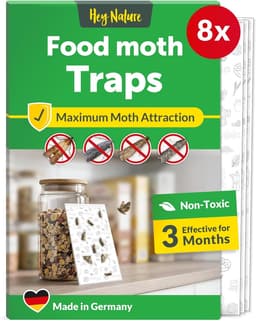
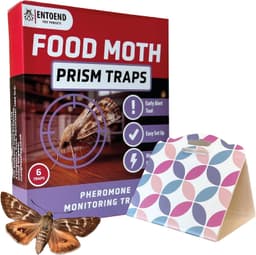
Peel the film and keep your fingers off the sticky face. Fold only if the card is creased for a prism. ENTOEND folds into a triangle and can hang from the hole. One Pest Expert reviewer found film still over the hang tab. Hey Nature, PIC, and Veddelholzer are flat patches with a narrow back strip. Do not press the catching glue against the door. The pheromone is already in the glue. No scent is normal on the odourless listings.

Where to place it

Put the card in the cupboard where you found the food, not on an open bag. One trap there is enough to start. A second card belongs in a different cupboard. PIC, Hey Nature, and Veddelholzer reviews describe a weak back strip. Veddelholzer buyers report the card on the floor within an hour. Hang the prism or stand a folded card on the shelf edge. Keep it out of a draught and off a warm appliance.

Read the glue and replace the card

Check about once a week. A few males after you have binned the source means adults are still flying. Replace the card when the glue is full or the stated life ends. PIC and Veddelholzer print up to 8 weeks, Hey Nature up to 12 weeks, Super Ninja up to 3 months, Pest Expert up to 90 days, and ENTOEND 6–8 weeks each. Dr. Killigan's, MothMag, and Puciuua print no life. Take the old card out wrapped.

Empty trap, moths still flying

An empty card with moths on the ceiling is a common review. The film may still be on. The moth may be female, or a clothes, carpet, or house moth. Food may still be in pet food or bird seed. Fruit flies ignore these cards. If the damage does not match stored food, read pantry moth or clothes moth trap. If males keep coming after a discard and clean, call a professional rather than adding more glue.

Common questions

Do I peel one trap or the whole pack?
Peel one. Date it. Leave the others in their sealed packs or foil bags until that card is full or its stated life ends. Opening the whole box on day one shortens the monitoring window you paid for, including ENTOEND's long pack claim.
Where should the card sit in the cupboard?
Near the shelf where you found the infested food, off the food itself, and out of the way of hands. One card for that cupboard is a sound start. A second card is for a different cupboard, not for the same door. Avoid a draughty spot and the top of a warm appliance.
Can I stick it on the cupboard door?
Only if the back strip holds on a clean, dry surface. In PIC, Hey Nature, and Veddelholzer reviews the strip often does not. Hang a prism from the hole or stand a folded card on the shelf edge instead. Do not press the catching glue against the door to compensate.
How do I know the lure is active?
You have peeled the film, the date is written down, and the card is inside its stated life. Several listings call the lure odourless, so a lack of smell is not a fault. Activity shows up as male moths on the glue, or as a continued empty card that you then troubleshoot. It does not show up as a strong perfume.
How often should I check the glue?
About once a week is enough to see whether males are still arriving. A sudden coat of moths in the first hour, which Hey Nature and Veddelholzer reviewers report, is a reason to look again for a missed packet, not a reason to declare the kitchen clear.
What if moths stick but more keep flying?
The card is catching some males while females and larvae, or a second source, remain. Bin any food you have not already checked, including pet food and bird seed, and keep one fresh card as a monitor. More traps in the same cupboard will not remove larvae from a packet.
When do I replace the card?
When the glue is full, or when the printed life ends: 6–8 weeks, 8 weeks, 12 weeks, 3 months, or 90 days, depending on the listing. If your brand prints no life, replace a dusty or loaded card and do not invent a number. Use the next sealed trap from the pack.
Why is the trap empty but I see moths?
The usual reasons in these reviews are an unpeeled film, females only, the wrong species, a failed door strip so the card is on the floor, or food still in the cupboard. Match the damage to the lure before you assume the glue is faulty. A clothes moth will not read a pantry pheromone.

Related pages

Sources

Public UK sources used for species, lure limits, and monitor wording. Shelf prices, stars and review counts are the amazon.co.uk figures captured for these nine listings. Last checked 19 October 2026.

  1. HSE insect monitoring traps (retrieved 19 October 2026)
  2. HSE biopesticides, pheromone section (retrieved 19 October 2026)
  3. BPCA moth control (retrieved 19 October 2026)
  4. Waltham Forest Indian meal moth fact sheet (retrieved 19 October 2026)
  5. Bromley stored product insects leaflet (retrieved 19 October 2026)
  6. Rentokil UK moth species (retrieved 19 October 2026)
  7. Pest Evidence pheromone traps (retrieved 19 October 2026)
  8. London Moth troubleshooting (retrieved 19 October 2026)