Independent comparisons. We may earn from shop links. More info

Carpet moth traps

Updated: 23 October 2026

The pile has gone thin along the skirting, and the bald patch under the sofa is worse than the one you noticed in March. Carpet moth traps are what people type when that happens. In a UK house the insect is usually a clothes moth, often the case-bearing clothes moth, Tinea pellionella. Larvae eat the wool. Adults do not. A pheromone card counts males. It does not pull a larva out of the underlay. The eleven packs are on the [clothes moth trap comparison](/hub/pest-control/clothes-moth-trap). Listings were saved on 21 October 2026. There is no lab test. A qualifying purchase can earn a commission at no extra cost to you.

The pile has gone thin along the skirting, and the bald patch under the sofa is worse than the one you noticed in March. Carpet moth traps are what people type when that happens.

Our top picks

On this page

Carpet moth is usually the case-bearing clothes moth

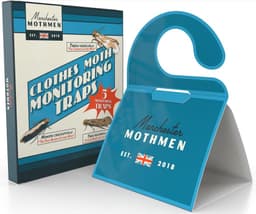
English Heritage’s fact sheet on the case-bearing clothes moth describes holes in wool, in soiled silk, and in fur and feathers. Larvae live in cases, often under furniture and at carpet edges, and they like it damper than the webbing clothes moth does. The adult is about 9–16 mm. The Museum treats that insect and the common clothes moth, Tineola bisselliella, as the two usual pests. A product title that says carpet moth is often still a Tineola lure. Acana names both Latin species and says the boards attract and kill. It states no life, it is 4.0 from 116 reviews, and saved UK texts include moths that ignored the cards. Manchester Mothmen names common, case-bearing and pale-backed moths, says monitoring only, and sells a three-sided floor card at £17.95, about £3.59 a trap, 4.6 from 632, with no stated life. MothOut names webbing, case-bearing and pale-backed moths. Pale-backed is a seller claim. Insectix’s title says carpet detection and the bullet names male Tineola only. A Tineola-only pad is a weak answer to a case-bearing hole. A larger brown moth, about 15–26 mm, is the brown house moth on UKMoths. What to read on a listing is on the clothes moth trap buying guide.

A card at the edge, not in the pile

Put the card flat at the skirting, behind a sofa leg, or under the furniture, where you can still see it. Do not press it into the pile. Glue in the wool sticks to the wool. MothOut’s seller sheet says a card can lie flat under furniture. Manchester’s listing says clothes moths tend to crawl, so a three-sided trap can sit on the carpet and be rotated. That is a reason to pay about £3.59 a trap if the damage is on the floor. Reviewers describe day-one catches behind furniture, and one is explicit that the traps catch adults, not the larvae in wool, sheepskin and fur. One card per room, or about 3 metres apart, still applies. Five cards under one sofa compete. Vacuum first, then place. A lavender pouch is a freshener. Park it away from the card. Manchester’s wording stays on monitoring. Acana’s says attract and kill. Wardrobe steps are on how to use clothes moth traps.

Vacuum the edge before you read the card

English Heritage says regular vacuuming of edges and under furniture, including the underlay, does more to stop a build-up than a trap. Move the sofa. Use a crevice tool along the skirting, under stair rods if you have them, and along the tack line. Cases and frass sit in those lines. A card on an unvacuumed edge can fill with males and leave the cases where they were. Shake a rug outside if you can, and look at the back. A monitor on the surface does not reach wool underlay.

When a full card is still not a repair

An empty card on a damaged carpet is not an all-clear. You may have the wrong moth, you may be early, or the males may be under the floor while larvae keep feeding. A full card tells you male clothes moths are using that room. If the pile or the underlay is still eaten after that clean and a fresh trap, call a professional. Do the same if you cannot identify the moth, or before foggers and mothballs. A bird nest in a blocked flue is a building fault. For a rug you can lift, keep the freeze figures apart. The Museum cites −20°C for a week, or 49°C for more than 30 minutes. English Heritage cites −18°C for two weeks. A fitted carpet is not a jumper you can bag. Sprays and mothballs are on clothes moth trap vs spray.

Common questions

Is a carpet moth the same as a clothes moth?
In UK homes the damage at floor level is usually from clothes-moth larvae, often Tinea pellionella and also Tineola bisselliella. Shop titles say carpet moth for both. Adults do not eat the carpet. A pheromone trap is aimed at males.
Which packs in this set actually name Tinea pellionella?
Acana prints Tinea pellionella and Tineola bisselliella, with kill wording and no stated life. Manchester Mothmen and MothOut name case-bearing moths in common language, plus pale-backed moths. Insectix’s bullet names only male Tineola. Entopest says related species are not guaranteed.
Where do I put the card if the holes are under the sofa?
Lay it flat at the edge or just under the furniture, where you can slide it out. Do not push it into the pile. Vacuum the same edge first. One card for that room tells you more than five under one cushion.
What if I only see a larger brown moth?
It may be a brown house moth, about 15–26 mm on UKMoths, which these clothes-moth listings exclude. A clothes-moth pheromone is the wrong lure. An empty card does not clear the carpet.
When do I lift the carpet or call someone?
Lift a rug you can move and look at the back. For a fitted carpet, call a professional if the pile or the underlay is still eaten after a vacuum and a fresh trap, or if you cannot name the moth. The card will not reach larvae under the gripper rods.

Related pages

Sources

Public UK sources used for species, lure limits, and monitor wording. Shelf prices, stars and review counts are the amazon.co.uk figures captured for these 11 listings. Last checked 21 October 2026.

  1. Natural History Museum clothes moth guide (retrieved 21 October 2026)
  2. English Heritage clothes moth prevention (retrieved 21 October 2026)
  3. English Heritage insect pest management (retrieved 21 October 2026)
  4. HSE monitoring traps (retrieved 21 October 2026)
  5. HSE regulated biocidal products (retrieved 21 October 2026)
  6. HSE decisions on scope (retrieved 21 October 2026)
  7. UKMoths brown house moth (retrieved 21 October 2026)
  8. Fort Products safety data sheet (retrieved 21 October 2026)