How to choose a bird deterrent in the UK
Pigeons on the fence, gulls on the lawn, or something stripping weekend seed, and amazon.co.uk mixes plastic strips, owls, hawk kites, and boxes that claim to upset birds with sound. A bird deterrent in the UK is a non-lethal device meant to stop wild birds landing or feeding where you do not want them. The useful first split is the job: cover the perch, or scare an open patch of ground. Those are different purchases. Peter F., editor for DIY & tools at productscompared.co.uk, uses the 11 listings kept for the [bird deterrent comparison](/hub/pest-control/bird-deterrent) on 20 October 2026, plus public UK guidance. It is not a lab test. A qualifying purchase can earn a commission at no extra cost to you.
Pigeons on the fence, gulls on the lawn, or something stripping weekend seed, and amazon.co.uk mixes plastic strips, owls, hawk kites, and boxes that claim to upset birds with sound.
Pigeons on the fence, gulls on the lawn, or something stripping weekend seed, and amazon.co.uk mixes plastic strips, owls, hawk kites, and boxes that claim to upset birds with sound. A bird deterrent in the UK is a non-lethal device meant to stop wild birds landing or feeding where you do not want them. The useful first split is the job: cover the perch, or scare an open patch of ground. Those are different purchases. Peter F., editor for DIY & tools at productscompared.co.uk, uses the 11 listings kept for the bird deterrent comparison on 20 October 2026, plus public UK guidance. It is not a lab test. A qualifying purchase can earn a commission at no extra cost to you.
Our top picks
| Badge | Product | Job on this shelf | Mechanism | Where it belongs | Note | Price | Offer |
|---|---|---|---|---|---|---|---|
| Best overall |  EarlyGrow EarlyGrow fence spikes, 10-pack | Cover a timber rail | Perch denial | Fence, with screws you buy | 8.3 | about £6.95 | View offer |
| Best value |  KOKMEYA KOKMEYA bird scare rods, 6-pack | A small flash you move | Moving visual | Eave, branch, or rail | 6.1 | about £6.29 | View offer |
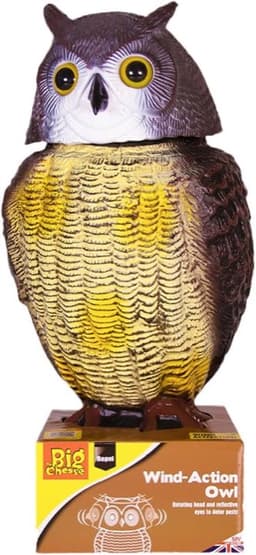
| Alternative |  The Big Cheese The Big Cheese wind-action owl | Scare an open patch | Moving visual | Lawn with wind at the head | 6.5 | about £12.99 | View offer |


On this page
Name the job before the brand
Four mechanisms on this shelf
What to skip even if the listing says bird repeller
Match the site
What you can decide today
Common questions
What bird deterrent should I buy for a UK garden fence rather than a lawn?
Do I need a licence to put up a scarer or a spike strip?
Will a plastic owl or a pinwheel keep birds off a balcony rail?
Can I fit anything if birds are already nesting?
When is this a job for a pest-control firm rather than a £7 strip?
Related pages
Sources
Public UK sources used for this comparison. Shelf prices, stars and review counts are the amazon.co.uk figures captured for these 11 listings. Last checked 20 October 2026.
- Wildlife and Countryside Act 1981, protection of birds (retrieved 20 October 2026)
- GOV.UK, prevent wild birds damaging land (retrieved 20 October 2026)
- Natural England GL41 (2026) (retrieved 20 October 2026)
- Natural England GL42 (2026) (retrieved 20 October 2026)
- WML-GU01, legal methods (retrieved 20 October 2026)
- Defra annex on non-lethal alternatives (retrieved 20 October 2026)
- Natural Resources Wales, deterring birds (retrieved 20 October 2026)
- RSPCA, pigeons in the garden (retrieved 20 October 2026)