Independent comparisons. We may earn from shop links. More info

Wood filler vs wax sticks for scratches and chips

Updated: October 2026

A chip in a finished cabinet and a small hole in bare skirting can look similar, but treating both with the same tub can damage the surface. In the wood filler vs wax sticks choice, wax is for disguising a shallow mark in a finish you do not want to sand, while filler is for a hole you intend to level and coat. The main [wood putty comparison](/hub/paints-and-varnishes/wood-putty) includes both types because amazon.co.uk titles often mix their names. This guide separates their jobs, limits and products. If a screw must bite into the repair or the timber is soft outdoors, move to the [wood filler buying guide](/hub/paints-and-varnishes/wood-putty/sub/wood-putty-buying-guide) instead.

A chip in a finished cabinet and a small hole in bare skirting can look similar, but treating both with the same tub can damage the surface.

Our top picks

On this page

When the surface is already finished

Wax suits a small scratch or chip in laminate, veneer or sealed furniture because it can be applied locally without sanding the whole face. A simple stick is rubbed or pressed into the mark, then scraped level and buffed. Laminate has a printed decorative layer and wear surface rather than solid colour throughout; sanding can dull or break through it. The limitation is structural. Wax does not restore the factory wear layer, recreate wood grain or strengthen a broken edge. One review says the wax shrank and came out, so a no-shrink claim should not be treated as a universal result. Choose wax for a pale chip in laminate or a small furniture scratch that will receive light contact. Do not sand it afterwards.

When you still need to sand, paint or screw

If a screwdriver still needs to bite, wax is the wrong buy. A stripped hinge hole needs a cured epoxy or another repair method suitable for the fixing, because cosmetic wax will not form a dependable plug. J-B Weld KwikWood is the epoxy-stick example in this comparison. Ready-mixed filler is the better side of this pair when the timber is bare or stripped and you plan to paint or stain after sanding. Everbuild light stainable 250 ml is listed as sandable in about 30 minutes, and its maker limits one coat to 5 mm. Sanding across a lacquered table or laminate board may cut through the intact coating around the defect. For the full layering and drying sequence, follow how to use wood filler. Bare wood that will receive paint favours paste; a shallow mark in an intact film favours wax.

Floors that are walked on

A review of a heated wax kit reports wax scraping back up in touched areas. Hard wax can be tougher than a soft rubbing stick, but neither recreates the original laminate wear layer. A long scratch across several boards, a swollen core or a broken click joint is unlikely to be solved by adding more colour. UK flooring guidance points towards board replacement when the damage is major, especially because laminate itself should not be sanded like solid timber. On a heated kit, the grey kit here lists a tip temperature up to 450 °C. Never touch the tip.

Which stick or tub is in this comparison

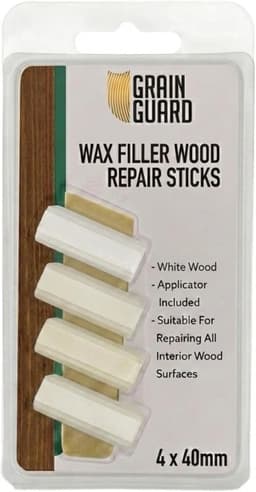
Grain Guard is the straightforward wax choice in the set. The white-wood pack costs £9.99, contains four 40 mm sticks and a scraper, and has 4.2 from 884 ratings. Its instructions say to press in, scrape and buff without sanding or painting. This listing is white wood, not a multi-pack of every shade named in the bullets. The 12-stick set is rated 3.5 from only seven reviews. The £22.99 SZ-KARIDGE kit includes 11 grey hard waxes and a USB heating pen, useful for repeated grey laminate repairs but excessive for one pale furniture nick, and it brings the listed 450 °C tip risk. On the paste side, Everbuild remains the simple option for a sanded paint-grade repair, with 4.5 from 9,188 ratings and a 5 mm coat limit. The job-by-job wood filler shortlist compares those conditions directly.

Common questions

Can I sand a wax repair?
No. Wax sticks are designed to be pressed or melted into a finished surface, scraped flush and buffed. Sanding can pull out the wax and damage the surrounding lacquer or laminate wear layer. If the repair must be sanded and painted, use a compatible hard-setting filler on suitably prepared timber instead.
Is wax enough for a chip in laminate?
Wax can disguise a small local chip when the board is otherwise sound and the shade can be matched. It does not rebuild the wear layer or repair a swollen core, broken edge or click joint. Large or high-traffic damage may justify replacing the board rather than repeatedly refilling it.
Will wax remain in a busy floor?
Not always. Friction, cleaning and movement can make wax lift or scrape out, and reviews include that complaint. Hard wax applied flush may last better than a soft rubbing stick, but it is still a cosmetic repair. Keep spare material and expect maintenance in walked areas.
When is ready-mixed filler better?
Choose ready-mixed filler for a shallow hole in bare or stripped wood that you will sand and then paint or cautiously stain. Everbuild limits its paste to 5 mm per coat. Avoid spreading it over intact laminate or finished furniture when sanding would damage the surrounding film.
What is a heated pen for?
A heated pen melts hard wax so shades can be blended and flowed into a chip before cooling. The grey kit here lists three heat settings and a tip up to 450 °C. Keep the hot end away from skin, children and the undamaged surface, and let it cool safely after use.
Which compared wax is the simplest choice?
Grain Guard's four-stick white-wood pack is the simplest evidenced option for a pale finish, with 4.2 from 884 ratings. Choose it only if the shade fits. The 12-stick budget set has just seven ratings, while the grey heated kit costs more and requires safe use of a hot applicator.

Related pages

Sources

Public UK sources and maker sheets used for the limits on this page. Prices, stars and review counts are the amazon.co.uk listing figures for the ten products compared here.

  1. Leyland SDM — wood fillers guide (retrieved 17 October 2026)
  2. Ronseal Multi Purpose Wood Filler (retrieved 17 October 2026)
  3. Ronseal High Performance Wood Filler (retrieved 17 October 2026)
  4. Everbuild multi-purpose wood filler technical data sheet (retrieved 17 October 2026)
  5. Milliput — how to use (retrieved 17 October 2026)
  6. HSE — wood dust (retrieved 17 October 2026)
  7. VOC in Paints, Varnishes and Vehicle Refinishing Products Regulations 2012 (retrieved 17 October 2026)
  8. Consumer Rights Act 2015, section 9 (retrieved 17 October 2026)