Independent comparisons. We may earn from shop links. More info

Matt or soft sheen emulsion: which finish should you choose?

Updated: October 2026

You have chosen a white emulsion, but the wall still presents a decision: should you use matt or soft sheen emulsion? In a UK hallway, soft sheen can make everyday marks easier to wipe, while matt is usually kinder to uneven plaster and patched areas. The short answer is to choose matt when hiding flaws matters most, soft sheen when the wall is sound and needs a light wipeable finish, or a washable matt when you want a flatter compromise. Our [wall paint comparison](/hub/paints-and-varnishes/wall-paint) places the relevant tins side by side; here, the focus is solely on what their finishes change.

You have chosen a white emulsion, but the wall still presents a decision: should you use matt or soft sheen emulsion?

Our top picks

On this page

What changes when the finish reflects light

Matt emulsion reflects relatively little light, so shallow dents, filler edges and small changes in texture are less obvious. Dulux likewise describes matt as a finish that helps to hide imperfections. This does not repair poor plaster. Soft sheen sits between matt and silk. It gives back more light than matt and is generally easier to wipe, but that reflection can reveal ripples and application marks. The practical trade-off is visual forgiveness versus a surface intended to tolerate more wiping. Choose matt for an uneven feature wall; choose soft sheen for a smooth, frequently touched wall.

The matt white and soft sheen white in this set

The matt brilliant white listing in our set was £17.01 when researched and carried a 4.5-star rating from 5,427 amazon.co.uk reviews. It is not named as washable. It suits a living room, bedroom or sound ceiling where a flat appearance matters more than regular cleaning. The Johnstone’s soft sheen brilliant white was £13.99, rated 4.6 stars from 519 reviews, and listed at 12 m² per litre. Although the product name says soft sheen, its finish field says satin. This tin makes more sense on a smooth hall wall than on lumpy plaster lit from the side. The lower displayed price does not automatically make soft sheen the better-value choice. Use our wall paint buying guide if you also need to settle colour, coverage or tin size.

Washable matt when you want both

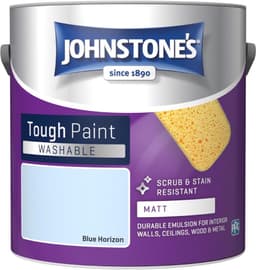
There is a third route if you want a flatter look without giving up the ability to wipe ordinary marks. The washable matt product in this set was £21.99 and had a 4.5-star rating from 9,681 amazon.co.uk reviews. Its explicit washable claim answers a hall or family room where reflection is unwelcome and occasional cleaning is expected. Treat “washable” as the maker’s description, not as proof of unlimited scrubbing. The listing does not provide an EN 13300 class 1 claim. For steam, grease and mould-related claims, our guide to kitchen and bathroom wall paint covers that room-specific problem.

Ceilings, halls and a simple rule

For most ceilings, matt is the safer starting point because broad areas catch light at a shallow angle. A soft sheen ceiling is less forgiving unless the surface is exceptionally flat. A hallway reverses some of those priorities. Soft sheen earns its place when the plaster is smooth. If the hall has bumps, washable matt can preserve a flatter appearance while allowing light cleaning. Keep a wet edge as sheen increases; the full sequence belongs in our guide to painting a wall with emulsion.

Common questions

Is matt or soft sheen better for uneven plaster?
Matt is usually the better choice because its low reflection makes small bumps, filler edges and texture changes less conspicuous. It will not conceal cracks or badly raised repairs, so sand and prepare those first. Soft sheen is better reserved for a sound, smooth wall where wipeability matters more than disguising the surface.
Which finish is easier to wipe?
Soft sheen is generally easier to wipe than an ordinary matt because its less porous, more reflective finish is intended to be more durable. If you want a flat appearance, choose a product explicitly sold as washable matt rather than assuming every matt can take repeated cleaning. Let any finish cure as directed before wiping it.
Is soft sheen the same as silk?
No. Soft sheen sits between matt and silk and is designed to look subtler than silk, although naming can vary between listings. The Johnstone’s product here is called soft sheen while its amazon.co.uk finish field says satin. Expect some reflection, but not necessarily the stronger shine associated with silk emulsion.
Should a ceiling be matt or soft sheen?
Matt is the more forgiving ceiling finish because it reduces reflections that can expose roller bands, filler and uneven plaster. Soft sheen is an option only if the ceiling is smooth and you actively want a slight reflective effect. Test near a window or light fitting before committing to the whole ceiling.
Is there a flat paint that can still be wiped?
Yes, washable matt is the third option in this comparison. The relevant listing explicitly claims washability while retaining a matt finish, but it does not state an EN 13300 class 1 scrub rating. Use gentle cleaning and follow the tin’s curing instructions rather than treating “washable” as permission for unlimited scrubbing.
Why was the soft sheen tin cheaper than the matt white?
The displayed prices were £13.99 for soft sheen and £17.01 for matt white at the time of research, but they are different products with different finishes and review histories. Amazon prices can change, and a lower shelf price does not prove better value. Choose the finish first, then compare the current price for the exact colour and tin.
Will soft sheen show roller marks?
It can show roller marks more readily than matt because reflected light emphasises changes in texture and direction. Work systematically, maintain a wet edge and avoid returning to paint that has started to set. If the wall is strongly side-lit, test a patch and inspect it after drying before painting the entire room.

Related pages

Sources

Public UK sources used for VOC limits, lead in old paint, new plaster and finish advice. Prices, stars and review counts are from the amazon.co.uk listings in this set. No BS EN 13300 class is claimed for these tins.

  1. VOC Regulations 2012 (SI 2012/1715) (retrieved 17 October 2026)
  2. HSE CIS79 — old lead paint (retrieved 17 October 2026)
  3. GOV.UK — lead information for the public (retrieved 17 October 2026)
  4. BSI BS EN 13300:2022 — interior wall paint classification (retrieved 17 October 2026)
  5. Dulux UK — painting new plaster (retrieved 17 October 2026)
  6. Dulux UK — how much paint you need (retrieved 17 October 2026)
  7. Dulux UK — paint finishes explained (retrieved 17 October 2026)
  8. Wickes — paint buying guide (retrieved 17 October 2026)