Independent comparisons. We may earn from shop links. More info

How to paint a wall with emulsion

Updated: October 2026

You have cleared the room, opened the tin and want an even wall rather than obvious brush borders and roller patches. The reliable way to paint a wall with emulsion is to prepare a sound surface, cut in one wall, roll it while that border is still wet, and wait for the recoat time printed on your tin. Do not judge the finish while the paint is wet: a first coat can look surprisingly uneven as different areas dry. If you are still choosing paint, start with our [wall paint comparison](/hub/paints-and-varnishes/wall-paint); the method below is for a sound, previously painted interior wall rather than new plaster or a damp room.

You have cleared the room, opened the tin and want an even wall rather than obvious brush borders and roller patches.

Our top picks

On this page

Prepare a wall that is already painted

A smooth finish begins before you load the roller. Protect the floor, mask necessary edges, clean the wall as directed and let it dry. Paint does not hide loose material, so scrape away flaking paint and fill small holes or cracks with an appropriate interior filler. Once the filler has cured, sand it level and remove the dust. Spot-prime filler if its instructions or your paint manufacturer call for it; otherwise, porous patches can absorb emulsion differently and show as dull or shiny areas known as flashing. Do not dry-sand old coatings if the property may contain lead paint. The Health and Safety Executive guidance on lead at work explains the hazard; if you suspect lead, stop and use a competent professional. Ordinary wall emulsion is not automatically suitable for persistent condensation or splashes, so use our kitchen and bathroom wall paint guide for those rooms.

Cut in, then roll that wall

Use a brush roughly 50–75 mm wide to cut in a band of about 50 mm around the ceiling line, corners, skirting and fittings. Do not cut in the whole room before rolling. Cut in one manageable wall, then move straight to the roller while the edge is wet. For matt emulsion, Dulux recommends a medium-pile roller; a very smooth surface may suit a shorter pile, but foam rollers can introduce bubbles into emulsion. Load the roller evenly without flooding it. Work a section in a loose W shape to distribute the paint, fill the gaps, then lay it off with light, consistent strokes. Keep the final passes in the same direction. Maintain a wet edge from top to bottom. Reload before the roller sounds dry or starts lifting paint.

Wait for the tin, not for a generic hour

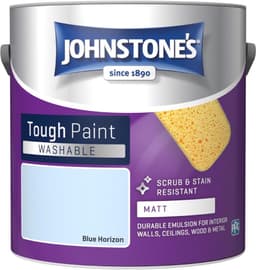
Touch-dry, ready to recoat and fully cured are different stages. Recoat times also vary: the UK product information reviewed for this guide includes a Johnstone’s matt figure of 1–2 hours and a Dulux listing that gives 4 hours, while Dulux’s general matt page states 2–4 hours. Those differences are why the tin you bought is the authority. Check the label before starting and allow longer in cool, humid or poorly ventilated conditions. If the coating still feels tacky at the stated time, wait rather than forcing the next stage. A colour change normally needs two full coats. Do not thin the second coat unless the manufacturer explicitly permits that use. For choosing between flatter and more reflective finishes, see matt or soft sheen emulsion.

When the finish still looks wrong

Let the whole wall dry before diagnosing patchiness. If the first coat is uniformly sound but thin, a complete second coat is usually the correction. Do not dab extra paint only onto visible patches: isolated touch-ups can dry with a different texture or sheen. A visible border often points to cutting in too far ahead. The wall paint buying guide can help if the finish is wrong for the room, but changing tins will not solve moisture behind the surface. Stop and call an appropriate professional if paint repeatedly blisters, the wall feels damp, or you suspect lead or another hazardous coating. Fresh plaster is a separate job. Dulux gives a 10:1 paint-to-water suggestion for its own mist-coat guidance, but that is not a universal ratio for every paint.

Common questions

Do I cut in the whole room first?
No. Cut in one wall and roll it while the brush border remains wet. This keeps the overlap blending into the rolled paint and reduces picture framing. On a very large wall, work in manageable sections while preserving a wet edge rather than outlining every surface at once.
Which roller should I use for matt emulsion?
A medium-pile roller is the usual choice for matt emulsion on a typical interior wall, and it is the pile Dulux recommends in its painting guidance. A smoother surface may need a shorter pile. Avoid assuming a foam roller is cleaner or smoother, because it can create bubbles in emulsion.
How long should I wait before the second coat?
Use the recoat time on your own tin. UK examples in this research range from 1–2 hours to 4 hours, so one universal waiting time would be misleading. Treat that figure as a minimum and wait longer if the room is cool or humid, or if the paint remains tacky.
Why does the first coat look patchy when it dries?
Different thicknesses and porous filler areas can dry at different rates, making a first coat look patchy. Wait until the entire wall is dry before deciding. If the surface is sound, a full second coat often evens the colour; recurring shiny or dull filler patches may need suitable spot priming first.
Can I thin emulsion on an already painted wall?
Only if the paint manufacturer permits it for that product and purpose. A sound, previously painted wall normally takes the paint as directed on the tin. New plaster is different and may require a mist coat, but the dilution ratio is product-specific rather than a general recipe to use on every wall.

Related pages

Sources

Public UK sources used for VOC limits, lead in old paint, new plaster and finish advice. Prices, stars and review counts are from the amazon.co.uk listings in this set. No BS EN 13300 class is claimed for these tins.

  1. VOC Regulations 2012 (SI 2012/1715) (retrieved 17 October 2026)
  2. HSE CIS79 — old lead paint (retrieved 17 October 2026)
  3. GOV.UK — lead information for the public (retrieved 17 October 2026)
  4. BSI BS EN 13300:2022 — interior wall paint classification (retrieved 17 October 2026)
  5. Dulux UK — painting new plaster (retrieved 17 October 2026)
  6. Dulux UK — how much paint you need (retrieved 17 October 2026)
  7. Dulux UK — paint finishes explained (retrieved 17 October 2026)
  8. Wickes — paint buying guide (retrieved 17 October 2026)