Independent comparisons. We may earn from shop links. More info

Varnish for acrylic paintings on a flat canvas

Updated: 22 October 2026

The acrylic painting is finished, the canvas is still on the table, and you want a clear coat before dust sits in the tooth of the paint. The question on a canvas is not which craft sealer is cheapest. It is whether you can lift that coat in ten years without taking the picture with it. This page stays with varnish for acrylic paintings on a flat canvas. The twelve-bottle table is the [acrylic varnish comparison](/hub/paints-and-varnishes/acrylic-varnish), with amazon.co.uk prices from 19 October 2026. Links to Amazon from that table are affiliate links. There is no lab test here, and there is no solvent-strip recipe. Peter F. edits DIY & tools.

The acrylic painting is finished, the canvas is still on the table, and you want a clear coat before dust sits in the tooth of the paint. The question on a canvas is not which craft sealer is cheapest.

Our top picks

On this page

Why a canvas still needs a coat

Acrylic dries to a porous film. Dust, handprints and a damp room settle into that surface in a way a glazed oil picture does not. A varnish is the clear layer you can, in the right system, clean or remove later. A glaze mixed into the paint is a different layer: it changes the colour and it stays in the picture. If you only want the colours richer and you will never need to remove anything, you are choosing a look, and gloss vs matte varnish acrylic is the place for that. If you want a coat that can come off, the next layer has to be one the maker says you can lift. Winsor & Newton puts an isolation layer under the varnish for that reason, and it tells you to work flat. Thin acrylic waits at least 24 hours. Impasto can wait up to a week. Liquitex asks for 72 hours to two weeks before a permanent varnish.

What an isolation coat does and does not do

An isolation coat is a permanent clear layer between the paint and a varnish you intend to remove. Daler-Rowney describes it as the layer that separates paint from varnish and evens glossy and matt passages so the varnish sits on one kind of surface. Golden's note, from a US maker page, says it seals absorbency and will not save you if the varnish itself cannot be lifted. Winsor & Newton says removal uses their remover and a lint-free cloth, and that colour on the cloth means the varnish is lifting. That method is on the maker's page. It is not printed as steps in the amazon file for the 75 ml Galeria bottle. The isolation coat does not make every varnish removable. Liquitex describes its water-based varnishes as permanent, and it points to Soluvar as the removable solvent range. Soluvar wants a gloss-medium barrier first, and it is solvent-borne.

Galeria gloss and Liquitex satin on a flat painting

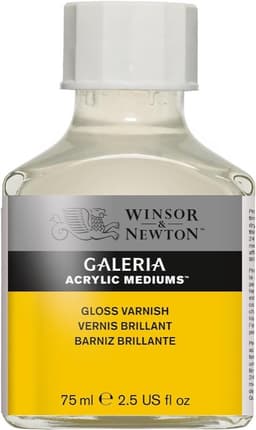
Galeria gloss, ASIN B001HJN0GY, is the listing in this set whose bullet says removable. It is 75 ml at £7.80, about £10.40 per 100 ml, 4.4 from 1,428 reviews, and all 50 texts in the file are from the United Kingdom. Specific uses say canvas. The bullet also says you can mix it with Galeria matt. UK reviews describe a light coat that saturates colour, a film that skins if you keep brushing, a second coat that lifted acrylic after a week of drying, and marker that smudged. 75 ml is a small bottle for a large canvas. Skip it when the picture is huge, when you are sealing marker, or when you wanted a satin. Liquitex Professional satin, ASIN B001US6NPM, is 237 ml at £14.93, 4.6 from 3,115 reviews, with all 50 texts from the UK. Who should skip the other strong bottles is on best acrylic varnish.

Keep craft and candles off the canvas

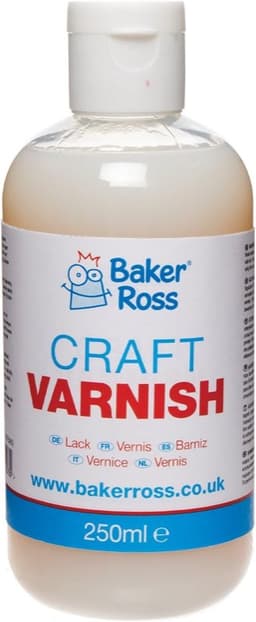
Baker Ross FE585 is a 250 ml craft gloss at £8.99, and UK reviews use it on rocks, clay and small figures. That is a fair craft bottle. It is not the canvas system on this page, because a large canvas is where the same liquid lumps, and the listing does not give you a removal method. Painted rocks and garden ornaments stay off this URL for the same reason. A UK buyer of an EIGTWEN gloss searched for something waterproof, then found a picture varnish that did not survive rain on stones. The lesson runs both ways. A picture varnish is the wrong outdoor sealer, and a craft sealer is the wrong assumption for a canvas you may need to clean. AllisWay does not belong here either. The title says clear varnish for acrylic paint, the unit count says 1.0 gram, there is no star line, and the bullets are Christmas candles and stickers.

Common questions

Do I need an isolation coat on a flat acrylic canvas?
You need one if you plan to remove the varnish later. Winsor & Newton and Daler-Rowney describe an isolation layer as the permanent clear barrier that keeps the remover off the paint. If the maker calls the varnish permanent, an isolation coat does not change that. It is not an undo button.
Does an isolation coat make any varnish removable?
No. An isolation coat separates the paint from the varnish. It does not change the varnish. Liquitex describes its water-based satin as permanent, and an isolation coat underneath does not make that satin removable. Removable solvent varnish in the Liquitex range is Soluvar, which is not in this amazon set, and it still wants its own barrier and ventilation. Buy a product whose listing or maker page states removal if removal is the point.
Is Galeria gloss actually described as removable?
Yes, on the amazon bullet for the 75 ml bottle: removable gloss for finished artwork. Winsor & Newton describes removal with the brand remover after an isolation layer, and colour on the cloth means the varnish is lifting. Those steps are on the maker's page, not in the amazon file. Removable does not mean you can scrub it wet.
Can I lift Liquitex Professional satin later?
The amazon listing does not say you can. The maker's UK page calls this satin permanent and tells you to patch-test because it stays. Do not assume an isolation coat changes that. If you may need to remove the coat, Galeria is the listing in this set with the removable bullet.
How long do I leave a canvas before the first coat?
Leave thin acrylic at least 24 hours, and impasto up to a week, which is the Winsor & Newton range. Liquitex asks for 72 hours to two weeks before varnishing, depending on thickness, then at least 24 hours between coats. Touch-dry paint in a thick passage is not dry through.

Related pages

Sources

Public UK sources from the research digest, last checked on 19 October 2026. Shelf prices and star lines are the amazon.co.uk figures in the display file. The price band is this set, not a market average. No listing was cured in a lab.

  1. SI 2012/1715, VOC in paints and varnishes (retrieved 19 October 2026)
  2. SI 2012/1715 Schedule 2, trim varnish limits (retrieved 19 October 2026)
  3. HSE: solvents (retrieved 19 October 2026)
  4. Winsor & Newton UK: how to varnish acrylic paintings (retrieved 19 October 2026)
  5. Liquitex UK: varnishing acrylics (retrieved 19 October 2026)
  6. Liquitex UK: professional satin varnish (retrieved 19 October 2026)
  7. ARTdiscount: varnishing acrylic paintings (retrieved 19 October 2026)
  8. Daler-Rowney: how to varnish paintings (retrieved 19 October 2026)