Independent comparisons. We may earn from shop links. More info

How to use a wallpaper steamer

Updated: 17 October 2026

You have a steamer or a Bartoline kit, and the risk is a plate left in one spot or a filler cap opened while the tank is still hot. This is how to use a wallpaper steamer: water only, a short first hold, a stiff knife, and a wait before the cap comes off. The [wallpaper stripper comparison](/hub/painting-supplies/wallpaper-stripper) is the table if you are still choosing. Peter F., the DIY & tools editor, used B&Q, Wickes, Wagner, Bartoline and Electrical Safety First, not a timed test. A qualifying purchase can earn a commission at no extra cost to you.

You have a steamer or a Bartoline kit, and the risk is a plate left in one spot or a filler cap opened while the tank is still hot.

Our top picks

On this page

Set the tank up

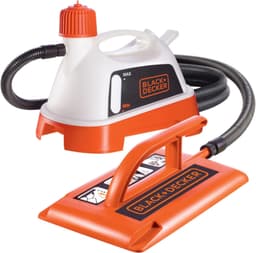
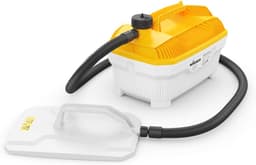
Put the boiler on a level board, not on a soft carpet that lets it tilt, and not directly under the patch you are about to steam. Wagner’s steam is at least 100°C, and hot water drips when you work overhead. Fill with warm tap water to the MAX line. Heat-up is up to about 12 minutes, depending on how full and how cold the fill is. Do not put wallpaper stripper, detergent or fabric softener in the tank. Listings that print no on/off switch mean the heater starts when you plug in. Have a bucket for the plate if you need to pause. If you smell burning, or the breaker trips, unplug it and treat that as a return, not as a repair on the landing.

How long to hold the plate

There is no single official timer. B&Q’s first trial is about 10 seconds at the bottom of a length. Wickes says no longer than about 30 seconds, and the SteamForce manual’s example is about 10 seconds. Start at the bottom so the sheet falls towards you, and keep the plate flat. If nothing moves, score a sealed face and try another short pass. Do not park the plate. Wickes warns that too much steam softens plasterboard, so test a patch and stop if you hear a pop. Scrape while the paste is soft, with a stiff knife. Painted woodchip is scored first, on the remove woodchip wallpaper page.

If you are using the bottle instead

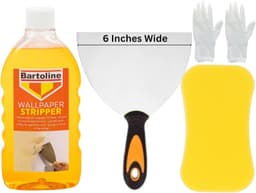
Bartoline’s sheet is 125 ml of concentrate in 4.5 litres of water, left for about 15 minutes. The pH is 6.5–7.5. It is not for skin, and the kit gloves have been called flimsy, so wear gloves you trust. One review of the 500 ml kit used a quarter of the bottle in 4.5 L and the same wait. Score washable and vinyl faces first, or the liquid sits on the coating. A feature wall is the job B&Q gives this method. Several rooms are the job it gives a steamer. Do not pour the diluted bottle into the steamer. If the paper has not moved after a second application and a score, more soaking will not invent a result the paste will not give. The dearer kit’s bottle count is not settled on the listing, so do not assume you have a litre until you see the bottles.

Sockets, the cap, and the paste afterwards

Cover sockets and switches before water runs down the wall. Unplug before you refill. Wagner wants at least two minutes after you unplug before the filler cap comes off. A cap opened early is a scald. Open a window. When the paper is off, the paste is still there. Wickes names sugar soap, then a rinse, before lining or paint. If the plaster is already blowing, or a hollow patch fails a knock, stop and get a plasterer. If water has reached the supply, that is an electrician, not a longer hold. The wallpaper steamer buying guide is where you check a plug before the next purchase.

Common questions

How long do I hold the plate?
Follow one source and say which. B&Q’s first trial is about 10 seconds at the bottom of a length. Wickes caps the hold at about 30 seconds, and Wagner’s how-to page uses that same ceiling, while the SteamForce manual’s example is about 10 seconds. If the paper has not let go, score and move. Do not leave the plate parked on plasterboard.
Can I put stripper in the tank?
No. The tank takes tap water only, to the MAX line. Bartoline and other concentrates go on the wall in a bucket, if you have chosen the bottle method. Detergent in the boiler is a way to spoil the element. Wagner’s listing also says steam removal with no chemical additives.
How do I dilute Bartoline?
The technical sheet is 125 ml in 4.5 litres of water, then about 15 minutes. A 1 litre bottle is rated at about 37 litres of working solution on Bartoline’s product page, which is many feature walls, not one splash. It is not for skin. Score washable paper first or the mix never reaches the paste.
When can I open the filler cap?
Unplug, then wait at least two minutes, which is Wagner’s rule for the SteamForce, before the cap comes off. The steam is at least 100°C and the tank can still be under pressure. Refill to the MAX line with water only, on a level boiler. If the unit smells of burning, do not refill it and carry on.
When should I stop and call someone?
Stop when the plaster pops, when a hollow patch fails a knock, when you cannot isolate the circuit, or when water has reached the supply. A burnt element or a leak onto the flex is a return to the seller, not a landing repair. A plasterer takes a wall that is already blowing. More steam enlarges that patch.

Related pages

Sources

Public UK sources on plugs, fuses, steam, dilution and plasterboard. Shelf prices, stars and review counts are the amazon.co.uk lines in the eight listings, snapshot 16 October 2026. Prices move.

  1. Electrical Safety First, wallpaper strippers (retrieved 16 October 2026)
  2. Electrical Safety First, plugs and fuses (retrieved 16 October 2026)
  3. HSE, electrically powered equipment (retrieved 16 October 2026)
  4. Wagner SteamForce manual (retrieved 16 October 2026)
  5. Bartoline wallpaper stripper technical data sheet (retrieved 16 October 2026)
  6. B&Q, how to remove wallpaper (retrieved 16 October 2026)
  7. Wickes, how to use a wallpaper steamer (retrieved 16 October 2026)
  8. Draper Storm Force 08090 (retrieved 16 October 2026)
  9. BLACK+DECKER KX3300T-GB (retrieved 16 October 2026)