How to use a paint roller: rinse, load, and wash it
You already have a sleeve and a tray, and the tin is water-based emulsion. How to use a paint roller is a set order: rinse the new sleeve, load it wet but not dripping, roll into a still-wet edge, then wash the emulsion out and dry the sleeve standing up. If the sleeve or the tray is still to buy, start with the [painting rollers comparison](/hub/painting-supplies/painting-rollers). Poles are on the [walls and ceilings](/hub/painting-supplies/painting-rollers/sub/painting-rollers-walls-and-ceilings) guide, and pile is on the [buying guide](/hub/painting-supplies/painting-rollers/sub/painting-rollers-buying-guide). A qualifying purchase can earn a commission at no extra cost to you.
You already have a sleeve and a tray, and the tin is water-based emulsion.
You already have a sleeve and a tray, and the tin is water-based emulsion. How to use a paint roller is a set order: rinse the new sleeve, load it wet but not dripping, roll into a still-wet edge, then wash the emulsion out and dry the sleeve standing up. If the sleeve or the tray is still to buy, start with the painting rollers comparison. Poles are on the walls and ceilings guide, and pile is on the buying guide. A qualifying purchase can earn a commission at no extra cost to you.
Our top picks
| Badge | Product | Sleeve | Tray | Paint named | Note | Price | Offer |
|---|---|---|---|---|---|---|---|
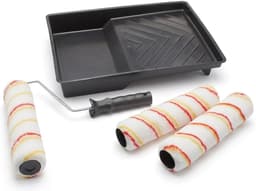
| Best overall |  Harris Harris 7-piece kit | Medium pile | Yes | Emulsion | 8.2 | about £10.27 | View offer |
| Best value |  Fit for the job Fit for the job 9 inch set | Synthetic medium pile | Yes, recycled plastic | Emulsion | 8.5 | about £5.95 | View offer |
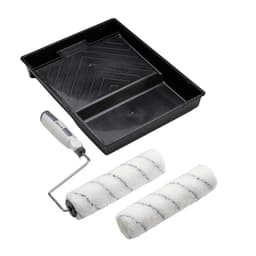
 Harris Harris 9 inch twin set | Medium pile | Yes | Walls and ceilings | 8.6 | about £6.49 | View offer |

On this page
Rinse the new sleeve before any paint
Load until the sleeve is wet, not dripping
Roll a small section and keep the edge wet
Bag it overnight, or wash the emulsion out
Common questions
How much paint should be on the sleeve before it touches the wall?
Do I cut in the whole room before I roll?
What does a wet edge actually mean on emulsion?
Why rinse a brand-new sleeve if it looks clean?
Can I bag the roller and finish tomorrow?
Is warm soapy water right for gloss as well as emulsion?
Why must the sleeve dry standing up?
Related pages
Sources
Public UK sources used for this comparison. Listing prices, stars and review counts are the amazon.co.uk figures saved for this set. Retrieved 21 October 2026.
- Screwfix, Paint brushes and rollers buying guide (retrieved 21 October 2026)
- B&Q, Best paint rollers (retrieved 21 October 2026)
- Dulux, Paint roller types (retrieved 21 October 2026)
- Dulux, Painting techniques (retrieved 21 October 2026)
- Harris, Seriously Good 9 inch sleeve (retrieved 21 October 2026)
- HSE, Work at height: step by step (retrieved 21 October 2026)
- SI 2012/1715, VOC in paints (retrieved 21 October 2026)
- Consumer Rights Act 2015, section 9 (retrieved 21 October 2026)