Foam or microfibre paint roller: emulsion or gloss
You are halfway through a UK decorating weekend: the walls still need matt emulsion, and a cupboard door is waiting for gloss. A foam or microfibre paint roller is that split. Fabric, including microfibre, lays ordinary emulsion, while spongy foam traps air in the same paint and leaves a cratered film. Dense foam is a small gloss or satin tool on flat wood, and it still fails on the quick-dry trim paints Dulux warns against. For frames and trays, use the [painting rollers comparison](/hub/painting-supplies/painting-rollers). Figures are the amazon.co.uk listings in this set on 20 October 2026, not a lab test. A qualifying purchase can earn us a commission at no extra cost to you.
You are halfway through a UK decorating weekend: the walls still need matt emulsion, and a cupboard door is waiting for gloss. A foam or microfibre paint roller is that split.
You are halfway through a UK decorating weekend: the walls still need matt emulsion, and a cupboard door is waiting for gloss. A foam or microfibre paint roller is that split. Fabric, including microfibre, lays ordinary emulsion, while spongy foam traps air in the same paint and leaves a cratered film. Dense foam is a small gloss or satin tool on flat wood, and it still fails on the quick-dry trim paints Dulux warns against. For frames and trays, use the painting rollers comparison. Figures are the amazon.co.uk listings in this set on 20 October 2026, not a lab test. A qualifying purchase can earn us a commission at no extra cost to you.
Our top picks
| Badge | Product | Sleeve | Width | Paint named | Note | Price | Offer |
|---|---|---|---|---|---|---|---|
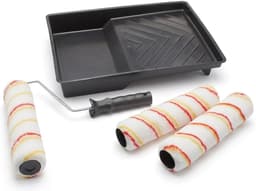
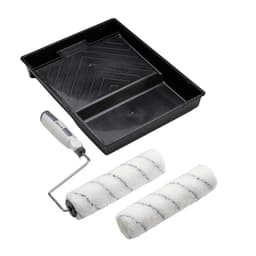
| Best overall |  Fit for the job Fit for the job 9 inch set | Synthetic medium pile | 9 inch | Emulsion | 8.5 | about £5.95 | View offer |
 Harris Harris 9 inch twin set | Medium pile | 9 inch | Walls and ceilings | 8.6 | about £6.49 | View offer | |
| Alternative |  Mister Rui Mister Rui 4 inch foam set | High-density foam | 4 inch | Water- and oil-based | 7.9 | about £8.95 | View offer |

On this page
Fabric for the emulsion wall
Spongy foam puts air in emulsion
Dense foam is a gloss and furniture sleeve
Quick-dry trim is the case where foam still fails
Common questions
Will a foam roller bubble matt emulsion?
Is high-density foam a different tool from a spongy foam sleeve?
Which listing in this set is actually foam?
Is foam the right sleeve for a door or a cupboard?
What about a foam roller on quick-dry gloss?
Does a box that says sponge count as a gloss roller?
Related pages
Sources
Public UK sources used for this comparison. Listing prices, stars and review counts are the amazon.co.uk figures saved for this set. Retrieved 21 October 2026.
- Screwfix, Paint brushes and rollers buying guide (retrieved 21 October 2026)
- B&Q, Best paint rollers (retrieved 21 October 2026)
- Dulux, Paint roller types (retrieved 21 October 2026)
- Dulux, Painting techniques (retrieved 21 October 2026)
- Harris, Seriously Good 9 inch sleeve (retrieved 21 October 2026)
- HSE, Work at height: step by step (retrieved 21 October 2026)
- SI 2012/1715, VOC in paints (retrieved 21 October 2026)
- Consumer Rights Act 2015, section 9 (retrieved 21 October 2026)