Independent comparisons. We may earn from shop links. More info

How to use a lawn roller

Updated: 21 October 2026

The drum has usually sat in the shed since autumn. A dry Saturday in March feels like the moment to firm the lawn, and how to use a lawn roller is mostly a question of the day. A light pass on moist soil that is not sticky and not frozen settles the top few centimetres. Roll on frost, or while the ground still squelches, and the cylinder cuts ruts. Which drum to buy is on the [lawn roller comparison](/hub/painting-supplies/lawn-roller). Peter F. wrote this from public UK guidance and amazon.co.uk listing notes, not a lab test. A qualifying purchase can earn a commission at no extra cost to you.

The drum has usually sat in the shed since autumn. A dry Saturday in March feels like the moment to firm the lawn, and how to use a lawn roller is mostly a question of the day.

Our top picks

eSkde eSkde 30 L

Best overall

eSkde eSkde 30 L
7.1/10about £50.00
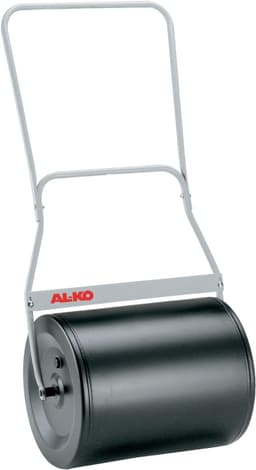
AL-KO AL-KO GW50

Alternative

AL-KO AL-KO GW50
6.2/10about £144.01
Outsunny Outsunny 60 L

Best value

Outsunny Outsunny 60 L
6.9/10about £48.94
On this page

Pick the day before you pick the fill

Roll when the soil is moist and gives under your thumb without smearing onto your boot. Lawnsmith describes the job as firming the top one to two inches, about 2.5 to 5 centimetres. If a footprint fills with water, leave it. The Royal Horticultural Society warns that very wet soil compacts and ruts. Frost is a separate stop. RHS advice is not to walk on a frosted lawn, because frozen leaf and soil bruise, and a roller does that across the whole width. Wait until the frost has left the ground, not merely until the tips look green. If the lawn stays soft for days, keep off it, because a drum will not open drainage.

A short pass, then stop

Start lighter than the drum will hold. A rule of thumb, and only a rule of thumb, is half a drum of water after seed, and more only if the cylinder does not sink. Sowing steps are on the lawn roller for a new lawn page. The Health and Safety Executive sets no legal maximum weight for this pushing, so a number on a listing is not a safe load. Walk in straight lines and turn on the path rather than twisting a loaded drum on the grass. Stop when the edge cuts a groove or soil squeezes up beside the cylinder. If it still ruts at about a quarter full, leave it for a drier afternoon.
eSkde eSkde 30 L

Testsieger

eSkde eSkde 30 L
7.1/10about £50.00

Check the bung, then empty it

Test the seal for about two metres on the path or a patio slab before you cross the lawn. Fit the bung, tip the joint to the bottom, and roll that short line. A drip at the cap or a wet seam shows there. If it still leaks, stop. Pour the water out when you finish. The Outsunny note on this set says to empty the roller when it is not in use. A full shell can freeze on a hard night and split. Leave the bung out so the inside dries. Sand will not pour back through a small hole, which is why that choice is on the lawn roller water or sand page.

What rolling will not do

A roller firms ground that is already roughly level. It will not plane bumps flat or fill hollows. Lawnsmith's limit is the top one to two inches, so a higher mound stays a mound. Adding water until the drum sinks seals the soil and bends the handle. Hollows that hold rain need drainage or top dressing. One light pass on a moist, frost-free afternoon, then an empty drum in the shed, is the method for a typical UK garden. Call a groundsman or a turf contractor if the lawn stays waterlogged for weeks, if a hollow could twist an ankle, or if you are laying turf on made-up ground.

Common questions

When should I roll a UK lawn?
Roll when the soil is moist, gives under your thumb, and is free of frost. Lawnsmith's job is the top one to two inches, not a new shape for the lawn. If a footprint fills with water, wait. The Royal Horticultural Society says to stay off frosted and saturated turf, and a filled drum is heavier than walking.
How full should the drum be?
Half a drum is a rule of thumb after seed, and only a rule of thumb. Add water only if the cylinder does not sink. The Health and Safety Executive sets no legal weight limit for pushing a roller, so a figure on a listing is not a safe load. If a rut appears, tip water out and stop.
What if the drum starts to rut?
A groove, or soil pushed up beside the cylinder, means the ground is too wet or the drum is too heavy. Empty some water and leave the lawn if a lighter drum still cuts in. Handles bend on that soft topsoil if you carry on. Wait for a drier day instead of pressing the mark flat.
Should I empty the water afterwards?
Yes. Pour the water out and leave the bung off so the drum can dry. The Outsunny note says to empty it when the roller is not in use. A full shell can freeze in a British winter and split. Sand will not pour out of a small hole. Water you can dump suits a drum you use only a few times a year.
How do I know it is leaking before I cross the whole lawn?
Roll about two metres on a path or slab with the bung downwards. A drip at the thread, or a wet seam, often shows on that short run. Reseat the seal and test again. If it still leaks, keep it off the grass, or the wet stripe will pull the drum off line.

Related pages

Sources

Public UK sources used for this comparison. Listing prices, stars and review counts are the amazon.co.uk figures saved for this set on 19 October 2026.

  1. Lawnsmith, Rolling the lawn (retrieved 19 October 2026)
  2. Lawnsmith, Repairs with grass seed (retrieved 19 October 2026)
  3. RHS, How to mow a lawn (retrieved 19 October 2026)
  4. RHS, January lawns (retrieved 19 October 2026)
  5. RHS, Waterlogging (retrieved 19 October 2026)
  6. GOV.UK, General Product Safety Regulations 2005 (retrieved 19 October 2026)
  7. Consumer Rights Act 2015 (retrieved 19 October 2026)
  8. HSE, Manual handling (retrieved 19 October 2026)
  9. AL-KO UK, Classic GW 50 garden roller (retrieved 20 October 2026)