Independent comparisons. We may earn from shop links. More info

Plastering stilts vs hop up

Updated: October 2026

You have a ceiling to skim or to cut in, and you are choosing a method, not a brand. Plastering stilts vs hop up comes down to this: stilts let you walk the lid when the floor is clear and you can already balance, and a hop-up stays put when the floor, the edge, or your first attempt is the problem. Stilts save you moving a platform and they add a fall you cannot put a rail around. The pairs in this comparison are listed on [Drywall stilts](/hub/painting-supplies/drywall-stilts). Products Compared used HSE guidance and UK plasterers’ forum threads, not a lab. A qualifying purchase can earn us a commission at no extra cost to you.

You have a ceiling to skim or to cut in, and you are choosing a method, not a brand.

Our top picks

On this page

What each method is actually for

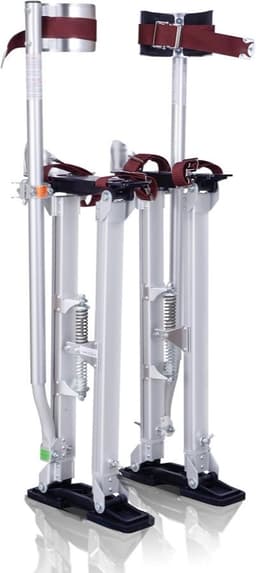
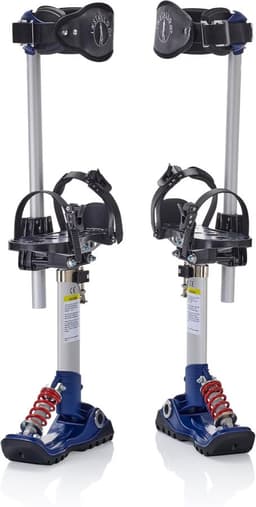
A hop-up is a low platform. You stand on it, the feet stay where you put them, and you climb off to move it. Plastering stilts are a sprung aluminium pair you strap on so your feet move with you. There is no guard rail around your balance. On The Original Plasterers Forum, a short version of the split is “hop-ups for walls, stilts for ceilings.” That is trade habit, not a regulation. Forum plasterers put small ceilings on a hop-up and larger lids on stilts, without a metre figure you can copy into every house. A run of ceilings is where stilts start to earn the time. Dust sheets and a tub on the floor undo that saving.

Where plasterers still pick a hop-up

Walls stay on the hop-up in those threads. If you can finish the ceiling by moving a hop-up twice, the time you would spend learning stilts is longer than the time you save. You cannot comfortably bend to a bucket once the straps are tight, so the room has to be set first. Dust sheets and leads are a known way to come off stilts. Park the tub on a hop-up at hand height even if you skim on stilts. If you have never walked a pair, the hop-up still lets you finish today.

Where stilts replace the up-and-down

Stilts replace the climb when the ceiling is a clear run, the floor is level and dry, and you can already walk short steps. A poll on one forum thread went 13 to 2 for stilts among people who voted. That is a forum vote, not a UK market share. The Health and Safety Executive does not ban stilts. The construction FAQ allows them for plastering or painting if you are trained and competent, the floor is not uneven or wet, and there are no trailing cables. A hop-up sits higher on that list, because the guidance still prefers preventing the fall. If you do strap in, how to use plastering stilts is the sequence: inspect on the floor, sit to mount, and walk forwards only. Do not learn on the paying ceiling.

Where neither is enough

An open stair, a landing with one side missing, or a floor you cannot clear is not a stilts job and it may not be a hop-up job either. The Work at Height Regulations 2005 require the work to be planned. If the way to prevent the fall is a tower with a platform and a rail, that is the equipment. One plasterer describes about 3.2 m on two pairs and a tower above that. Treat 3 m, and that 3.2 m note, as a rule of thumb from working plasterers, not as a British Standard. If you are unsure which band reaches, measure on the plastering stilts ceiling height page before you buy the tallest pair.

Common questions

Are stilts better than a hop-up for skimming?
They are better only when the ceiling is large, the floor is clear, level, and dry, and you can already walk on the pair. For a small lid, a wall, or a first attempt, a hop-up is the method plasterers on UK forums still pick, and it sits higher in the Health and Safety Executive’s order because it prevents the fall rather than asking you to balance it. Stilts save the up-and-down after those conditions are true. They are not better because the stars are higher.
What about a small ceiling?
A small ceiling is a hop-up job if you can finish it by moving the platform a couple of times. Forum posts put small lids on hop-ups and bigger lids on stilts, and they do not define “bigger” in metres. If you are moving the hop-up every few minutes across a clear floor, that is where stilts start to replace the climbing, provided you can walk them.
Do I still need somewhere to put the tub?
Yes. Even plasterers who skim on stilts talk about leaving the mix on a hop-up or a bench at hand height. You should not bend to the floor once you are strapped in, and Ulka’s safety note says not to pick objects up from below foot level. The hop-up does not leave the room just because your feet are on springs. Set it before you put the stilts on.
Are stilts legal if a platform would also work?
They can be lawful and still be the worse plan. The Health and Safety Executive’s FAQ allows stilts for plastering or painting when you are trained and competent and the floor is suitable, with no trailing cables. The same body’s guidance still prefers avoiding the height or preventing the fall before you rely on balance. A platform that would do the job is the earlier control. Stilts are not banned.
What if the floor has dust sheets?
Sheets, rucked edges, and leads are a reason to stay on a hop-up. Forum posts and the HSE FAQ both treat trip hazards as the condition that takes stilts off the table. A sheet that is safe in boots can catch a stilt sole. If you cannot clear a path you would happily walk in the dark, do the ceiling from the platform.
When is a tower the answer?
Use a tower when the ceiling is beyond the pair, which working plasterers often put around 3 m and, in one note, about 3.2 m, depending on their height. Also use one when the edge is open or someone employed is not competent on stilts. A taller stilt setting is not a substitute for a rail. Treat those heights as a rule of thumb from working plasterers, not as a British Standard.

Related pages

Sources

Public UK sources on work at height, equipment inspection and stilt training, plus height talk from working plasterers. Shelf prices, stars and review counts are the amazon.co.uk figures in the six listings, snapshot 16 October 2026. Prices move.

  1. HSE construction FAQ, work at height (retrieved 16 October 2026)
  2. Work at Height Regulations 2005, SI 2005/735 (retrieved 16 October 2026)
  3. HSE, inspection of work equipment (retrieved 16 October 2026)
  4. HSE, work at height step-by-step guide (retrieved 16 October 2026)
  5. CITB, stilt safety training standard (retrieved 16 October 2026)
  6. Ulka Tools, plastering stilts safety advice (retrieved 16 October 2026)
  7. Ulka Tools, stilts and the work at height regulations (retrieved 16 October 2026)
  8. The Original Plasterers Forum, stilts thread (retrieved 16 October 2026)