Independent comparisons. We may earn from shop links. More info

Plastering stilts ceiling height

Updated: October 2026

You have a tape on the wall and four different size labels in the basket, and you need to know which plastering stilts ceiling height matches you. In this set the ranges are 18–30 in, 24–40 in, 38–58 cm, and 45–75 cm. The tall inch band is the one people grab because it looks capable, and it is often too much for a 2.4 m ceiling. Extra height is a higher fall, not spare safety. The six pairs, with prices and loads, are on [Drywall stilts](/hub/painting-supplies/drywall-stilts). Conversions below are arithmetic, not a second maker measurement. A qualifying purchase can earn us a commission at no extra cost to you.

You have a tape on the wall and four different size labels in the basket, and you need to know which plastering stilts ceiling height matches you. In this set the ranges are 18–30 in, 24–40 in, 38–58 cm, and 45–75 cm.

Our top picks

On this page

The ranges in this comparison

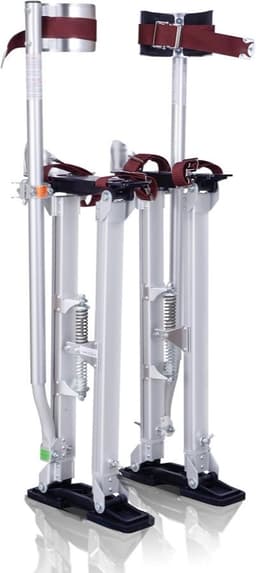
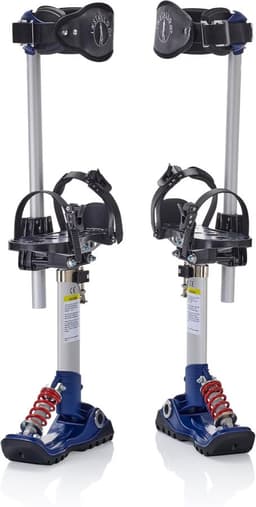
Keep the four printed bands apart. The two short iElyiEsy pairs, silver and blue, are 18–30 in. By arithmetic, 18 in is about 46 cm and 30 in is about 76 cm. The tall iElyiEsy pair is 24–40 in, about 61–102 cm. The Installoo consumer pair and Skywalker size M are 38–58 cm, about 15–23 in, not 18–30 in. Skywalker size L is 45–75 cm, close to the 18–30 in idea and not the same as 24–40 in. Calling 38–58 cm “the 18–30” will put you on the wrong pair. Ulka’s 102 kg limit does not transfer to these ASINs. How this check sits among the others is the plastering stilts buying guide.

A normal domestic ceiling

For a ceiling around 2.4 m, the first look is 18–30 in or, if you want the centimetre short band, 38–58 cm. It is not 24–40 in. On The Original Plasterers Forum, a plasterer at 6 ft added 24 in to their own height and expected their head on a domestic ceiling. Replies point at 18–30 in for normal domestics. A 15–23 in pair is described as short unless the user is very tall, which is why 38–58 cm can be enough for a taller person and tight for a shorter one on the same lid. Size M is not taller because it costs more.

When the tall band is the one you mean

Choose 24–40 in or 45–75 cm when you have measured a ceiling the shorter bands will not reach, often the rooms people on the forum talk about near 3 m, and when you already know you can walk. At an average height, 24–40 in is the pair those threads associate with about 3 m, and above that they talk about a tower. Do not buy the tall band because it looks safer. The Health and Safety Executive’s conditions are about competence and the floor, not about a longer leg. Skywalker size L is the 45–75 cm listing and it prints a load. The blue 24–40 in file repeats the 18–30 in reviews. Read the failures and the praise on best plastering stilts before you treat those stars as a cleaner test.

How to measure, and when to stop

Measure floor to ceiling, then mark where your hands need to be, not where your head is. If a hop-up already feels right, measure to the tread you stand on and match a stilt range that includes that rise on its lowest useful hole. If the lowest hole is already too high, the pair is the wrong band. Stop when the ceiling is beyond the pair, which working plasterers often put around 3 m and sometimes 3.2 m, depending on who is walking. Stop if you would be on the highest setting on day one, or if the floor is uneven, wet, or crossed by leads. A tower is the next piece of kit.

Common questions

What size plastering stilts for a 2.4 m ceiling?
Start with 18–30 in, or with 38–58 cm if you are looking at the Installoo short band, and measure your own reach before you order the tall pair. A 2.4 m domestic ceiling is where forum plasterers around 6 ft say 24 in of lift puts their head on the lid. Twenty-four to 40 inches is the higher-ceiling band in those threads. Mark the working height on the wall rather than copying a stranger’s size.
I am about 6 ft. Is 24–40 in too tall?
It is too tall for a normal domestic ceiling if 24 in plus your height meets the plaster, which is the sum a 6 ft plasterer on the forum was worried about. Six feet is about 1.83 m, and 24 in is about 61 cm, which lands near 2.44 m. That is an illustration, not a standard. On a ceiling nearer 3 m, 24–40 in is the band those same threads start to discuss.
Is 38–58 cm the same idea as 15–23 in?
Yes, as arithmetic, and no, as a renamed 18–30 in pair. Thirty-eight centimetres is about 15 in and 58 cm is about 23 in. In this set, 38–58 cm is the Installoo consumer pair and Skywalker size M. Do not order it when you meant 18–30 in.
When do I need 45–75 cm?
You need 45–75 cm when 38–58 cm and 18–30 in leave your hands short of the ceiling and you have measured that gap. In this set that range is Skywalker size L. Forty-five centimetres is about 18 in and 75 cm is about 30 in, near the 18–30 in idea and well below 24–40 in.
Does a taller pair reduce the chance of a fall?
No. A taller setting raises you and raises the fall. The Health and Safety Executive’s conditions for stilts are competence, a floor that is not uneven or wet, and no trailing cables. They are not a longer leg. Ulka’s safety note says not to wear more height than the job needs. Buy the lowest band that still lets you work, and leave the tall pair for a ceiling you have measured.
How do I measure before I buy?
Measure floor to ceiling, then mark the height your hands need for the tool, not the height of your head. If a hop-up already feels right, measure the rise to the tread you stand on and look for a stilt range that includes that figure on its lowest useful setting. If the lowest setting on a pair is already above that mark, choose the shorter band.

Related pages

Sources

Public UK sources on work at height, equipment inspection and stilt training, plus height talk from working plasterers. Shelf prices, stars and review counts are the amazon.co.uk figures in the six listings, snapshot 16 October 2026. Prices move.

  1. HSE construction FAQ, work at height (retrieved 16 October 2026)
  2. Work at Height Regulations 2005, SI 2005/735 (retrieved 16 October 2026)
  3. HSE, inspection of work equipment (retrieved 16 October 2026)
  4. HSE, work at height step-by-step guide (retrieved 16 October 2026)
  5. CITB, stilt safety training standard (retrieved 16 October 2026)
  6. Ulka Tools, plastering stilts safety advice (retrieved 16 October 2026)
  7. Ulka Tools, stilts and the work at height regulations (retrieved 16 October 2026)
  8. The Original Plasterers Forum, stilts thread (retrieved 16 October 2026)