Lead paint UK decorating: leave sound old paint

Sound old paint can stay if you key it wet and seal it. Dry sanding and a blow lamp make the dust and fume. Flakes a child can reach need a controlled strip.
On this page

The door is shut, the dust sheet is down, and the skirting looks tired enough that a sanding block feels like the first honest step. Lead paint UK decorating starts with that surface, not with a new tin. The risk HSE describes is dust and fume you breathe or swallow when you strip or dry-sand, not a sound coat you leave in place and seal.
If the paint is sound, key it wet and paint over it. If it is flaking, chipping, dusty, or somewhere a child can reach the flakes, the job changes. Stripping a sound door "to be sure" is the mistake that creates the exposure.
Products Compared used the Health and Safety Executive sheet CIS79, the HSE lead FAQs, the HSE construction page on lead, and HSE guidance OCE1 on preparing surfaces. The roller price is from the amazon.co.uk listing read in October 2026. This is not a lab test, and this hub did not test a coating for lead. A qualifying purchase through our amazon.co.uk links can earn us a commission at no extra cost to you.
In short
Sound old paint stays: key it with wet or waterproof abrasive paper, wipe with a damp cloth, bag the debris, and paint over it. Dry sanding, a blow lamp and a gas torch are the methods HSE tells you to avoid. Flakes a child can reach are a controlled strip or a professional, not a new airbrush.
Where lead paint from before the 1980s still sits
HSE's lead FAQs put the history in plain terms. Lead pigments were widely used in domestic paint until the 1960s, and they were not taken out of commonly used paints until the early 1980s. A later coat can hide that older layer.
CIS79, the old lead paint HSE sheet, treats stripping in pre-1980s properties as the highest concern, along with blow lamps, gas torches and dry sanding. Age is a reason to assume a risk, not a home test. A 1970s door under a newer topcoat still carries the old film if nobody stripped it to wood. We did not test a door, a window board or a stair spindle.
OCE1 says check whether the coating contains lead before you prepare a surface. A guess from the shade of cream is not that check. If you cannot show the layers are lead-free, treat a pre-1980s undercoat as if it may contain lead. You may wet-key a clear door and gain only a better grip. Dry-sanding one that is not clear is the result those sheets are written to stop.
Key sound paint with wet abrasive paper
The HSE construction page says leave sound paint in place, including under a newer non-lead coat. CIS79 says key it with waterproof abrasive paper. You are dulling the sheen so the next coat grips. You are not cutting back to bare wood with a dry block first.
Keep the paper wet so the debris stays in a slurry. Wipe with a damp cloth, bag the cloth, the paper and the slurry, and tie the bag before you leave the room. Do not shake the cloth out of the window. Stop as soon as rubbing creates dust: that surface is no longer the sound-paint case, even if the window is open.
A wall then takes a normal emulsion system. A door or a frame takes the gloss or satin the woodwork needs, with a brush, after the wet key. The Hamilton seven-piece on our paint roller comparison is the top pick in the October 2026 amazon.co.uk snapshot for that wall field: five 9 inch medium-pile sleeves, a cage frame and a tray, at £9.93, with a 1.75 inch core in the title and 4.7 from 873 reviews. The listing does not name a paint type, there is no 4 inch sleeve, and a 9 inch sleeve does not remove old paint.
When flaking paint has to come off
Strip when the paint is flaking, chipping, giving off dust, or a risk to children. CIS79 names the method: a chemical stripper, wet abrasive paper, and on-tool extraction, with the debris bagged. Do not strip sound paint on the same door to be on the safe side.
This page does not give you a stripper brand, a dwell time or a dilution. Follow the tin, keep the work wet, and bag what comes off. If the tin and the surface do not match, stop, rather than warming the door to hurry it. On-tool extraction means the tool is attached to extraction while it raises debris. A brush nozzle afterwards is not that step, and OCE1 rules out a dry brush or compressed air.
A small chip you can keep wet is a different job from failed paint on a run of windows, a stair, or every door on a landing. Widespread failure is a professional job. Do not dry-sand the loose edges first, and do not paint over flakes and call them sealed. If the cloth comes away dry and grey, bag it and stop that hour.
Blow lamps, heat guns and dry dust
CIS79 puts blow lamps and gas torches on the highest-concern list for old coatings. The construction page says do not overheat the paint. A flame on a pre-1980s door makes fume, even when you only want the film to blister for a scraper.
A hot air gun or infrared equipment is allowed only below 500 °C, so the paint does not fume. That 500 degrees Celsius figure is a ceiling, not a target. If you cannot tell whether the gun in your hand stays under it, do not use heat. We did not measure a DIY nozzle, so this page will not invent a safe distance.
Dry sanding lead paint is the same problem with the window open. The control is wet paper, not a breeze and a vacuum at the end. OCE1 says do not brush the dust and do not blow it off clothes or surfaces with compressed air. Bag it, rather than shaking a cloth outside.
Children, flakes and a professional
Flakes of lead paint on a low rail, a windowsill, a skirting beside a cot, or a stair baluster are not a job you postpone. This hub's notes treat flakes a child can reach as the reason to bring in someone who will use the wet method. Swallowing a flake, or the dust from one, is the exposure HSE means.
Keep children out of the room while any debris exists, including damp cloths and the tied bag. Keying a sound door still makes slurry. Finish the wipe and bag the waste before anyone small comes back.
CIS79 is a builder's sheet. Control of Lead at Work duties sit with employers, so a householder keying one sound board is not told here to notify HSE. That is not permission to dry-sand, because the dust is the same if you breathe it. Regular paid stripping of pre-1980s paint is work. If you are paid to strip a run of old doors, you are outside the one-off case.
Ask for chemical stripper, wet abrasive paper, on-tool extraction and bagged waste. Refuse a quote that starts with a blow lamp, a gas torch or a dry sand.
What an airbrush and a steamer do not do
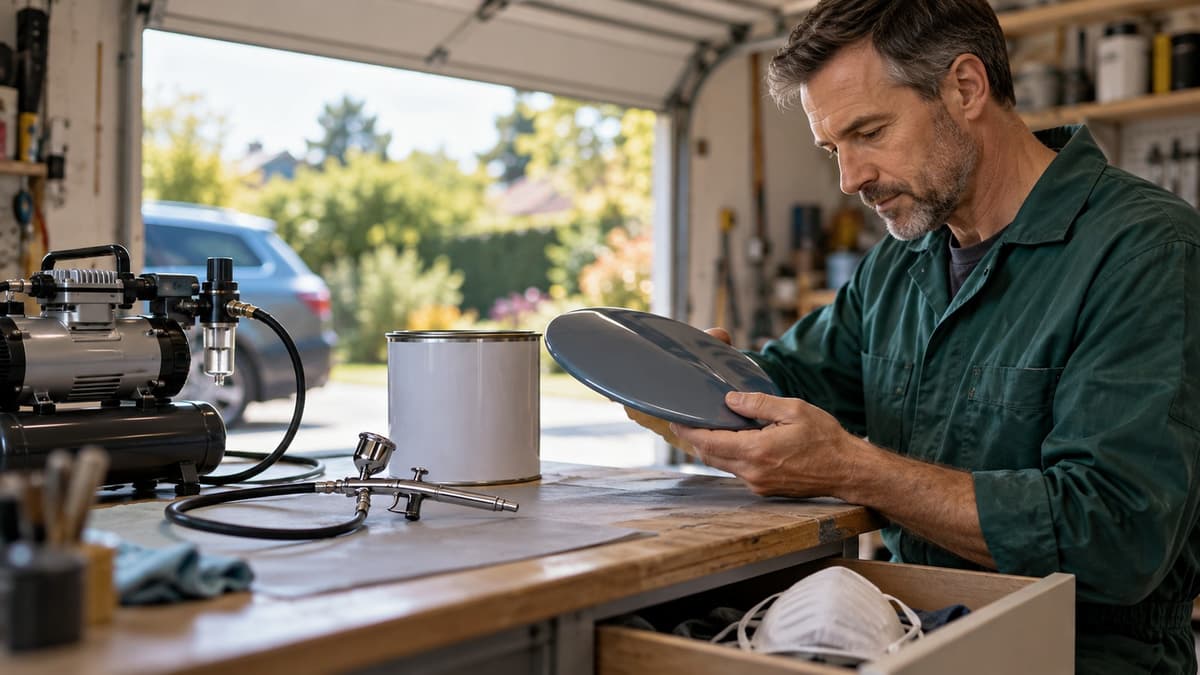
An airbrush makes a mist. It does not remove lead paint. OCE1 already tells you not to blow dust around with compressed air, so a small gun will not lift an old film or seal flakes by spraying over them. Our airbrush set comparison is for craft work. A lower kit price does not change the coating on the architrave.
A wallpaper stripper softens paste on paper. It is not a method for lead-painted wood, and pointing the plate at suspected lead is the shortcut this page rules out. A strong review for woodchip is still a review of a steamer.
An airless paint sprayer lays new paint on a surface you have already prepared. It does not check a coating for lead, and it does not make dry sanding acceptable. Sound paint that is keyed wet takes a brush or a roller. Spraying over flakes only hides them until the next rub.
Common questions
How do I test for lead paint in the UK?
Can I paint over lead paint?
Is dry sanding a problem if I open the window?
Can I use a heat gun or a blow lamp to strip it?
What temperature is too hot for old paint?
Do I have to strip every old door?
Will an airbrush or a wallpaper stripper remove lead paint?
When should a decorator do the strip?

Peter F. is the editor for DIY & tools at productscompared.co.uk. Comparisons in this category are checked against amazon.co.uk listings, review evidence and public UK sources.
Related articles
Isocyanate paint spraying UK: when home use must stop
A hobby kit is not a spray booth. Two-pack coatings and flaking lead paint are the point where a professional takes the job.

Paint sprayer or roller for walls: one-room choice
One room of emulsion is a roller and brush. A sprayer needs masking, and a hobby airbrush cannot cover a bedroom wall.

Airbrush kit price UK: what each shelf buys
A kit price is not a method for old paint. A small craft gun does not strip a door or seal a lead risk.