Independent comparisons. We may earn from shop links. More info

How to use vermiculite for plants

Updated: October 2026

The peat-free compost sheds water off the top, then sits as a wet lump in the bottom of the pot, and the bag of vermiculite you bought offers three different recipes. You need one share you can measure. This page is how to use vermiculite for plants when the bag is already open: the mix, the dust and the storage. Product ranks stay on the [vermiculite for plants comparison](/hub/ornamental-plants/vermiculite-for-plants). The Products Compared editorial team took the ratios from UK growing notes on 15 October 2026, and did not run a glasshouse trial. A qualifying purchase can earn a commission at no extra cost to you.

The peat-free compost sheds water off the top, then sits as a wet lump in the bottom of the pot, and the bag of vermiculite you bought offers three different recipes. You need one share you can measure.

Our top picks

On this page

Ratios you can cite, and why they disagree

There is no single percentage. Butterfly Conservation suggests about 10–20 per cent vermiculite or perlite in containers. A Lindfield note uses about 20 per cent fine vermiculite so peat-free seed compost will re-wet after it dries, and Emsworth is in the same area at about one part vermiculite to four of compost for sowing. Gardeners' World uses about 30 per cent when you prick out, and Westland says 25–30 per cent when you pot on. Measure with a jug. In a 10 L bucket of compost, 20 per cent is 2 L of vermiculite and 30 per cent is 3 L. Stir until the flakes are through the compost, not sitting in a stripe. A 50:50 mix is for germination, or for a fern that must not dry. Pennells uses about 30 per cent medium-grade vermiculite for cuttings. Emsworth's cuttings note is different: about one part perlite or grit to eight parts compost, not vermiculite. Follow Pennells when the cutting must not dry, and Emsworth when a wet stem will rot. Vermiculite is not plant food. Seed depths stay on the vermiculite for seed sowing page.

Pouring without filling the room with dust

Dry flakes throw a cloud if you tip a 100 L sack into a bucket on the kitchen floor. Holland Horticulture says pour slowly, moisten before mixing, and reseal the bag upright. Gardeners' World suggests gloves, and Westland says wash your hands. Take the bucket outside or next to an open window, sprinkle until the flakes darken, then fold them into the compost. Reviewers mention dust in the bottom of the UK GROW bucket, so damp that last cup before it hits the floor. Dampen at the moment of use. Do not store the bag wet, because a soaked sack is awkward to measure by March. If you still need a grade and a litre size, start with the horticultural vermiculite buying guide.
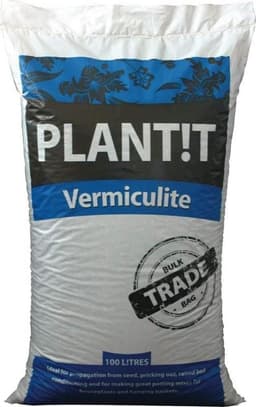
PLANT!T PLANT!T vermiculite 100 L

Testsieger

PLANT!T PLANT!T vermiculite 100 L
8.8/10about £42.95

Where an open bag should live

Store vermiculite dry, cool and sealed, away from weedkiller and liquid feed. A PLANT!T 100 L sack that arrives punctured, which reviewers report, should go into a lidded bin the same day. A damp delivery is a problem because you cannot tell how long it has been wet, and sealing that moisture in does not dry it. If you bought 100 L and have nowhere dry to keep it, that limit is on the best vermiculite for plants page.

When vermiculite is the wrong amendment

If the compost is still sodden four days after a normal watering, the share is too high for that plant, or the drainage hole is blocked. Take out about a third of the mix and replace it with plain compost, rather than pouring another mineral onto a wet one. Succulents, cacti and Mediterranean herbs are the usual skip. Emsworth uses a handful of grit or perlite per litre for those plants, and keeps vermiculite for houseplants that want moisture. The British Cactus and Succulent Society pairs John Innes No. 2 or No. 3 with grit, coarse sand or perlite in about equal parts. A review that sprinkled vermiculite on cacti is one buyer's note, not this advice.

Common questions

Can I use vermiculite on its own all season?
You can germinate in vermiculite alone, which Gardeners' World allows, and then move the seedlings into compost. A whole season in pure flakes leaves the plant without feed. Half and half with seed compost is the other germination pattern, not a recipe for a large houseplant watered until autumn.
Should I wet vermiculite before I pour it?
Yes, when you mix, not days before. Pour slowly, moisten until the flakes darken, and do it by an open window or outside. Do not soak the stored bag. Dust in the bottom of a bucket is still worth damping before it reaches the kitchen floor.
Where do I store an open 100 L bag?
Keep it dry, cool and sealed, away from weedkiller, and off the floor if the shed floods. If the sack arrived punctured or damp, tip it into a lidded bin rather than sealing that moisture in for months. A 5 L or 20 L bucket avoids the problem when you only need a small volume, and Westland asks for frost-free storage.
What share is used for cuttings?
Pennells uses about 30 per cent medium-grade vermiculite for cuttings. Emsworth's cuttings mix is about one part perlite or grit to eight parts compost, which is drainage, not vermiculite. Use the Pennells share when the cutting must not dry, and the Emsworth share when a wet mix will rot the stem.
Does COSHH apply in my kitchen?
COSHH is an employer duty about substances at work, including dust. Mixing one bag at home does not make you that duty-holder. The Sinclair figure of 10 mg per cubic metre is not a kitchen test. Dampen the flakes, pour in moving air, and keep the stored bag sealed and dry.

Related pages

Sources

Public sources used for this comparison. Prices are amazon.co.uk shelf prices from the listing extracts dated 15 October 2026.

  1. RHS seed germination guide (retrieved 15 October 2026)
  2. RHS peat-free advice (retrieved 15 October 2026)
  3. RHS houseplant growing media (retrieved 15 October 2026)
  4. BBC Gardeners' World: how to use vermiculite (retrieved 15 October 2026)
  5. Westland Gro-Sure vermiculite (retrieved 15 October 2026)
  6. HSE COSHH basics (retrieved 15 October 2026)
  7. HSE EH44 dust guidance (retrieved 15 October 2026)
  8. US EPA: horticultural vermiculite in potting soil (retrieved 15 October 2026)
  9. Summit Environmental (UK): vermiculite insulation versus horticultural bags (retrieved 15 October 2026)