How to clean safety glasses: coatings that stay put

Rinse grit off before you wipe coated safety glasses. Window spray, paper towel, and the wrong solvent lift the coating. Follow the maker's own sheet.
On this page
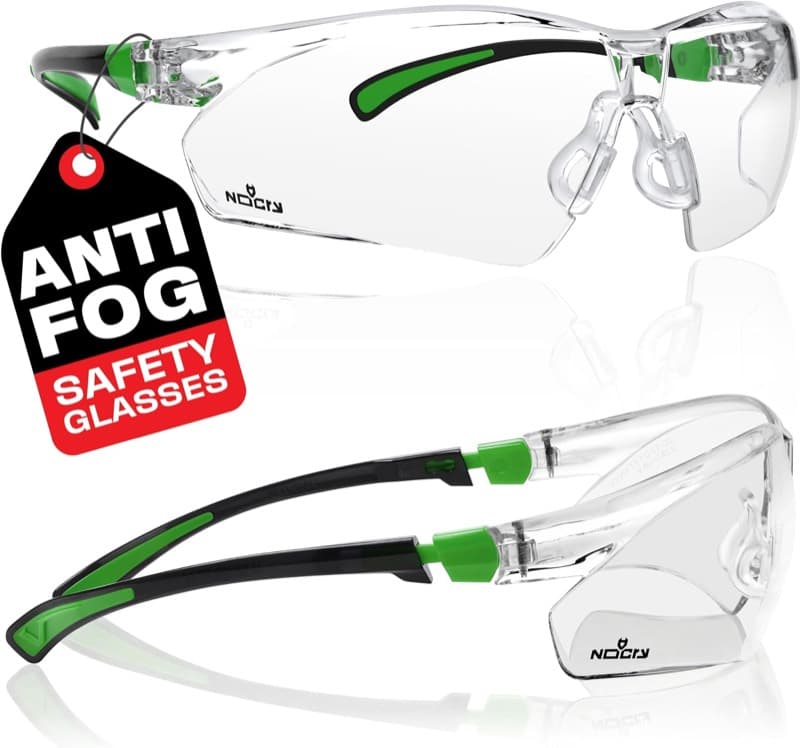
The lens is grey with fine dust, and the window spray is the nearest bottle. How to clean safety glasses with a coating starts with the grit and ends with the fluid the maker named.
If the leaflet allows mild soap, use mild soap and air drying. That is the captured care line on the NoCry EyeArmor+ in the safety glasses comparison. If it names only that brand's fluid, leave the washing-up bottle shut. Window spray, a dry paper towel, a shirt tail, and a compressor lift the layer or drag grit across polycarbonate. None of the specification tables in that set print a K or an N.
In short
Rinse loose dust off before a cloth touches the lens, use the cleaner the maker names, and let it air dry. Window spray, paper towel, and alcohol wipes are a gamble the brand sheets do not share. A patchy coating or a scratch means you replace the pair. At work the employer pays for the cleaning materials.
What the coating is doing
The film sits on polycarbonate. Anti-scratch slows fine dust. Anti-fog stops breath and a cold workshop turning the inside white. Health and Safety Matters, on EN 168, says K is the fine-particle surface test and N is eight seconds clear in air above 50 degrees Celsius. Both letters are optional. A wash does not print a letter the maker never claimed.
uvex calls its anti-fog hydrophilic: moisture goes into the coating and out to the edge, and the brand says those layers do not wash off. It calls a lot of rival anti-fog hydrophobic and detergent-based, so repeated washing can take that effect away.
On the amazon.co.uk set captured on 19 October 2026, titles say anti-fog while the tables stay blank on K and N. NoCry EyeArmor+ black and green, B01AWK1XAS, is the top pick: 28 g polycarbonate, £13.99, 4.4 from a 61,350 pool shared with the red pair, and the listing ASIN matches the details ASIN. Care is mild soap and air drying, with a warning against high heat and harsh chemicals. The lens check is on how to read EN 166 markings. Mask fog is on why safety glasses fog.
Rinse first, then the maker's fluid
uvex calls improper cleaning the main reason lenses scratch, and bad storage the second. Dust comes off under running water, or you lift it with the edge of a folded moist towelette. Then use a little fluid, or a lens towelette, and wipe in a circle. Do not scrub backwards and forwards, and do not wipe the lens dry. Leave the moisture to evaporate. Hold the frame. Do not stand the pair on the lens or the nose bridge.
A dry cloth on dusty polycarbonate grinds the grit in. With no tap, the moist towelette edge is the first pass uvex allows. A shirt is the wrong tool.
- Read the leaflet first. uvex allows only uvex fluid on uvex lenses if you want supravision to keep working.
- Where the sheet says water and soap, use a drop of mild soap, rinse, and air dry. Bollé Silium calls the coating washable with water and soap and still says use only B-clean. UCi SG618 allows soap and warm water, a UV lamp, or a domestic disinfectant, and little wiping.
- NoCry's line is mild soap, then a stop at harsh chemicals and high heat. That note is for B01AWK1XAS, not a uvex lens.
- If a pencil line still looks milky in patches, retire the pair.
Logistics Matters says rinse with warm water, pat dry, then use an approved solution, and it treats a weekly clean as the rule of thumb. uvex says do not wipe dry. The sheet in the case wins, and a dusty afternoon still needs a rinse the same day. The same order is on how to wear safety glasses.
Sprays, soap, and alcohol
Logistics Matters says soap, washing-up liquid, and window cleaners can damage the coating. uvex says solvents and chemical cleaning agents may remove its coatings. Those sprays are mixed for silicate glass. A safety lens is polycarbonate, and the film shows only when it fails in patches.
The same publisher tells you never to use soap. Bollé and UCi allow water and soap on the sheets we read. NoCry allows mild soap, and that pair was £13.99 on 19 October 2026. uvex says detergent-style anti-fog fades with repeated washing. A named station fluid still beats the kitchen bottle.
On 20 October 2026, ZEISS AntiFOG wipes, ASIN B0DDCPGTRQ, 50 in a pack, were £10.00 one-time and £8.50 with 15 percent savings on amazon.co.uk, about £0.17 a wipe. The listing calls them alcohol-based and ammonia-free, names propan-2-ol, and says they suit coated lenses and safety goggles. It says renew the film within 72 hours. ZEISS spray B07339STBJ, two 120 ml bottles, was £7.93 the same day. uvex says solvents may remove its coatings. UCi says solvents and solvent vapours may seriously reduce the impact protection behind the letter F.
A spray you add is a temporary film, closer to that 72-hour claim than to a factory N. Bollé says wait two minutes, and keep two of those packs off anti-reflective coatings. Silicone polish smears polycarbonate.
Cloths, pockets, and the bench
uvex and Health and Safety Matters keep clothing, paper towel, napkins, and facial tissue off the lens. They carry abrasive fibres. Use a microfibre cloth, and keep it in the case once it picks up metal dust. UCi says wipe as little as possible. After the dust is gone, a circle is the motion uvex allows. Scrubbing backwards and forwards is the one it tells you to drop.
The pair goes in a spectacle case, never a pocket, and not stood on the lens or the nose bridge. A face-down lens on the bench puts grit back. Bollé Silium asks for a microfibre pouch or a rigid case, dry and clean. UCi says store at 0 to 35 degrees Celsius and 30 to 70 percent relative humidity, away from solvents. A July van dashboard sits outside that band. NoCry already says avoid high heat.
HSE sheet S102 says never use compressed air to blow dust off PPE. The blast drives particles into the frame and towards your face. Keep the case and the maker's wipes off a solvent tin. Reusable PPE is stored dry, and defects are reported. If several people share one pair, L25 expects a clean between users.
When washing will not save the lens
Stop when the lens stays hazy after the right fluid has dried. Grease comes off. A scratch does not. A bald patch in the centre keeps fogging. Bollé says pitted, scratched, or damaged lenses mean you replace the whole product, and a damaged frame means the same. When to bin scratched safety glasses is the longer test. A white or lined lens is finished.
S102 also says never wash chemically contaminated PPE at home. Solvent, paint stripper, or cement slurry is bagged under the assessment, or the pair is binned. A bathroom soak moves residue onto your hands.
L25 says the employer maintains PPE, pays for cleaning materials, and still pays when the contract asks you to rinse your own pair. It cannot invoice you for the fluid. This top pick was £13.99 on 19 October 2026. A second pair is the spare when the first one films over. Who should skip the close wrap, because it will not sit over ordinary glasses, is on best safety glasses.
A clean pair can still be the wrong shape. Spectacles leave a gap, and liquid or fine dust belongs on a goggle. The buying guide puts hazard, then mark, then fit, then money in that order. We did not time how many washes a hydrophobic layer survives. If the leaflet disagrees, follow the leaflet.
We read uvex's UK cleaning notes, a Bollé user sheet and a UCi user sheet from a UK seller, HSE's L25 and COSHH essentials guidance, and the twelve amazon.co.uk listings captured on 19 October 2026. We did not run a scratch test or a fog test. A qualifying purchase through our links can earn a commission at no extra cost to you.
Common questions
How do you clean safety glasses with a coating?
Can I use window cleaner on safety glasses?
Does soap strip an anti-fog coating?
Are alcohol wipes safe on coated safety lenses?
Should I dry safety glasses with a paper towel?
Who pays for cleaning wipes at work?
When should I replace safety glasses instead of cleaning them?

Peter F. is the editor for DIY & tools at productscompared.co.uk. Comparisons in this category are checked against amazon.co.uk listings, review evidence and public UK sources.
Related articles
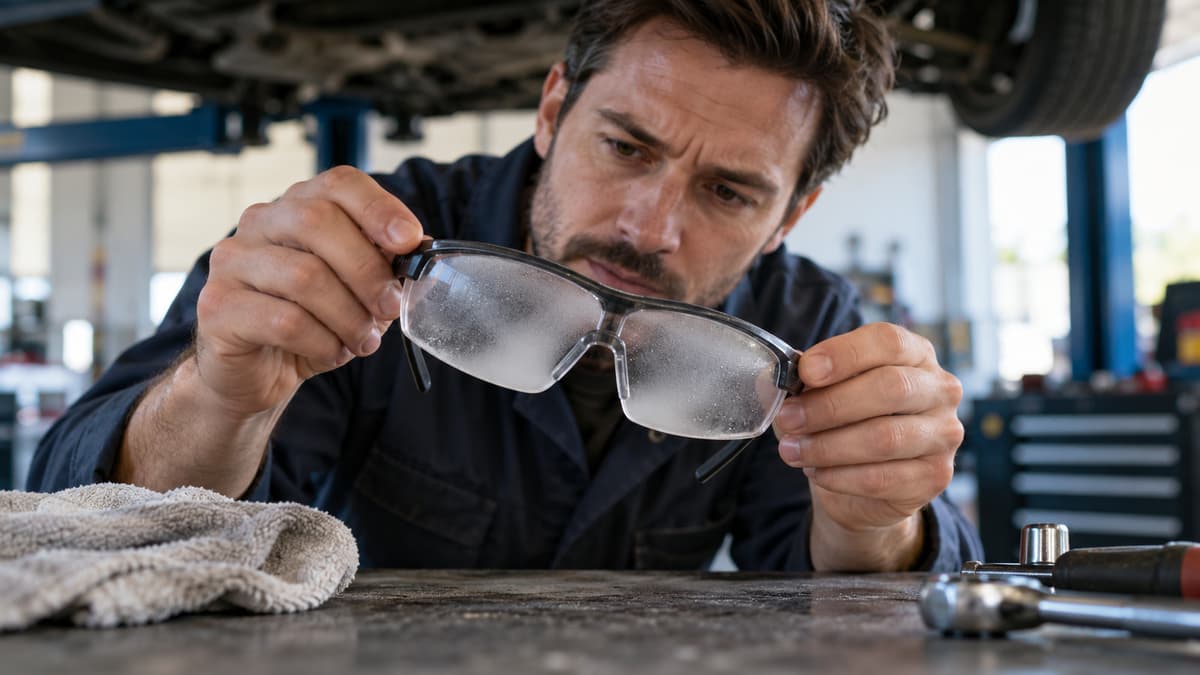
Why safety glasses fog
Warm breath on a cool lens makes the film. Anti-fog in a title is a coating claim, and N is the optional test.

When to bin scratched safety glasses
A hazed lens is a visibility hazard. Washing will not fill a scratch, and a spare pair is the practical fix.
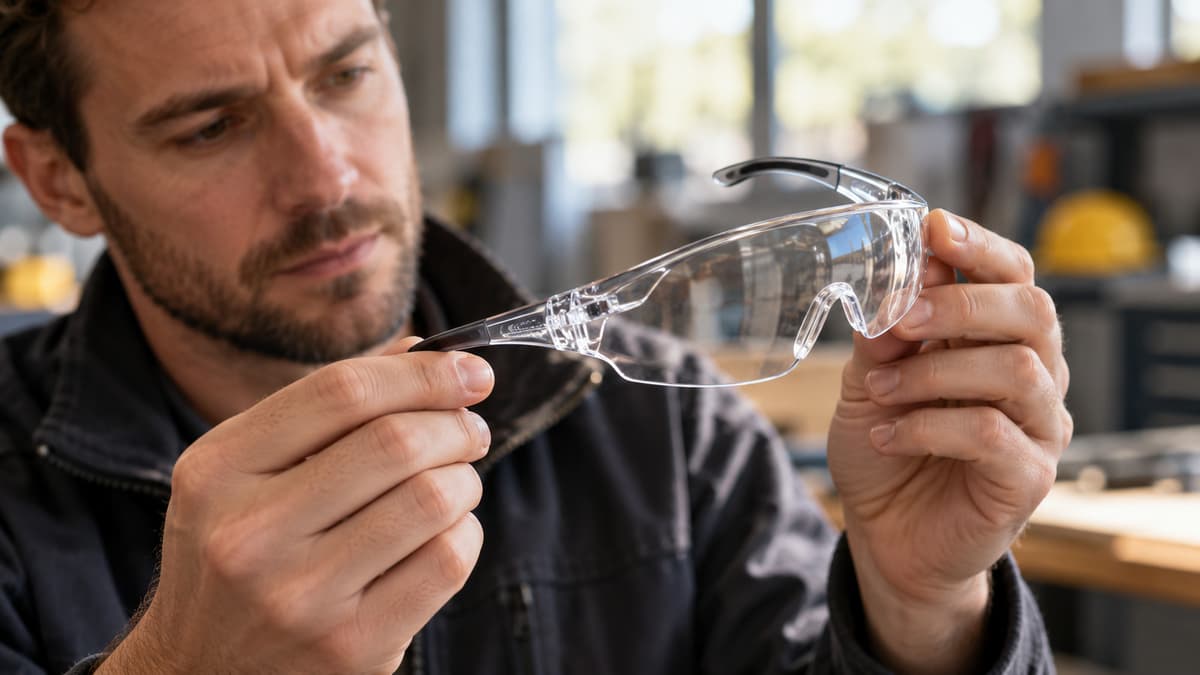
How to read EN 166 markings
K is the optional scratch test and N is the optional fog test. A coating name on the box is a different line.