Independent comparisons. We may earn from shop links. More info

PU or nitrile work gloves

Updated: 21 October 2026

You spent the morning on dry screws and the afternoon on parts with a light film of oil, and one glove was wrong for half the day. PU or nitrile work gloves is that choice. Polyurethane is the thin palm for a dry part you still need to feel. Foam nitrile is the palm to change to when oil is why the washer slips. Neither dip is waterproof or a solvent glove. The [assembly gloves comparison](/hub/occupational-safety/assembly-gloves) holds the amazon.co.uk listings and their captured prices. Peter F. used those listings and UK coating notes. We did not run a wear test. A qualifying purchase can earn a commission at no extra cost to you.

You spent the morning on dry screws and the afternoon on parts with a light film of oil, and one glove was wrong for half the day. PU or nitrile work gloves is that choice.

Our top picks

On this page

PU when the part is dry

Polyurethane is the light, flexible coating. Unigloves describes it as the thinnest of the common dips, useful for small parts, and permeable, so it is a weak liquid barrier. Uvex Safety UK points the same palm at dry work where dexterity matters. Cromwell puts it on intricate dry handling. You feel the screw or the connector because there is little material between the knit and the part. Most of these gloves are a palm dip, not a full coat. The bare knit on the back lets heat out, which is also why a shiny palm is not a sealed shell. Tilsatec notes that polyurethane can strike through the liner. A tacky feel on the inside is the coating against the skin, not proof that oil is leaking in. It is a comfort limit, not a diagnosis. A full coat is a different glove: more barrier, less feel, and warmer. The thin boxes here are palm dips. Use them when the part is dry and the hazard is dirt, not a liquid you must keep off the skin. The moment oil is the problem, change the coating, not just the brand on the cuff.

Foam nitrile when oil is light

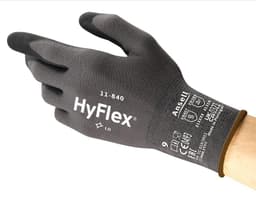
Foam nitrile grips a light oily film because the foam behaves a little like a sponge. Cromwell describes it for dry conditions and light oil, and says it can saturate once the oil is heavy. Tilsatec draws the same line: better for dry or light oil than for a part sitting in liquid. Flat nitrile, the smoother coat, is tougher and less nimble. It is not the foam on the 11-840. Disposable blue medical nitrile is a third product, a film glove without a knitted liner. Reviewers of the knit gloves compare them with nitrile they have already split on a thread. A search for nitrile shows both. Read the title for foam, micro-foam, or a coated knit before you assume you have an assembly glove. A sump, a degreasing bath, or parts dripping with cutting fluid are past foam nitrile. The foam fills, the grip goes, and liquid can still reach the skin. HSE warns that a knitted coating can wick liquid onto the skin in seconds. That is why neither dip belongs in a solvent, however well it holds a slightly oily washer. If the oily part is also sharp, the letter matters more than the dip.

Which listing is which

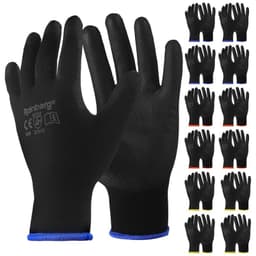
Thin polyurethane here is the HyFlex 11-618 and the HyFlex 48-101. The 48-101 is twelve pairs at £12.35, the top pick for dry fasteners, with no EN 388 code in the amazon.co.uk capture. The 11-618 is twelve pairs at £35.95, described as 18-gauge, with touchscreen in the bullets, and also no code in this capture. The 48-101 attributes say waterproof. A review says oil and dirt still reach the skin. Do not invent a test to settle that. Treat the waterproof line as unresolved. The other polyurethane packs are Blackrock, Kebada, QEARSAFETY, Straame, and Rainberg. Blackrock's bullets mention paint and solvents that can dry the skin. That sentence is not an EN 374 claim. Rainberg puts the glove on light to medium work in dry and slightly wet or oily conditions, and prints CE EN 388 3121. A review says it is not the glove for angle-grinder sparks. Slightly oily is not a sump. Foam nitrile is the HyFlex 11-840, one pair at £6.23, and KAYGO's micro-foam nitrile, two pairs at £14.98 with 4X42C in the title. The 11-840 is how you test the coating and the size before a box. A review says sandy water from cement gets inside. The attribute says water repellent, not waterproof. KAYGO is the foam-nitrile listing that also prints a cut letter, so it is the one for a sharp edge that is lightly oily. AovYoo is polyurethane on an HPPE liner, not foam nitrile. WFX is not a dip at all. Dry precision: polyurethane, and in this set the 48-101 unless you specifically want the 18-gauge 11-618. Light oil, and you are unsure of the size: the 11-840. Sharp and lightly oily: KAYGO, not a plain polyurethane box. If the edge is sharp, read the letter on EN 388 glove ratings before you decide the dip was enough.

When neither dip is the right glove

Solvents, immersion, and a chemical splash need a glove specified for that chemical. A palm-dipped knit is the wrong shape, because liquid finds the uncoated knit. Paint that dries your skin is a comfort sentence on a decorating glove. It is not permission to wipe white spirit and call the coating a barrier. Waterproof is the other false friend. A shiny palm, a water-repellent attribute, and a single waterproof tick all appear in this set. Reviews still describe oil, dirt, and sandy water on the skin. Wet cement, heavy rain, or a part under a tap needs a different glove. If the day is a dry hinge and then a lightly oily clip, two coatings in the drawer is a fair split. The WFX padded rigger does not fill the gap. Leather fingertips and foam knuckles are not polyurethane and not foam nitrile. Rotating tools stay a hard stop: HSE says not to wear gloves where a bench drill can catch them. A foam-nitrile pair that will not go on is not a grip glove, which is why the work glove size chart comes before a box of twelve.

Common questions

Which coating for dry screws and connectors?
Polyurethane. In this set that is the HyFlex 48-101 at £12.35 for twelve, or the 11-618 at £35.95 if you want the 18-gauge description and will pay about £3 a pair. Skip polyurethane when oil is why the part slips. A shiny palm is not waterproof, and neither Ansell polyurethane box prints an EN 388 code in this capture.
Which coating when a film of oil makes parts slip?
Foam nitrile. Try the HyFlex 11-840 at £6.23 for one pair so you learn the size. If the part is also sharp, use KAYGO's micro-foam nitrile with 4X42C printed, not a plain polyurethane pack. A part dripping with oil is past the foam, because the coating can saturate and the knit can still wick.
Will foam nitrile survive a sump full of oil?
Do not plan on it. Coating guides say the foam grips light oil and can saturate in heavy oil. Once it is saturated, the sponge advantage has gone. A sump or a solvent wipe needs a glove specified for that liquid. The 11-840 review about cement and sand is the same family of problem: wet grit inside a knit.
Is a shiny PU palm waterproof?
No. The shine is the coating. Unigloves describes polyurethane as permeable. Several polyurethane listings here say not water resistant. The 48-101 attribute says waterproof, and a review says oil still gets through, so that claim stays unresolved. Rainberg allows slightly oily conditions and is still not a waterproof glove.
Why do my hands feel the coating on the inside?
Polyurethane can strike through a thin liner and sit against the skin. That tacky feel is the coating, not necessarily oil from the job. It is a comfort limit of a very thin dip, which is also why you can feel a screw. If your skin reacts, stop. This page is not a dermatitis assessment.
Does nitrile mean disposable blue medical gloves?
Not here. Foam nitrile and micro-foam nitrile are coatings on a knitted liner, the 11-840 and the KAYGO. Blue disposable nitrile is a film glove. Read foam, coated, and the pair count. A box of twelve knit pairs is not a box of examination gloves, and it is still not a chemical glove.
Can I use either glove for solvents?
No. A knitted dip can wick liquid onto the skin, and a bullet about paint drying the hands is not a chemical claim. Match a glove to the safety data sheet. Do not wear either dip on a bench drill.

Related pages

Sources

Public UK sources from the research digest, last checked on 20 October 2026. Shelf prices and star lines are the amazon.co.uk figures in the display file. The price bands are this set, not a market average.

  1. HSE: glove selection (retrieved 20 October 2026)
  2. HSE: using the right type of PPE (retrieved 20 October 2026)
  3. GOV.UK: PPE Regulation 2016/425 guidance (March 2025) (retrieved 20 October 2026)
  4. GOV.UK: product marking UKCA and CE regimes (retrieved 20 October 2026)
  5. SATRA: EN 388 explained (retrieved 20 October 2026)
  6. SATRA: EN ISO 21420 sizing (retrieved 20 October 2026)
  7. Uvex Safety UK: glove coatings and grips (retrieved 20 October 2026)
  8. Ansell HyFlex 11-618 (manufacturer page) (retrieved 20 October 2026)