Spit or anti-fog spray swimming goggles: read the label
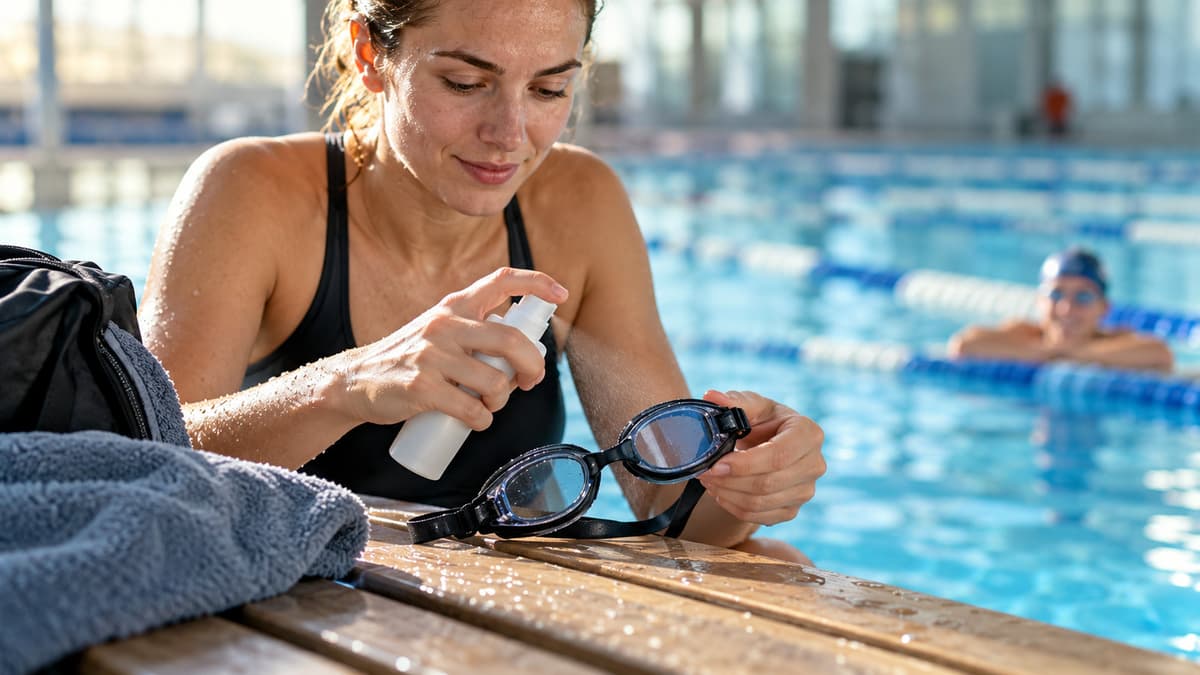
Spit or anti-fog spray on swimming goggles: saliva is a habit, not a product. A labelled spray has its own rinse or no-rinse step, and spit is not that step.
On this page
Someone at the end of the lane tells you to spit in the goggles, rub it round, and rinse. The bottle in your bag says something else, or you never bought one. Spit or anti-fog spray on swimming goggles puts a habit beside a labelled product. Saliva has no formula you can read. A spray has a step printed on the bottle.
This page will not teach a saliva method, and it will not give a shampoo recipe. It covers what the habit does to a factory coating, and which bottles in the staged set name a rinse. Prices are amazon.co.uk shelf prices on 16 October 2026. Products Compared did not swim these bottles. A qualifying purchase through a comparison link can earn a commission at no extra cost to you.
In short
Spit is a common pool habit, and it is not a declared anti-fog formula. Arena tells you not to touch the inside of the goggles, because the factory film wears off. A labelled spray is a separate step: some are no-rinse, some must be rinsed, and mixing saliva into that step shows up in reviews as streaks. If the goggles leak, fix the seal. Spit and spray both fail on a flooded lens.
What swimmers mean by spit
Prescription Swimming Goggles’ anti-fog guide names the habit, then points swimmers at a spray used before each swim. People mean a smear of saliva on the inner lens, sometimes left, sometimes rinsed, sometimes rubbed until the plastic squeaks. The squeak is a wipe. Saliva is not bottled to a formula. It changes with what you drank, and the next person’s is a different liquid.
There is no drop count here and no instruction to copy the next lane. A timed test in an American magazine is not a UK result, so it is not cited. The sources in this brief support a narrower claim: the habit exists, makers tell you not to handle the inner lens, and labelled products publish their own steps. 220 Triathlon’s round-up is useful for one observation. Those sprays do not share a single method. Branded bottles that already disagree leave no silent standard underneath them.
The inner lens sits on the skin around your eyes. Mouth fluid in a damp kit bag is a poor storage plan, whether or not a length stayed clear. One Stream2Sea review on amazon.co.uk describes streaks when saliva was used with the product, and links a skipped rinse to an eye infection afterwards. That is one report, not an infection rate and not medical advice. If your eyes are already sore, stop and get them looked at.
Rider pages mention spit on visors in the same casual way. The visor article refuses that smear as well. A pool lens and a helmet visor are different plastics. Both mistakes treat a bodily fluid as a product.
What that does to a factory coating
Arena’s UK care note is the cleanest line in these sources: do not touch the inside. The factory film wears off with use. Fingers move oils onto the lens, and a towel that dries the inside finishes the job. Prescription Swimming Goggles’ cleaning guide says the same thing. Rinse the goggles and let them dry. A tissue on the treated face is how the film leaves.
Saliva usually arrives on a fingertip, so the habit is a rub as well as a liquid. Each rub takes more of the factory film. Arena is explicit that the film does not last the life of the goggle. Fog in week six is often the coating you were told not to touch, touched every session. More rubbing speeds that loss. It does not restore a film that has already gone.
A leak copies the same blur. Water past the seal wets the inner lens. Zoggs reviewers in this set say their spray fails when the goggles leak and wet the film after application. That is a bottle review, and it applies to a factory film too. Once pool water is on the inside, you are looking through droplets. Tighten or replace the pair. A thicker smear does not seat a skirt.
Fog on the first swim is not proof that spit is required. A sticker, mould-release residue, or a wipe in the shop can leave the lens worse than the factory left it. Rinse under the tap, keep tissue off the inside, and check the seal when you press the eye cups. If they ship water, the coating is not the first fault.
A labelled spray is a different step
A spray has a name, a price, and a method. Prescription Swimming Goggles treats it as a step before each swim, and tells you not to copy a glasses cleaner onto goggles. 220 Triathlon’s point is to follow the brand in your hand. Some films stay dry. Some are rinsed, or they streak.
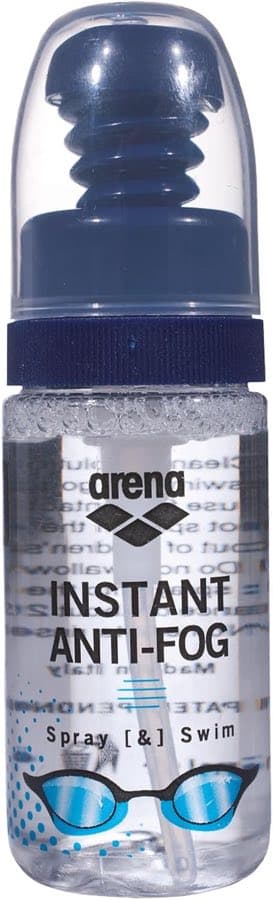
Arena’s anti-fog spray, B0788ZQMPH, is the high-volume swim bottle in the comparison: £9.50 on amazon.co.uk, 3.9 out of 5 from 5,775 reviews. The listing states no volume. Listed weight is 41 g. Arena’s UK page calls it a per-use spray with no rinse and no wait, and claims about 150 applications from 35 ml. That 35 ml figure is the maker page, not the Amazon bullets. Clearer reviews sprayed from about 20 cm and left the film to dry. Spraying too close wetted the lens and it fogged at once.
Cressi gel, B075DD4LCF, is £10.31, 4.3 out of 5 from 1,685 reviews, and it is the best-value rinse product here. The size line says 15 ml and the item volume says 30 ml, so the fill is unsettled. Dive-mask and swim-goggle reviews are more often positive when a small amount is rinsed. Stream2Sea at £20.95, 4.4 out of 5 from 2,078 reviews, is the other rinse liquid: a drop, a finger spread, then a light rinse in the clearer UK reviews. The review that added saliva reported streaks.
The ZEISS 15 ml kit at £6.99 is the comparison’s top pick for spectacles you wipe dry. The listing mentions a pool mask and does not answer swimming goggles. A dry-wipe film and a goggle you flood are different methods. The reapply article keeps 72 hours with ZEISS and the session with the pool. Application steps sit on the swim guide. This article stops at the habit.
Baby shampoo is a hair detergent. It is not in this set, and this page will not print a dilution. If a goggle maker names a detergent, that sentence belongs on their care sheet. Until then, shampoo stays on hair.
When fog means the goggles are worn out
Another spray is only maintenance on a sound pair. When the factory film has been wiped away, the seal leaks, the strap no longer holds the cups, or the lens is crazed, the goggles are finished as a clear view. Arena’s “wears off with use” is a life statement. A session spray can film a sound inner lens. It cannot rebuild a perished seal or fill scratches.
If you taste pool water, or the mist starts at the outside edge, the skirt is not seated. A spray that is then flooded fails for the reason Zoggs reviewers gave: water on the film after application. Next time, use a dry, sealed lens, or retire the pair if the skirt has hardened. Wash a shared strap and the outside. Leave the inside to clean water, and keep the deck towel off it.
Spectacle cleaner, screen wipes, and a hard cloth on the inner goggle are the wipe Arena tells you to avoid. The cloth belongs with the spectacle kit. The buying guide compares the labels, including bottles with no stated volume. An unstated volume is a reason to read the maker page.
The habit note is Prescription Swimming Goggles’. The no-touch rule is Arena’s care page and that retailer’s cleaning guide. The streaks and the infection sentence are one Stream2Sea review. Products Compared did not time saliva against a spray.
Common questions
Does spit stop swimming goggles fogging?
Is spit unhygienic on goggles?
Will spit wreck the anti-fog coating?
Is baby shampoo the same as an anti-fog spray?
Which staged spray needs a rinse?
Why do brand-new goggles still fog?
Can I use spectacle anti-fog in the pool?
Where are the actual application steps?

Products Compared publishes British-English buying guides based on amazon.co.uk listings and public UK sources. We do not run a lab and we do not invent test scores.
Related articles

How often to reapply anti-fog spray
A goggle spray is usually that session. A 72-hour spectacle claim belongs on glasses.

Pinlock insert or visor spray
Spit shows up in helmet talk as well. A sealed insert is a part, not a smear.

Why safety glasses fog with a mask
Workshop lenses and pool goggles both meet moist air. The bottles are not interchangeable.