FFP3 valved mask buying guide: the marks to check first
You have a dust mask whose title says FFP3 and mentions a valve, and you want to know which marks have to be on the product before that title is worth paying for. An FFP3 valved mask buying guide starts with the print on the box, not the star rating. The Health and Safety Executive treats a fitting FFP3 disposable as an assigned protection factor of 20, and that figure assumes the mask seals. The valve does not raise that factor. The [FFP3 mask with valve](/hub/medical-protection/ffp3-mask-with-valve) comparison holds the listings. This page is the checklist before that table, and it does not rank the boxes. A qualifying purchase can earn a commission at no extra cost to you.
You have a dust mask whose title says FFP3 and mentions a valve, and you want to know which marks have to be on the product before that title is worth paying for.
You have a dust mask whose title says FFP3 and mentions a valve, and you want to know which marks have to be on the product before that title is worth paying for. An FFP3 valved mask buying guide starts with the print on the box, not the star rating. The Health and Safety Executive treats a fitting FFP3 disposable as an assigned protection factor of 20, and that figure assumes the mask seals. The valve does not raise that factor. The FFP3 mask with valve comparison holds the listings. This page is the checklist before that table, and it does not rank the boxes. A qualifying purchase can earn a commission at no extra cost to you.
Our top picks
| Badge | Product | Standard | Valve | Reuse | Note | Price | Offer |
|---|---|---|---|---|---|---|---|
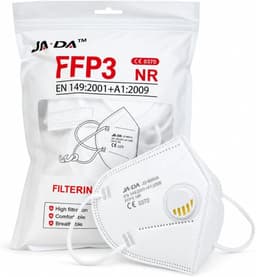
| Best overall |  Spanner In The Works Spanner valved FFP3, pack of 10 | n/a | Yes, in the title | Disposable in the title. NR or R not printed | 6.5 | about £12.95 | View offer |
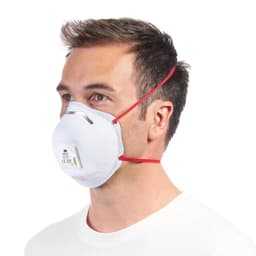
 3M 3M Aura 9332+, valved, pack of 10 | EN 149:2001+A1:2009 FFP3 NR D, CE 0086 | Yes, Cool Flow | NR on the bullets. Attribute says reusable | 7.2 | about £58.03 | View offer | |
| Alternative |  3M 3M 8833 valved FFP3, pack of 2 | EN 149:2001+A1:2009 FFP3 NR D | Yes, Cool Flow | NR, and the attribute says disposable | 4.5 | about £16.21 | View offer |

On this page
What the box must show
What the valve does not change
Checks before you pay
When to stop and get advice
Common questions
What should be printed on a valved FFP3 before you trust the title?
Does FFP3 NR D mean you can wear it again tomorrow?
Is UKCA required, or is CE still enough in Great Britain?
Will this mask stop paint fumes or deodorant smell?
Why do some listings say both NR and reusable?
Related pages
Sources
Public UK sources named below. amazon.co.uk prices, stars and review counts on these five listings were read on 19 October 2026. Page updated 21 October 2026.
- HSE, disposable dust masks (retrieved 19 October 2026)
- HSE, COSHH essentials R3 (retrieved 19 October 2026)
- HSE, fit testing basics (retrieved 19 October 2026)
- HSE, cutting and sanding wood (retrieved 19 October 2026)
- HSE, PPE supply (retrieved 19 October 2026)
- GOV.UK, PPE marking (retrieved 19 October 2026)
- NHS England, valved FFP3 respirators, 25 August 2021 (retrieved 19 October 2026)
- SATRA on EN 149 (retrieved 19 October 2026)