Independent comparisons. We may earn from shop links. More info

USB or XLR measurement microphone

Updated: 22 October 2026

A USB or XLR measurement microphone is a choice about where the converter sits: inside the capsule, or in an interface you already own. Peter F. set the split from Room EQ Wizard's British English help and the amazon.co.uk notes for 21 October 2026. We did not compare clocks in a lab. Choose USB when the laptop is the instrument and you need one channel. Choose XLR when the interface, the phantom power, and a second channel are already part of the job. Other rows are on the [measurement microphone comparison](/hub/measuring-equipment/measurement-microphone). A qualifying amazon.co.uk purchase can earn us a commission at no extra cost to you.

A USB or XLR measurement microphone is a choice about where the converter sits: inside the capsule, or in an interface you already own. Peter F.

Our top picks

Behringer Behringer ECM8000

Best overall

Behringer Behringer ECM8000
8.2/10about £16.90
miniDSP miniDSP UMIK-1

Rank 2

miniDSP miniDSP UMIK-1
9.1/10about £120
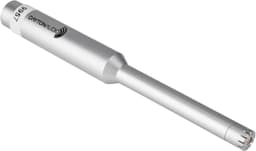
Dayton Audio Dayton Audio EMM-6

Alternative

Dayton Audio Dayton Audio EMM-6
7.6/10about £84.68
On this page

USB is one channel with its own clock

A USB measurement microphone puts the capsule, preamp, and converter in one barrel, so a laptop with no interface can run a sweep and phantom power is not required. On this shelf that shape is the UMIK-1. The ECM999U is the same chain on USB-C: no phantom, 10 Hz to 20 kHz, 24-bit/48 kHz, and 133 dB maximum SPL. A US review returned one because the calibration link failed, and the review sample has no United Kingdom texts. The converter's clock belongs to the microphone, so there is no spare input for a loopback. The best measurement microphone page names the UMIK-1 for a laptop and one seat. The chain that can take a second electrical channel is an interface with an XLR capsule.

A transfer function needs a second input on the same device

A transfer function compares the microphone with an electrical copy of the signal you sent. Both inputs have to share one clock. A USB microphone has nowhere to plug that loopback. Room EQ Wizard says long sweeps are a problem when input and output are different devices, such as when using a USB mic, because the clocks differ and the impulse can distort. A longer sweep does not lock the clocks. An acoustic timing reference lines a sweep up in software. It is still not a second electrical channel on the UMIK-1. That limit is not a ban on a living-room sweep of one seat. The how to use page is the aim and the file once the chain is chosen.
Behringer Behringer ECM8000

Testsieger

Behringer Behringer ECM8000
8.2/10about £16.90

XLR means phantom, a cable, and an interface you trust

An XLR condenser here needs a mixer or interface, a cable, and phantom power. It does not plug into a headphone socket. Quote only the voltage the listing states. The ECM8000 bullets say +15 V to +48 V. The microphone does not include an individual file. A UK review found only a generic curve. It is cheap only after the interface exists. The EMM-6 bullets include the individual graph and do not state a voltage. The PRM1, MM 1, and TM1 bullets are also silent. Close the channel before the connector moves, because a live pop can damage loudspeakers. The buying guide puts voltage in the wider order.

Pick USB for the laptop, XLR for the interface you already own

If the laptop is the instrument and you need one channel, buy the USB shape. On this shelf that is the UMIK-1, or the ECM999U only when the slip yields a file. If the interface already supplies phantom power, buy XLR. The ECM8000's missing file is why that path is not automatically the cheap win. Choose the EMM-6 when the graph is the point and the bullets leave the voltage blank. iMM-6 and RTA-M sit outside this split. A shared clock does not make these capsules a Class 1 or Class 2 meter.

Common questions

Can the UMIK-1 be one channel of a two-channel measurement?
No. The converter is inside the capsule, so a loopback has nowhere to connect on the same clock. One living-room seat does not need that second channel. For speaker design, a single-channel USB microphone is the wrong tool because timing and phase are not on a shared clock.
What phantom voltage does an XLR measurement microphone need?
Only the voltage the listing states. The ECM8000 bullets say +15 V to +48 V. The RTA-M says DC 9 V to 52 V and is for a DriveRack, outside this split. The EMM-6, PRM1, MM 1, and TM1 bullets do not state a voltage. Maker sheets that do are not filled-in listing cells. Do not assume every capsule is 48 V.
I already own an interface. Is XLR the better chain?
It is the better chain when that interface supplies phantom and you will use a second input. It is not automatically a better microphone. The ECM8000 still has no individual file. The EMM-6 has the graph and, on amazon.co.uk, no stated voltage. USB remains reasonable if the laptop is what you will actually use for one seat.
Why can't I loop back into a USB measurement microphone?
There is no second input. The converter is already inside the capsule, on its own clock. REW says that when the microphone and the output are different devices, long sweeps can distort the impulse. An acoustic timing reference can line a sweep up in software. It is not an electrical reference and not a socket on the UMIK-1.
Is the ECM999U the same kind of choice as the UMIK-1?
It is the same chain: converter in the capsule, no phantom, one channel, no loopback. It is USB-C, at £76 against £120, with 4.2 from 32 reviews and no United Kingdom texts in the review sample. A US review returned one because the calibration link failed. If the slip does not produce a file, you have the clock limit without the correction.

Related pages

Sources

Public UK sources from the research digest, last checked on 21 October 2026. Shelf prices and star lines are the amazon.co.uk figures captured with these nine listings. The price bands are this set, not a market average.

  1. HSE L108: Controlling noise at work (retrieved 21 October 2026)
  2. HSE INDG362: Noise at work (retrieved 21 October 2026)
  3. Cirrus Research: which class of sound level meter (retrieved 21 October 2026)
  4. NoiseMeters: which meter for noise at work (retrieved 21 October 2026)
  5. Institute of Acoustics: a guide to sound level meters (retrieved 21 October 2026)
  6. miniDSP UMIK-1 (retrieved 21 October 2026)
  7. Room EQ Wizard getting started (retrieved 21 October 2026)
  8. Tantrum Audio: measurement microphones (retrieved 21 October 2026)